SCAMPER Method: 7 Innovation Prompts (With Workshop Script)
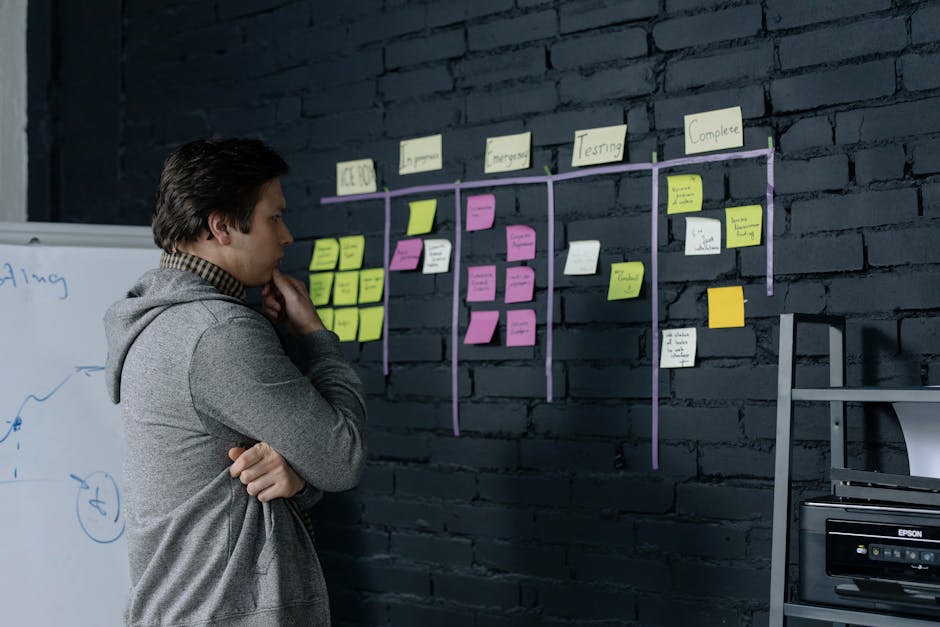
⏱ 15 min read
The SCAMPER method is a structured ideation heuristic that forces teams to interrogate an existing product, service, or process using seven distinct operational verbs: Substitute, Combine, Adapt, Modify, Put to another use, Eliminate, and Reverse. Created by educational administrator Bob Eberle in 1971 and built on Alex Osborn’s 1953 brainstorming rules, it breaks functional fixedness by systematically altering baseline assumptions rather than waiting for unprompted inspiration. Applying all seven questions to a single workflow routinely generates dozens of viable concepts within 45 to 60 minutes.
Key Takeaways
- Structured Disruption: SCAMPER provides 7 targeted levers (Substitute, Combine, Adapt, Modify, Put to another use, Eliminate, Reverse) to systematically dismantle product stagnation.
- Root Origin: Developed by Bob Eberle in 1971, building directly on advertising executive Alex Osborn’s 1953 creative checklist from Applied Imagination.
- Cognitive Shift: Defeats functional fixedness by treating every attribute of an existing product as a variable parameter rather than a permanent constraint.
- Velocity: A cross-functional team can execute an end-to-end SCAMPER audit in a structured 60-minute sprint, producing 30 to 50 distinct concepts.
Table of Contents
- Origins of the SCAMPER Framework
- The Seven SCAMPER Techniques Explained
- Substitute: Swapping Components and Assumptions
- Combine: Merging Complementary Capabilities
- Adapt: Importing Solutions from Foreign Domains
- Modify (Magnify / Minify): Adjusting Scale and Emphasis
- Put to Another Use: Unlocking Secondary Value
- Eliminate: Pruning to the Core Utility
- Reverse: Inverting Workflows and Hierarchies
- Evaluating Team Readiness for SCAMPER
- Applying SCAMPER Across Modern Business Models
- Operational Pitfalls and Common Misconceptions
- Running a 60-Minute SCAMPER Workshop
- Sources & Further Reading
Origins of the SCAMPER Framework
In 1948, Richard and Maurice McDonald closed their profitable San Bernardino drive-in barbecue restaurant for three months to solve a persistent operational bottleneck: carhops were slow, dishes broke, and the 25-item menu overwhelmed the kitchen. Instead of trying to imagine a completely new dining experience out of thin air, the brothers dismantled their existing operation component by component. They replaced porcelain plates and silverware with paper bags and wax wrappers (Substitute). They welded custom spatulas and paired the burger grill directly with the condiment dispenser (Combine). They borrowed automated factory assembly principles pioneered by Henry Ford (Adapt). They eliminated 16 slow-selling menu items to focus solely on hamburgers, fries, and milkshakes (Eliminate). They rearranged the entire kitchen footprint on a tennis court with chalk to optimize worker motion (Reverse).
That redesign became the Speedee Service System, cutting order fulfillment from 20 minutes to 30 seconds and laying the foundation for modern fast food. Two decades later, Bob Eberle codified precisely this type of systematic deconstruction into the SCAMPER acronym in his 1971 book SCAMPER: Games for Imagination Development. Eberle drew directly from advertising executive Alex Osborn’s 1953 book Applied Imagination, which introduced brainstorming alongside 75 diagnostic questions designed to nudge dormant minds into action.
When modern engineers run an unguided ideation meeting, participants hit a psychological wall known as functional fixedness—a cognitive bias first documented by psychologist Karl Duncker in 1945. People instinctively view an object or process solely through its conventional function. SCAMPER acts as an algorithm that forces the brain to systematically alter physical, temporal, and financial variables one by one. Teams struggling with creative fatigue can pair this structured interrogation with a Functional Fixedness Audit: 12 Questions (Checklist) to surface invisible operational orthodoxies before ideation begins.
The Seven SCAMPER Techniques Explained
SCAMPER operates through seven specific, non-linear cognitive lenses that convert fixed operational assumptions into fluid design parameters.
Substitute: Swapping Components and Assumptions
Substitution demands replacing a core material, vendor, step, technology, or human role with an unconventional alternative. Instead of accepting bill-of-materials costs or procedural dead ends as permanent facts, the practitioner tests what happens when one foundational piece leaves the board.
In consumer packaging, switching from single-use corrugated cardboard to reusable high-density polyethylene totes can eliminate thousands of dollars in recurring supply costs while slashing packaging waste. Similarly, engineering teams evaluate whether copper wiring inside industrial actuators can be swapped for lightweight conductive polymers to shave off precious grams. For a granular exploration of mechanical and software swaps, review SCAMPER: Substitute – Unlock New Ideas by Swapping Elements.
- Diagnostic Questions:
- What material, component, or energy source can we exchange without sacrificing structural integrity?
- Which step in the approval pipeline can an automated script or third-party service handle instead?
- What unstated assumption about customer behavior can we replace with its polar opposite?
Combine: Merging Complementary Capabilities
Combination links two disparate capabilities, products, or service offerings to generate synergistic value that neither could achieve in isolation. This goes beyond simple product bundling; it re-architects workflows so that output from one system immediately fuels another.
Consider the smart thermostat: Honeywell and Nest did not simply bundle a thermometer with an internet router; they fused environmental sensing, occupancy heuristics, and remote utility control into a single real-time feedback loop. Hardware manufacturers also leverage this technique by uniting structural chassis design with heat dissipation, avoiding separate thermal sinks. To master the mechanics of merging distinct value propositions, explore SCAMPER: Combine – The Ultimate Guide to Merging Ideas for Innovation.
- Diagnostic Questions:
- Which two standalone products or software features do customers routinely use simultaneously?
- Can we merge manufacturing steps into a single continuous-flow operation?
- What intellectual property from another business unit could fuse with our existing product line?
Adapt: Importing Solutions from Foreign Domains
Adaptation searches for proven solutions in unrelated industries, biological ecosystems, or historical engineering feats to bypass original research cycles. Rather than solving a problem from scratch, teams borrow an established mechanism and translate it into their operational context.
In 1941, Swiss engineer George de Mestral examined cockleburs clinging to his dog’s fur under a microscope, noticed hundreds of microscopic hooks gripping mechanical loops, and patented Velcro. In medical engineering, pediatric hospital surgical teams famously adapted pit-crew handoff protocols from Formula 1 racing teams like Ferrari and McLaren, dropping postoperative handover errors by more than 40% according to patient safety research published in Quality and Safety in Health Care. Teams facing complex mechanical hurdles can even study how historic patents solved torque stabilization, such as the principles outlined in the Anschütz-Einstein Gyro Damping for Drones (Checklist).
- Diagnostic Questions:
- What industry has already solved our specific speed, friction, or retention challenge?
- What biological adaptation performs this exact functional requirement under extreme constraints?
- Which legacy historical design can we modernize using current production methods?
Modify (Magnify / Minify): Adjusting Scale and Emphasis
Modification forces an extreme shift in scale, frequency, velocity, or visual emphasis to reveal latent market niches. Practitioners systematically stretch a product attribute to 100x its normal value (magnify) or compress it down to 1% (minify).
When consumer electronics manufacturers magnified display screen dimensions from 3.5 inches to over 6 inches, they created the phablet category, capturing market share for mobile gaming and video consumption. Conversely, British bicycle engineer Andrew Ritchie minified traditional road bicycle dimensions by designing a three-part folding linkage, launching Brompton Bicycle into an urban commuting powerhouse. In enterprise technology, minifying monolithic software releases from annual deployments to 10-minute micro-deployments sits at the very heart of modern DevOps culture.
- Diagnostic Questions:
- What happens if we increase durability, speed, or warranty coverage by 10x?
- What occurs if we shrink the physical footprint, onboarding duration, or unit price down to near zero?
- Which single visual or functional attribute deserves 90% of the customer’s immediate attention?
Put to Another Use: Unlocking Secondary Value
Putting an existing asset to another use extracts commercial return from waste streams, underutilized infrastructure, or forgotten technological patents. This approach views internal byproducts not as disposal liabilities, but as unmonetized inventories.
In 1968, 3M scientist Dr. Spencer Silver synthesized an adhesive that was too weak to permanently bond surfaces. Years later, colleague Art Fry used that low-tack adhesive to anchor bookmarks in his church hymnal, inventing the Post-it Note. In heavy industry, facilities capture excess blast-furnace slag and grind it into supplementary cementitious materials for green concrete. Teams can systematically uncover these dormant opportunities by working through the Scrap-to-Product Matrix: Reuse Waste (With Template) or reviewing the Revive Shelved Inventions: 4-Step Audit (Worksheet).
- Diagnostic Questions:
- Who could benefit from our toxic or inert production byproducts?
- Can our internal administrative tooling solve an external problem for non-competing businesses?
- How would a child, an elderly user, or an offshore logistics operator deploy this exact product?
Eliminate: Pruning to the Core Utility
Elimination strips non-essential complexity, extraneous features, and bloated management layers to unmask pure customer utility. Product teams chronically suffer from feature creep, adding incremental capabilities until the baseline product becomes slow, confusing, and costly to maintain.
Apple famously eliminated the floppy disk drive from the 1998 iMac, the optical disc drive from the 2008 MacBook Air, and the 3.5mm analog headphone jack from the 2016 iPhone 7, reclaiming internal hardware volume for larger batteries and haptic motors. In aviation, Southwest Airlines eliminated reserved seating and meal services to guarantee 10-minute gate turnarounds. Software product managers can prune non-value-add complexity using a structured Zero-Based Feature Backlog Audit (Scoring Worksheet).
- Diagnostic Questions:
- If we had to cut manufacturing or operational costs by 50% tomorrow, which three components would we remove first?
- What software features do less than 5% of active users open during a 90-day window?
- Can we eradicate the sign-up form, user manual, or retail packaging entirely?
Reverse: Inverting Workflows and Hierarchies
Reversal flips sequence, causal direction, organizational hierarchies, or delivery mechanisms upside down. Instead of moving from Step A to Step Z, the process runs backwards from expected customer outcomes to initial resource sourcing.
Traditional retail required consumers to visit brick-and-mortar stores, inspect products, pay, and bring them home. Direct-to-consumer mattress company Casper reversed the transaction: they ship compressed mattresses in 40x20x20-inch boxes directly to the customer’s doorstep with a 100-night trial before asking for a permanent commitment. Similarly, Dell Computer built a multi-billion-dollar empire in the 1990s by collecting customer cash before purchasing computer components from suppliers, reversing the traditional manufacturing cash-conversion cycle. In strategic growth, teams implement an inverted playbook using the Zero-Budget Marketing: 4-Step Reversal (Template).
- Diagnostic Questions:
- What if the customer pays after experiencing the outcome rather than before accessing the service?
- What happens if the supply chain works backwards on pull signals rather than forecast push models?
- How can we invert the sequence of onboarding so users receive value before creating an account?
Try This Today: Select one recurring, frustrating meeting or operational bottleneck on your calendar. Open a text document and spend precisely 7 minutes drafting 3 radical ideas using only the Eliminate and Reverse prompts. Commit to testing the top candidate on your next project cycle.
Evaluating Team Readiness for SCAMPER
Running ideation exercises without diagnosing team habits produces shallow incremental suggestions rather than actionable operational pivots. Assess your team’s baseline practices using the scorecard below.
Self-Assessment: Innovation Process Health
Scoring Guide:
- 0–1 checked: Healthy operational agility. Your team is ready to run an advanced 45-Minute Remote Brainstorming: A Visual Agenda (Template).
- 2–4 checked: Creeping functional fixedness. Ideation is stalling on conventional orthodoxies; implement rigorous prompt-based sprints immediately.
- 5–6 checked: Severe innovation stagnation. Your team habitually kills novel concepts; establish a structured governance framework using the 100-Point Concept Viability Matrix (Scoring Sheet) before holding another open brainstorm.
Applying SCAMPER Across Modern Business Models
Organizations unlock exponential gains when they expand SCAMPER beyond physical product features into servitization, operational architecture, and procurement agreements.
| SCAMPER Lens | Hardware Engineering | B2B SaaS Architecture | Industrial Servitization |
|---|---|---|---|
| Substitute | Replace CNC aluminum brackets with 3D-printed carbon fiber nylon to cut unit weight by 35%. | Swap self-managed relational databases for serverless vector stores to handle unstructured search data. | Replace upfront capital sales with consumption-based equipment leases modeled via an Equipment Servitization Financial Model (Excel Template). |
| Combine | Integrate cooling channels directly into structural motor mounts to remove separate fan modules. | Unite issue tracking, CI/CD telemetry, and incident alerting into a single unified developer dashboard. | Combine preventative maintenance diagnostics with automated replacement parts fulfillment. |
| Adapt | Adapt automotive crumple-zone geometry to protect sensitive drone payloads during hard landings. | Adopt consumer gaming leaderboard mechanics to drive enterprise sales software adoption. | Adapt commercial airline jet-engine uptime guarantees for municipal water treatment pumps. |
| Modify | Minify wall thickness on injection-molded casings down to 1.2mm using structural rib reinforcement. | Magnify status alert visibility by shifting from buried email notifications to direct Slack channel webhooks. | Minify routine inspection cycles from monthly technician visits to continuous IoT acoustic telemetry. |
| Put to Another Use | Repurpose rejected battery cells from vehicle packs into stationary warehouse energy storage racks. | Package anonymized database indexing performance logs as an industry benchmark report for IT buyers. | Use fleet vehicle sensor arrays to sell real-time road condition and potholes data to city planners. |
| Eliminate | Eliminate screws and fasteners by implementing snap-fit joints designed for rapid end-of-life teardowns. | Eradicate multi-field registration screens in favor of frictionless single sign-on (SSO) authentication. | Cut scheduled maintenance intervals by implementing condition-based vibration monitoring. |
| Reverse | Invert assembly sequence so internal wear components can be replaced without disassembling outer chassis. | Allow end users to access premium dashboard capabilities before asking them to invite their team or pay. | Charge clients per cubic meter of clean water pumped rather than billing for equipment depreciation and labor. |
Transitioning industrial hardware to subscription revenue models requires distinct financial planning, which teams calculate using the Servitization Cost Calculator (Excel Model & Formulas). Furthermore, teams working on circular manufacturing models can cross-reference the Eliminate and Reverse techniques with the Design-for-Disassembly: 20-Point Audit (Checklist) to satisfy evolving environmental regulations.
Executing these pivots regularly demands rapid experimentation and iterative cycles, embodying the core principles of the Lean Startup Methodology: Build, Measure, Learn Your Way to Success. Modern organizations increasingly co-locate cross-disciplinary sprint teams inside dedicated Future of Work Innovation Hubs to run uninterrupted ideation sessions.
Operational Pitfalls and Common Misconceptions
Many organizations fail to extract tangible business outcomes from SCAMPER sessions because they treat the technique like open-ended social chatter rather than an analytical diagnostic protocol. The following table contrasts common industry myths with practical operational realities.
| Operational Myth | Observed Reality | Strategic Correction |
|---|---|---|
| Myth 1: SCAMPER is exclusively for creative brainstorming and advertising teams. | SCAMPER delivers its highest financial returns in manufacturing supply chains, enterprise software refactoring, and cost-reduction audits. | Deploy SCAMPER during formal engineering sprint retrospectives, value stream mapping, and post-launch reviews. |
| Myth 2: The prompts are too elementary to generate defensible enterprise patents. | Elementary constraints systematically break functional fixedness, forcing experts out of established cognitive ruts. | Anchor each letter to hard financial or physical boundaries (e.g., cut mass by 40%, lower latency to 5ms). |
| Myth 3: Every prompt must produce an active development ticket immediately. | SCAMPER is a divergent discovery framework; over 70% of initial outputs will be operationally non-viable. | Filter outputs using a disciplined 5-Criteria Idea Scoring Rubric (Excel Template) rather than killing ideas mid-session. |
| Myth 4: You must always follow the letters sequentially from S to R. | Rigid linearity stalls momentum when a team hits a difficult prompt such as Adapt or Put to Another Use. | Allow facilitators to jump dynamically to high-energy prompts like Eliminate or Combine when discussion flags. |
To see how modern agile teams translate raw brainstorm lists into production roadmaps, read through our detailed breakdown in SCAMPER Technique Application: Unleash Innovation & Transform Ideas.
Running a 60-Minute SCAMPER Workshop
Running a productive SCAMPER sprint requires rigorous timeboxing, silent generation rounds, and decisive convergence scoring. The fill-in-the-blank workshop agenda below equips internal leads to conduct an intensive 60-minute session that produces 30 or more vetted concepts.
Copy-Paste Template: SCAMPER 60-Minute Sprint Facilitator Script
================================================================= SCAMPER SPRINT FACILITATOR RUN OF SHOW SESSION TARGET: [INSERT PRODUCT / PROCESS / FEATURE NAME] SESSION FACILITATOR: [INSERT NAME] TIMEBOX: 60 MINUTES TOTAL PARTICIPANTS: 4 TO 7 CROSS-FUNCTIONAL STAKEHOLDERS =================================================================PHASE 1: BASELINE DECONSTRUCTION (0:00 - 0:10)
- Post the baseline target on the central board.
- Physical Product: List the top 5 components and materials.
- Software Workflow: Map the 5-step user journey from entry to completion.
- Service/Process: Detail the 5 operational cost drivers.
- Facilitator states the boundary constraint: "Our objective is to generate 35+ divergent ideas targeting [INSERT GOAL: E.G., 30% COST REDUCTION / 2X ONBOARDING SPEED]. No idea evaluation is permitted during the next 35 minutes."
PHASE 2: THE 5-MINUTE SCAMPER INTERVALS (0:10 - 0:45) [Run 7 consecutive 5-minute sprints. For each prompt, participants write silently on digital/physical sticky notes for 3 minutes, followed by a 2-minute rapid round-robin share.]
[0:10 - 0:15] S - SUBSTITUTE: Swap materials, steps, vendors, or inputs. Prompt: "What core component of [PRODUCT/PROCESS] can we replace with a cheaper, faster, or unconventional alternative?"
[0:15 - 0:20] C - COMBINE: Merge with complementary capabilities. Prompt: "What adjacent feature, external partner tool, or manual task can we fuse into this single step?"
[0:20 - 0:25] A - ADAPT: Borrow proven mechanisms from outside our industry. Prompt: "How would [F1 RACING / HOSPITAL EMERGENCY ROOMS / LOGISTICS HUBS] handle this exact operational problem?"
[0:25 - 0:30] M - MODIFY (MAGNIFY / MINIFY): Stretch or shrink parameters. Prompt: "What happens if we increase this dimension or timeline by 10x? What happens if we shrink it to 1%?"
[0:30 - 0:35] P - PUT TO ANOTHER USE: Repurpose assets and waste streams. Prompt: "Who else can use the output, exhaust data, or physical waste generated by this process?"
[0:35 - 0:40] E - ELIMINATE: Ruthlessly strip non-essential layers. Prompt: "If we had to eliminate 50% of the steps or parts without killing baseline function, what goes first?"
[0:40 - 0:45] R - REVERSE: Invert the chronological order or business model. Prompt: "What does the exact opposite sequence look like? How can we deliver value before user commitment?"
PHASE 3: CONVERGENCE & MULTI-VOTING (0:45 - 0:55)
- Group duplicate stickies into thematic clusters.
- Hand each participant 5 voting tokens.
- Voting Criteria:
- 2 votes for Highest Commercial Impact.
- 2 votes for Rapid Implementation Feasibility (< 30 days).
- 1 vote for Moonshot Strategic Differentiator.
PHASE 4: OWNERSHIP & NEXT EXPERIMENTS (0:55 - 1:00) Document the top 3 scored concepts and assign single-threaded owners:
- Concept [NAME]: Owned by [PERSON], Next Prototype Milestone due [DATE].
- Concept [NAME]: Owned by [PERSON], Next Prototype Milestone due [DATE].
- Concept [NAME]: Owned by [PERSON], Next Prototype Milestone due [DATE]. =================================================================
Once your team filters their raw SCAMPER sticky notes, transition the winning concepts into rapid validation spikes using the Creative Spike Charter (1-Page Fill-in Template) or deploy low-fidelity mockups via the Wizard of Oz Prototype Scripts (Word-for-Word Template). By transforming creative divergence into structured validation experiments, teams turn casual whiteboard sketches into defensible commercial revenue.
Sources & Further Reading
- Eberle, Bob. (1971). SCAMPER: Games for Imagination Development. D.O.K. Publishers.
- Osborn, Alex F. (1953). Applied Imagination: Principles and Procedures of Creative Problem-Solving. Charles Scribner’s Sons.
- Duncker, Karl. (1945). On Problem-Solving. Psychological Monographs, 58(5), i-113. American Psychological Association.
- Catchpole, Ken R., et al. (2007). Patient Handover from Surgery to Intensive Care: Using Formula 1 Pit-Stop and Aviation Models to Improve Safety and Quality. Pediatric Anesthesia, 17(5), 470-478.
- University of Waterloo Catalyst. SCAMPER Method for Innovation.
- Harvard Business Review. Case Studies in Ideation and Creative Problem Solving.
- MIT OpenCourseWare. Innovation Teams: Generating and Developing Creative Ideas.
- Google Scholar. Empirical Research on SCAMPER and Heuristic Creativity.
Featured image by cottonbro studio on Pexels