AI & The Automated Workforce: Revolutionizing Jobs or Replacing Them?
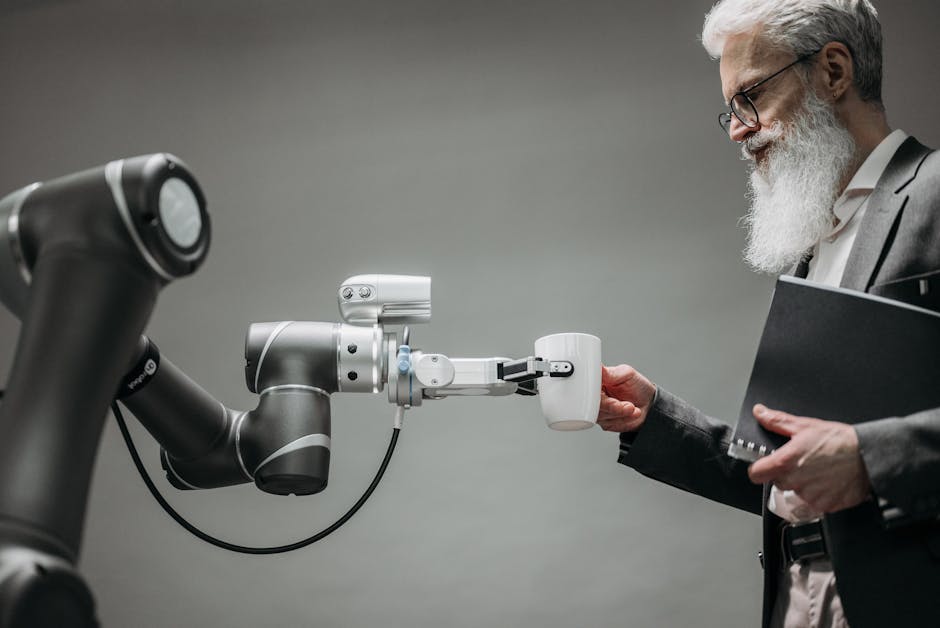
The Rise of the Automated Workforce: Friend or Foe?
Imagine a world where routine tasks vanish, productivity soars, and human potential is unleashed. This isn’t science fiction; it’s the burgeoning reality of AI and the automated workforce. But as intelligent machines become increasingly adept, a critical question looms: are we on the cusp of unprecedented progress, or is mass unemployment an inevitable consequence?
Executive Summary
This article delves into the profound impact of Artificial Intelligence (AI) on the modern workforce. We explore how automation is reshaping industries, the evolving nature of jobs, the emergence of new skill requirements, and the ethical considerations surrounding AI adoption. We analyze the potential for both job displacement and creation, offering insights into how individuals and organizations can adapt to this transformative era. This discussion is crucial for anyone seeking to understand the trajectory of their career or business in the face of rapid technological advancement, much like understanding AI and the Future Workforce: Navigating the Revolution. The evolution of information dissemination has seen several pivotal moments, from the invention of the printing press to the digital age, with innovations like The Gutenberg Press: Revolutionizing Information Dissemination serving as key historical markers.
Table of Contents
- The Shifting Landscape of Work
- AI’s Role in Automation
- Job Displacement vs. Job Creation
- Skills for the AI Era
- Ethical Considerations and Societal Impact
- Preparing for the Future
- Conclusion
- References
The Shifting Landscape of Work
The traditional 9-to-5, single-career path is rapidly becoming a relic. Automation, powered by advancements in AI, is not just changing how we work, but what constitutes work itself. From manufacturing floors to executive suites, intelligent systems are integrating into daily operations, promising greater efficiency and innovation. This transformation necessitates a proactive approach to understanding the evolving job market.
AI’s Role in Automation
Artificial Intelligence is the engine driving much of today’s automation. It allows machines to perform tasks that previously required human intelligence, learning, and decision-making.
Enhancing Efficiency and Productivity
AI excels at processing vast amounts of data and identifying patterns far beyond human capability. This leads to optimized operations, reduced errors, and accelerated workflows across various sectors.
Automating Complex Tasks
Beyond simple repetitive actions, AI is now capable of handling more intricate responsibilities. This includes data analysis, customer service interactions, diagnostic processes in healthcare, and even creative content generation.
Job Displacement vs. Job Creation
The most debated aspect of AI in the workplace is its dual potential to eliminate existing jobs while simultaneously creating new ones.
Roles Under Threat
Jobs that are highly repetitive, rule-based, and involve predictable physical or cognitive tasks are most vulnerable to automation. This includes roles in data entry, assembly line work, and certain administrative functions.
Emerging Opportunities
Conversely, AI is spurring the creation of new job categories. These often involve AI development, data science, AI ethics, prompt engineering, and roles that focus on managing, maintaining, and collaborating with AI systems. The demand for professionals who can bridge the gap between human ingenuity and machine capabilities is set to skyrocket.
Skills for the AI Era
As AI takes over routine tasks, the value of uniquely human skills becomes paramount.
The Human Advantage
Skills such as critical thinking, creativity, emotional intelligence, complex problem-solving, and collaboration are areas where humans continue to hold a distinct advantage. These are the skills that AI, in its current form, cannot easily replicate.
Upskilling and Reskilling
To thrive in an AI-augmented world, continuous learning is essential. Individuals and organizations must invest in upskilling and reskilling programs to equip the workforce with the competencies needed to work alongside AI and fill the new roles emerging.
Data Table: AI Automation Impact – Before vs. After
| Feature/Task | Pre-AI Automation (Manual/Human-led) | Post-AI Automation (Automated) |
|---|---|---|
| Data Analysis | Time-consuming, prone to human error, limited scope | Rapid, precise, identifies complex patterns, vast data handling |
| Customer Service | Limited availability, scripted responses, potential for inconsistency | 24/7 availability, personalized interactions, faster issue resolution |
| Manufacturing | Labor-intensive, slower production, higher defect rates | Increased speed, precision, reduced human error, enhanced safety |
| Content Creation | Time-intensive, requires human creativity at every step | AI-assisted brainstorming, drafting, and editing, faster output |
| Decision Making | Based on human judgment, intuition, and historical data | Data-driven, predictive analytics, optimized outcomes |
Ethical Considerations and Societal Impact
The widespread adoption of AI in the workforce raises significant ethical questions. Issues of bias in algorithms, data privacy, job security, and the potential for increased economic inequality must be addressed. Thoughtful policy-making and responsible AI development are crucial to ensure a just transition.
Preparing for the Future
Organizations need to develop AI strategies that focus on augmentation rather than just automation. This involves identifying where AI can best support human workers, fostering a culture of adaptability, and investing in workforce training. Individuals should embrace lifelong learning and focus on developing uniquely human skills. Understanding the landscape of AI and the Future Workforce: Navigating the Revolution is key to this preparation.
Conclusion
AI and the automated workforce represent a paradigm shift. While challenges like job displacement are real, the opportunities for enhanced productivity, innovation, and the creation of new, meaningful roles are immense. By focusing on human-centric skills, continuous learning, and responsible AI integration, we can navigate this revolution and build a future where humans and machines collaborate for mutual benefit.
References
- Brynjolfsson, E., & McAfee, A. (2014). The Second Machine Age: Work, Progress, and Prosperity in a Time of Brilliant Technologies. W. W. Norton & Company.
- Ford, M. (2015). Rise of the Robots: Technology and the Threat of a Jobless Future. Basic Books.
- Daugherty, P. R., & Wilson, H. J. (2018). Human + Machine: Reimagining Work in the Age of AI. Harvard Business Review Press.
- World Economic Forum. (2020). The Future of Jobs Report 2020. https://www.weforum.org/reports/the-future-of-jobs-report-2020
- Acemoglu, D., & Restrepo, P. (2018). Artificial Intelligence, Automation and Work. NBER Working Paper No. 24643. https://www.nber.org/papers/w24643
- Moorhouse, J. (2020). AI and the Future of Work. MIT Sloan Management Review. https://sloanreview.mit.edu/article/ai-and-the-future-of-work/
- Manyika, J., Chui, M., Miremadi, M., Bughin, J., George, K., Willmott, P., & Dewhurst, M. (2017). A future that works: Automation, employment, and productivity. McKinsey Global Institute. https://www.mckinsey.com/featured-insights/future-of-work/a-future-that-works-automation-employment-and-productivity
- Frey, C. B., & Osborne, M. A. (2017). The future of employment: How susceptible are jobs to computerisation? Technological Forecasting and Social Change, 114, 254-280. https://www.ox.ac.uk/sites/files/oxford/field/field_document/Future%20of%20Employment%29.pdf
Featured image by Pavel Danilyuk on Pexels