The Algorithmic Artist: How Generative AI is Reshaping Innovation & Creativity
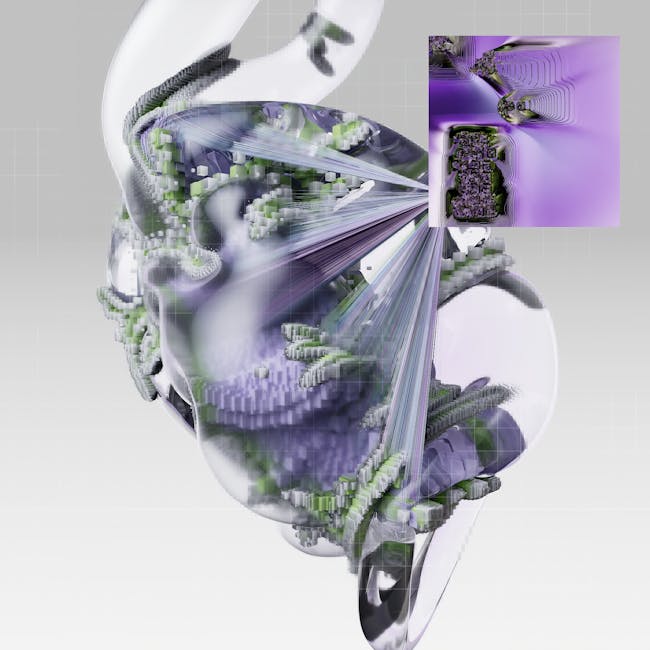
The Algorithmic Artist: Generative AI in Creative Endeavors
I remember a client, a seasoned marketing executive, who once confessed to me, "I feel like I’m losing my edge. The old playbook just isn’t working. Everything feels… predictable." This was years ago, before the current AI boom, but the sentiment rings truer than ever today. We stand at a precipice, where the very nature of creation is being redefined by algorithms. Generative AI isn’t just a new tool; it’s a new collaborator, a digital muse that can conjure images, sounds, and text from thin air. For those of us in innovation and creativity, this isn’t a distant sci-fi concept – it’s a present-day operational challenge and opportunity.
Table of Contents
- The Algorithmic Brushstroke: Generative AI in Visual Arts
- The AI Composer: Generative AI in Music and Audio
- The AI Scribe: Generative AI in Writing and Storytelling
- The Algorithmic Collaborator: Augmenting Human Creativity
- Executive Summary
- Further Reading & Frameworks
The Algorithmic Brushstroke: Generative AI in Visual Arts
Forget the sterile, robotic image of AI. Think of it as a highly sophisticated paintbrush, capable of rendering styles and concepts that would take human artists years to master. The speed at which AI can generate visual assets is staggering. For marketing teams, this means rapid prototyping of ad visuals, mood boards, and even product mockups. For designers, it’s an unprecedented ability to explore variations and iterate on concepts at lightning speed.
From Pixels to Masterpieces: Image Synthesis
Tools like Midjourney, DALL-E, and Stable Diffusion have democratized visual creation. You can now describe a scene with words – "a vintage astronaut exploring a neon-lit alien jungle, in the style of Moebius" – and have a compelling image materialize. This capability is a game-changer for content creation, drastically reducing the time and cost associated with stock photography or custom illustration. It allows us to visualize abstract concepts for presentations or generate unique branding elements on demand. If you’re looking to understand this space further, our deep dive into Generative AI for Image Synthesis: Create Stunning Visuals with AI offers a practical entry point.
The AI Director: Video and Animation
While still evolving, generative AI is also making inroads into video. Tools are emerging that can create short clips from text prompts, animate still images, or even generate realistic human avatars. This has profound implications for explainer videos, social media content, and personalized marketing messages. Imagine generating a dozen unique video intros for different audience segments in minutes – that’s the power we’re talking about.
The AI Composer: Generative AI in Music and Audio
Music and sound design have long been considered uniquely human domains, steeped in emotion and intuition. Yet, generative AI is proving to be a surprisingly adept musician. From generating background scores for videos to creating entirely new musical genres, AI is opening up new sonic territories.
This burgeoning field of Generative AI for Music Composition is rapidly transforming how we think about and create audio content.
Crafting Sonic Landscapes
Need a specific mood for a podcast intro or a unique track for a game? AI music generators can produce royalty-free scores based on genre, tempo, and instrumentation. This is invaluable for creators who lack the resources or expertise for traditional music production. It allows for a level of customization and speed that was previously unimaginable, directly impacting the production pipeline for multimedia projects.
Voice Synthesis and Narration
The uncanny realism of AI-generated voices is transforming audio content. From creating audiobooks to providing voiceovers for e-learning modules or virtual assistants, AI can deliver human-like narration. This is particularly useful for creating localized content quickly or for projects requiring a consistent voice across multiple platforms. The implications for accessibility and content delivery are significant.
The AI Scribe: Generative AI in Writing and Storytelling
Perhaps the most talked-about application of generative AI is in text creation. Large Language Models (LLMs) are becoming incredibly sophisticated, capable of understanding context, tone, and complex instructions.
Beyond the Blank Page: Text Generation
For writers, marketers, and anyone who relies on text, AI can be an indispensable partner. It can brainstorm ideas, draft articles, write marketing copy, summarize lengthy documents, and even generate code. This isn’t about replacing writers; it’s about augmenting their abilities, overcoming writer’s block, and freeing up time for higher-level strategic thinking. Our exploration of Generative AI for Text Generation: The Future of Content Creation is Here delves into the practical applications.
Scriptwriting and Narrative Design
AI can assist in outlining plots, developing character backstories, and generating dialogue. While AI-generated scripts may still require human refinement for emotional depth and nuanced storytelling, they provide a powerful starting point. This accelerates the pre-production phase for film, games, and other narrative-driven projects. The ability to quickly test different narrative branches or character arcs is a significant innovation.
The Algorithmic Collaborator: Augmenting Human Creativity
The core of innovation lies in how we combine existing elements in novel ways. Generative AI amplifies this capability exponentially. It allows us to explore more ideas, generate more variations, and push the boundaries of what’s possible, faster than ever before.
AI as a Muse and Assistant
Think of AI not as a replacement, but as an incredibly capable intern or a brainstorming partner. It can present novel combinations of ideas, suggest unexpected design elements, or provide alternative phrasing you might never have considered. This collaborative dynamic is key to unlocking new creative breakthroughs. It supports the idea that everyone can Start Thinking Of Yourself As A Creative Person, with AI acting as a powerful catalyst. The process often mirrors structured creative thinking methods, like those championed by Edward de Bono, where divergent and convergent thinking are essential. You might find Unlock Your Genius: Master Edward De Bono’s Creative Thinking Methods a valuable resource.
You’re a creative director tasked with developing a campaign for a new sustainable energy product. The deadline is tight, and the budget for extensive visual production is limited. You’ve just received a brief with a very abstract concept: “Visually represent the feeling of harnessing pure potential.” Your team is struggling to land on a compelling visual metaphor. What’s your first move?
Options:
- Schedule an intensive brainstorming session using Edward de Bono’s Six Thinking Hats to explore different perspectives.
- Tell your team to start sketching and developing concepts from scratch, hoping inspiration strikes.
- Use a generative AI image tool, feeding it prompts like “pure potential energy abstract,” “harnessing invisible power,” and “bottled lightning,” to generate a range of visual metaphors and concepts quickly.
Ethical Considerations and the Future of Creative Work
As we embrace these powerful tools, we must also confront the ethical implications. Issues of copyright, originality, bias in training data, and the potential displacement of creative jobs are critical. Fostering an environment of Ignite Innovation: Cultivating Psychological Safety for Bold Creative Risk-Taking is paramount. This includes open dialogue about how AI can be integrated responsibly. The goal should be augmentation, not just automation. We need to ensure that the human element – judgment, curation, emotional intelligence, and ethical oversight – remains central. Effectively Communicate Creative Vision Through Change: Your Executive Guide becomes even more vital in navigating this transition.
Executive Summary
Generative AI is rapidly evolving from a novel technology into an indispensable tool across creative industries. It empowers artists, musicians, writers, and designers to explore new frontiers, accelerate production cycles, and augment their innate creative capabilities. By leveraging AI for tasks like image synthesis, music composition, and text generation, professionals can overcome creative blocks, reduce production costs, and generate a wider array of innovative outputs. However, integrating these tools requires a thoughtful approach, emphasizing collaboration between humans and AI, and addressing the significant ethical considerations surrounding copyright, bias, and the future of creative work. Embracing generative AI as an algorithmic collaborator, rather than a replacement, is key to unlocking its full potential for innovation and creativity.
Further Reading & Frameworks
- Book: Creativity, Inc.: Overcoming the Unseen Forces That Stand in the Way of True Inspiration by Amy Wallace and Edwin Caton
- Book: Steal Like an Artist: 11 Things Nobody Told You About Being Creative by Austin Kleon
- Framework: Design Thinking – A human-centered approach to innovation that integrates the needs of people, the possibilities of technology, and the requirements for business success. (Stanford d.school)
- Theory: The Network Theory of Innovation – Emphasizes the importance of connections and collaborations in the generation and diffusion of new ideas. (e.g., Everett Rogers’ Diffusion of Innovations)
- Book: The Medici Effect: What Elephants and Emails Have in Common by Frans Johansson
- Book: Thinking, Fast and Slow by Daniel Kahneman
- Framework: SCAMPER – A mnemonic for a checklist of action verbs to spark ideas and new solutions. (Developed by Bob Eberle based on Alex Osborn’s brainstorming techniques)