Nature’s Patterns: Fractals, Spirals & Fibonacci Explained
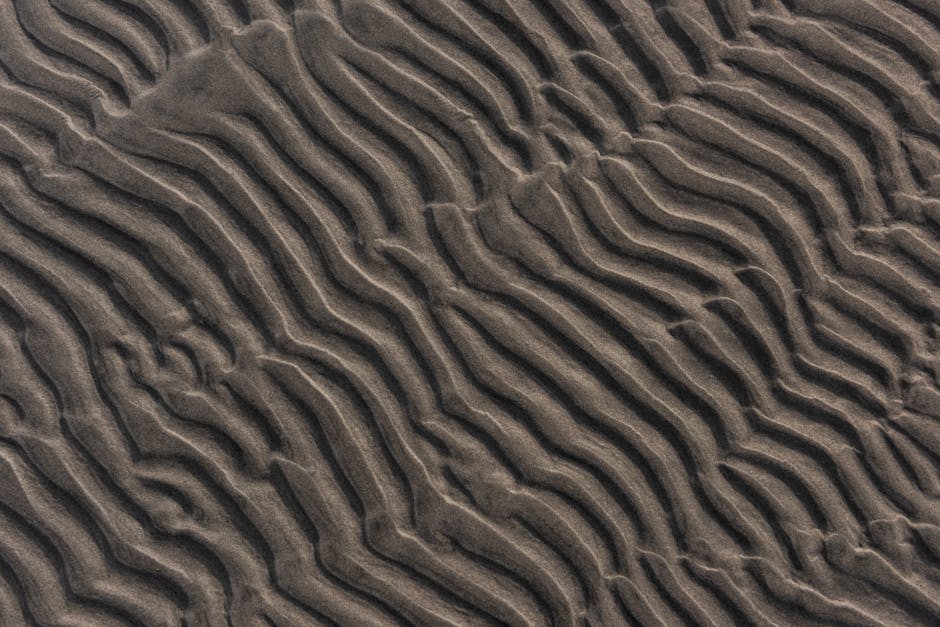
The Ubiquity of Patterns in the Natural World
Nature isn’t just a breathtaking spectacle; it’s a masterclass in efficiency and elegance, a testament to the power of underlying order. For those of us who’ve spent years dissecting the intricate workings of industries, there’s a profound resonance in observing the natural world. Patterns, often subtle and easily overlooked, are not merely decorative elements; they are the very architecture of life and the planet itself, the silent blueprints that dictate everything from the spiral of a galaxy to the branching of a tree.
Table of Contents
- The Ubiquity of Patterns in the Natural World
- Geometric Wonders: Fractals and Self-Similarity
- Case Study: The Lungs’ Fractal Design for Maximum Oxygen Exchange
- Spirals: The Golden Ratio and Fibonacci Sequence
- Symmetry: From Bilateral to Radial Harmony
- Tessellations and Packing Problems
- Emergent Patterns: The Sum of Simple Rules
- The Biomimicry Advantage: Learning from Nature’s Patterns
Understanding these fundamental patterns is key to unlocking the secrets of biological and geological processes. Consider the seemingly chaotic swirl of a hurricane or the intricate veins of a leaf. At first glance, they might appear as random expressions of elemental forces. Yet, beneath this apparent randomness lies a profound mathematical order. The Fibonacci sequence, for instance, emerges with astonishing regularity, appearing in the arrangement of seeds in a sunflower, the unfurling of a fern frond, and even the chambers of a nautilus shell. This sequence, a simple additive progression, reveals a deep-seated principle of growth and optimization that nature has honed over millennia.
The role of dedicated observation in uncovering these hidden structures cannot be overstated. It’s the patient gaze that notices the precise arrangement of petals on a flower, the subtle asymmetry in a bird’s flight, or the fractal geometry inherent in a snowflake. These aren’t accidents; they are the visible manifestations of underlying physical laws and evolutionary pressures. The dendritic branching of river systems, for example, mirrors the circulatory systems of our own bodies and the electrical networks that power our cities. This universality of form suggests a common language spoken by nature, a language of efficient transport and resource distribution. Recognizing these connections isn’t just an academic exercise; it’s a powerful source of inspiration for innovation, allowing us to borrow from nature’s proven designs to solve complex challenges in engineering, medicine, and beyond.
Geometric Wonders: Fractals and Self-Similarity
The universe, it turns out, isn’t just a canvas of grand gestures; it’s also a master of intricate detail, repeating its artistic vision on scales both microscopic and cosmic. This is the realm of fractals, a concept that, once you grasp it, unlocks a profound understanding of the hidden elegance and efficiency woven into the fabric of our natural world.
At its core, a fractal is a geometric shape exhibiting self-similarity. This means that if you zoom in on any part of a fractal, you’ll see a miniature version of the whole. This pattern repeats infinitely, creating astonishing complexity from relatively simple rules. Imagine a coastline: from space, you see its general shape. Zoom in, and you find bays and peninsulas. Zoom in further, and you discover individual coves and rocky outcrops, each with their own miniature versions of the larger features. This boundless detail, all contained within a finite overall shape, is the hallmark of a fractal.
Nature is replete with these self-similar marvels. Consider the delicate filigree of a snowflake, where each branch mirrors the structure of the entire crystal. Or the unfurling frond of a fern, where the main leaf is a scaled-down replica of the larger plant. Even the branching pathways of lightning, carving ephemeral, intricate patterns across the sky, or the seemingly chaotic explosion of a head of Romanesco broccoli, with its mathematically perfect spiral arrangement of florets, all whisper the same fractal language.
The mathematical beauty of fractals lies in their generative algorithms. Equations, often deceptively simple, are iterated repeatedly, with the output of one iteration becoming the input for the next. This iterative process, a fundamental concept in mathematics and computation, naturally leads to the emergence of self-similar structures. When these mathematical principles meet the raw energy and materials of the natural world, we see them manifest as these breathtaking geometric wonders. The efficiency of fractal patterns is also a key to their prevalence; they maximize surface area or distribute resources with remarkable economy, from the branching of blood vessels in our bodies to the root systems of plants.
Case Study: The Lungs’ Fractal Design for Maximum Oxygen Exchange
The human respiratory system is a prime example of fractal efficiency in action. To maximize the surface area available for gas exchange (oxygen into the bloodstream, carbon dioxide out), the lungs employ a fractal branching structure. The trachea branches into bronchi, which then branch into smaller bronchioles, and finally into millions of tiny alveoli. Each level of branching is a scaled-down version of the previous, creating an incredibly vast surface area within the confined space of the thoracic cavity. This fractal geometry allows us to efficiently absorb the oxygen we need to survive, a testament to nature’s elegant engineering solutions derived from hidden geometric principles.
Spirals: The Golden Ratio and Fibonacci Sequence
We often marvel at the intricate beauty of the natural world, the seemingly random yet perfectly formed arrangements that captivate our eyes. But beneath this surface of apparent chaos lies a profound mathematical order, a hidden language that speaks of efficiency, growth, and elegance. Today, we delve into one of nature’s most ubiquitous and inspiring patterns: the spiral, and its intimate connection to the mesmerizing Fibonacci sequence and the divine proportion known as the Golden Ratio.
Imagine starting with the simplest numbers: 0 and 1. Now, add them together to get the next number: 1. Then add the last two numbers (1 and 1) to get 2. Continue this process – 1+2=3, 2+3=5, 3+5=8, and so on – and you’ve just generated the Fibonacci sequence: 0, 1, 1, 2, 3, 5, 8, 13, 21, 34… What’s truly astonishing is how this simple additive progression pops up everywhere in the living world. Look at the petals on a flower – you’ll often find a Fibonacci number of them. Observe how seeds are packed in a sunflower head, or how the scales on a pineapple are arranged. They don’t just appear haphazardly; they follow this numerical blueprint, maximizing space and light exposure with remarkable efficiency.
This sequence is intrinsically linked to a magical number we call Phi (Φ), the Golden Ratio, approximately 1.618. As you go further into the Fibonacci sequence, the ratio of any number to the preceding number gets closer and closer to Phi. Phi isn’t just a mathematical curiosity; it’s an aesthetic marvel. Our brains seem to be hardwired to find proportions close to the Golden Ratio pleasing, which is why it appears in art, architecture, and even our own physical features. But its significance in nature goes beyond mere beauty.
Consider the growth of a nautilus shell. As the creature builds its home, it adds chambers in a spiral pattern that closely approximates a "Golden Spiral," a logarithmic spiral whose growth factor is Phi. This ensures that each new chamber is proportionally larger than the last, allowing for efficient expansion without drastically changing the overall shape. Even on a cosmic scale, the majestic sweep of spiral galaxies mirrors this fundamental pattern, suggesting that these elegant curves are a universal solution for growth and expansion.
From the humble pinecone to the grandest celestial structures, spirals governed by the Fibonacci sequence and the Golden Ratio are a testament to nature’s ingenuity. They remind us that sometimes, the most innovative solutions are found by looking to the timeless elegance of the natural world, and that within these hidden patterns lies a wellspring of inspiration for human creativity.
Symmetry: From Bilateral to Radial Harmony
Nature, in its infinite wisdom, often employs elegant principles to achieve functionality and beauty. Among these, symmetry stands out as a recurring theme, a silent architect shaping everything from the microscopic to the magnificent. It’s not just about aesthetics; these patterns are deeply rooted in survival and efficiency, offering a powerful blueprint for innovation.
We commonly encounter bilateral symmetry, where an organism can be divided into two mirror-image halves along a single plane. Think of the striking, perfectly matched wings of a butterfly, or the familiar outline of our own bodies. This type of symmetry is incredibly advantageous for creatures that need to move through their environment. It allows for streamlined locomotion, with paired limbs or fins providing balanced propulsion and direction. Furthermore, bilateral symmetry often correlates with centralized sensory organs, like eyes and ears, positioned at the front of the organism, facilitating focused perception and rapid response to stimuli. Imagine a predator that needs to see and react swiftly – bilateral symmetry is its visual and physical advantage.
Then there’s radial symmetry, where an organism can be divided into similar halves from the center outwards, like slices of a pie. The iconic starfish, with its five-fold symmetry, is a prime example. Flowers, too, often exhibit radial patterns in their petals, inviting pollinators from any direction. This symmetry is particularly beneficial for sessile or slow-moving organisms that need to interact with their environment from all sides. A sea anemone, for instance, can capture prey or sense danger approaching from any angle with its radially arranged tentacles.
While symmetry often dominates our perception of nature’s order, it’s crucial to remember that asymmetry also plays a vital role. Some organisms, like the humble snail with its coiled shell, display asymmetry that serves specific purposes. This deviation from perfect balance can be a result of evolutionary adaptations for unique niches or developmental processes.
Understanding these natural symmetries – from the precise mirroring of bilateral designs to the all-encompassing harmony of radial patterns – provides a profound source of inspiration for designers, engineers, and artists. It’s a reminder that elegant solutions to complex challenges often lie in the fundamental structures and efficiencies that life itself has perfected over millennia.
Tessellations and Packing Problems
Nature, in its relentless pursuit of efficiency and elegance, has mastered the art of fitting things together. This isn’t just about aesthetics; it’s about survival, resource optimization, and robust structural integrity. At the heart of this lies the fascinating world of tessellations, where shapes interlock perfectly, leaving no wasted space.
Think of the humble honeycomb. The hexagonal cells are not an arbitrary design choice. Hexagons are the most efficient shape for tessellating a plane, meaning they can tile a surface with the least amount of perimeter material for a given area. This translates directly to saving precious beeswax for the bees. Similarly, observe the scales on a fish. They overlap in a precise, tessellated pattern, providing a flexible yet impermeable armor against predators and the elements.
Even in seemingly chaotic formations, these patterns emerge. The intricate, polygonal cracks that form in dried mud are a beautiful example of a naturally occurring tessellation, driven by the forces of contraction and surface tension. In the mineral kingdom, the interlocking crystal structures of many geological formations showcase tessellations on a microscopic level, a testament to the fundamental rules of atomic arrangement.
The evolutionary advantage of these tessellated arrangements is undeniable. They represent ingenious solutions to fundamental engineering challenges, offering strength with minimal material, optimal surface area for exchange, and effective protection. These are not accidents; they are the result of eons of natural selection favoring the most efficient and resilient designs.
Beyond the immediate examples, tessellations and the related "packing problems" – how to arrange objects in the most compact way – are deeply influential in fields ranging from material science to logistics. Understanding how nature solves these puzzles provides a powerful blueprint for innovation, inspiring everything from new architectural designs to more efficient packaging solutions for our own manufactured goods.
Emergent Patterns: The Sum of Simple Rules
The world around us hums with an astonishing beauty, a beauty often born not from grand, intricate blueprints, but from the elegant dance of simple rules played out on a vast scale. This is the magic of emergent patterns: complex, breathtaking order that springs forth from the aggregation of countless small, individual interactions. Think of it as a grand symphony conducted by a thousand tiny musicians, each playing a single, simple note, but together creating something profoundly harmonious.
Consider a murmuration of starlings. No single bird orchestrates the swirling, breathtaking formations. Instead, each individual follows a few basic directives: stay close to your neighbors, avoid collisions, and match their speed and direction. Yet, from these humble, localized rules, an astonishing collective intelligence emerges, allowing the flock to evade predators with uncanny agility, a unified entity performing aerial ballets. The same principle applies to schools of fish, where each fish maintains proximity to its nearest companions, leading to mesmerizing, synchronized movements that confuse hunters.
Ant colonies offer another compelling example. An individual ant might follow a simple chemical trail, seeking food and depositing pheromones on its return. There’s no queen dictating every move, no central command center. Yet, the collective behavior of thousands of ants, driven by these local interactions, leads to the construction of elaborate nests, efficient foraging strategies, and sophisticated division of labor – a testament to emergent intelligence.
Even in the seemingly static world of minerals, we see this phenomenon. Crystal growth, from the delicate hexagonal structure of a snowflake to the jagged perfection of a quartz geode, arises from the simple, repetitive attraction and arrangement of atoms or molecules according to their chemical properties. The vast, ordered structure is an emergent property of these minuscule, rule-based interactions.
This concept of emergence is a cornerstone of understanding complex systems, from biological ecosystems to financial markets, and even the very workings of our own brains. It teaches us that to comprehend complexity, we don’t always need to dissect every minute detail of a grand design. Often, the most profound insights lie in understanding the simple, underlying rules and how their collective application can lead to unforeseen, extraordinary outcomes.
- Simple, local interactions are the building blocks of complex patterns.
- Emergence demonstrates that the whole can be greater than the sum of its parts.
- Understanding emergent patterns offers a powerful lens for innovation in diverse fields.
By recognizing these hidden patterns, we can begin to appreciate the universe’s inherent elegance and unlock new avenues for creativity, designing systems that harness the power of decentralized, rule-based interactions to achieve remarkable results.
The Biomimicry Advantage: Learning from Nature’s Patterns
The whispering algorithms of life, etched into the very fabric of our planet, offer an inexhaustible wellspring for innovation. For centuries, humanity has marveled at nature’s elegance, but it’s only in recent decades that we’ve begun to systematically decipher its hidden patterns and harness them for our own creative endeavors. This is the essence of biomimicry: looking to nature not just for inspiration, but for blueprints, for proven strategies honed over eons of evolution.
When we truly understand how a leaf captures sunlight with unparalleled efficiency, how a spider’s silk achieves astonishing tensile strength, or how a termite mound regulates temperature without a single watt of electricity, we unlock the potential for revolutionary technological and design innovations. These aren’t mere aesthetic borrowings; they are fundamental principles applied to human challenges. Consider the elegant efficiency of a bird’s wing, a design that has informed aircraft wing development for decades, leading to lighter, more fuel-efficient planes. Or the self-cleaning properties of the lotus leaf, a principle now replicated in paints, fabrics, and even building materials, reducing our reliance on harsh chemicals.
- Architectural Marvels: Think of the Eastgate Centre in Harare, Zimbabwe, a building that ingeniously mimics the passive cooling system of termite mounds. Its structure allows for natural ventilation, drastically reducing energy consumption. Similarly, the Shard in London, with its faceted design, draws inspiration from crystalline structures and seed pods, optimizing its structural integrity and light penetration.
- Material Science Breakthroughs: The remarkable adhesion of gecko feet, which allows them to scale vertical surfaces, has spurred the development of new adhesives that are strong, reusable, and leave no residue – a far cry from traditional glues. The structural integrity of bone and seashell, with their micro-architectures, is informing the creation of stronger, lighter composite materials for everything from automobiles to prosthetics.
- Fluid Dynamics and Energy: The streamlined efficiency of a shark’s skin, which reduces drag in water, has led to the development of specialized coatings for ships and swimwear, improving speed and fuel economy. The spiral patterns found in seashells and galaxies are being explored for optimizing the flow of fluids in pipes and designing more efficient turbines.
The future potential of leveraging nature’s inherent blueprints is staggering. As our understanding of biological systems deepens, we can anticipate solutions for challenges ranging from sustainable energy generation and waste management to advanced medical treatments and resilient infrastructure. Imagine cities that breathe, materials that heal themselves, and energy systems that mimic photosynthesis. Nature has already solved countless problems that plague humanity; we simply need to learn to read its elegant, time-tested code. By embracing biomimicry, we move beyond simply imitating nature to becoming truly collaborative partners with it, fostering a new era of innovation that is not only groundbreaking but also inherently sustainable.
Featured image by Trygve Finkelsen on Pexels