User-Centric Product Innovation
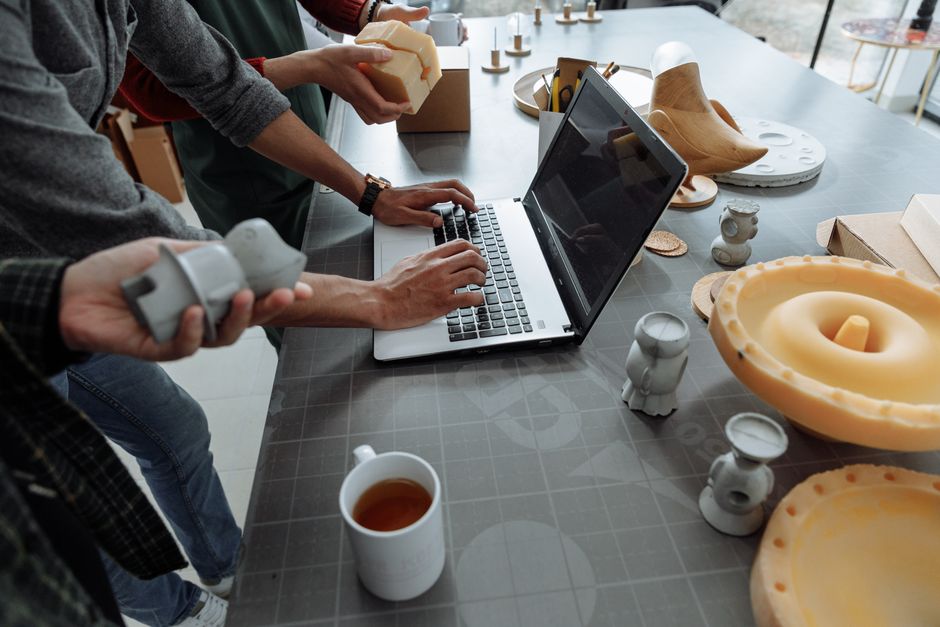
Table of Contents
- Defining User-Centric Product Innovation
- Understanding Your Users: Research and Discovery
- Ideation and Concept Development
- Designing for the User Experience (UX)
- Testing and Iteration: The Feedback Loop
- Measuring Success and Impact
- Building a User-Centric Culture
- Case Studies: User-Centric Innovation in Action
Defining User-Centric Product Innovation
At its heart, user-centric product innovation is a philosophy and a practice that places the user – not the technology, not the business goal in isolation, but the human being who will interact with the product – at the absolute center of every decision. It’s about building solutions that genuinely resonate with people, solving their real problems, and enhancing their lives, rather than forcing them to adapt to a product’s limitations.
This approach is fundamentally different from mere customer-centricity, which often focuses on transactional relationships and immediate purchase intent. While customer-centricity looks at who buys, user-centricity delves into why they need, how they use, and what their broader experience is with a product or service. Similarly, market-centricity, which prioritizes competitive analysis and market trends, can lead to me-too products or solutions that miss nuanced user needs. User-centricity, however, recognizes that truly disruptive innovation often arises from deeply understanding unmet needs that the market itself hasn’t yet articulated. It’s about looking beyond the obvious, to truly unlock innovation through a user-first lens.
The cornerstone of user-centricity is empathy. This isn’t just about sympathy; it’s the ability to deeply understand and share the feelings, needs, and motivations of another person. In product innovation, this translates to actively seeking to understand users’ pain points, frustrations, aspirations, and their existing behaviors. Methodologies like Empathy Mapping: Understand Users & Drive Innovation and robust User Research for Innovation are indispensable tools for cultivating this empathy, enabling teams to move beyond assumptions and into genuine understanding. Techniques such as User Persona Development for Creative Solutions further solidify this understanding by creating rich, representative profiles of target users.
The benefits of weaving user-centricity into the fabric of product development are profound. Firstly, it significantly drives improved adoption rates. When a product is designed with the user’s context, capabilities, and goals in mind, it’s intuitive, easy to learn, and genuinely useful. This directly leads to increased user engagement and reduced churn. Secondly, it fosters customer loyalty. Products that consistently solve problems and provide delightful experiences build strong emotional connections with users, turning them into advocates. This is often a byproduct of a well-executed User Journey Mapping for Innovation that identifies and addresses friction points. Finally, and perhaps most critically, it ensures superior market fit. By grounding innovation in validated user needs, businesses are far more likely to develop products that not only meet demands but also create new markets or disrupt existing ones, as explored in Understanding Disruptive vs. Sustaining Innovation.
- Prioritize user needs and pain points above all else.
- Cultivate empathy through active listening and observation.
- Validate assumptions with real user feedback throughout the development lifecycle.
- Design for intuitive usability and delightful experiences.
- Measure success by user adoption, satisfaction, and loyalty.
Embracing user-centricity is not just a strategic advantage; it’s a fundamental shift in mindset that fuels genuine Innovation & Creativity in Product Development. It often aligns seamlessly with frameworks like Lean Startup for Product Innovation and Agile for Product Innovation, which inherently promote iterative development based on user feedback. Furthermore, this approach can be a critical driver for Sustainable Product Design Innovations, as users increasingly demand products that are not only functional but also ethically and environmentally responsible. Mastering these interconnected approaches is key to developing products that truly stand the test of time and market. For a comprehensive guide, consider exploring resources like Master User-Centered Innovation Frameworks: Your Blueprint for Real-World Breakthroughs.
Understanding Your Users: Research and Discovery
At the heart of every truly innovative product lies a deep, almost intuitive, understanding of the user. It’s not enough to have a brilliant idea; you must also grasp the intricate needs, desires, and frustrations of the people you aim to serve. This phase of user-centric product innovation is about moving beyond assumptions and diving into genuine discovery. It’s where the magic of creativity truly begins to intersect with practical application, as outlined in our broader guide to Innovation & Creativity in Product Development.
The Dual Pillars: Qualitative and Quantitative Research
To truly understand your users, a blended approach to research is essential. Qualitative research delves into the "why" behind user behavior, exploring motivations, emotions, and experiences. Methods like in-depth interviews allow for rich, nuanced conversations, uncovering insights that a survey might miss. Ethnographic studies, where researchers immerse themselves in the user’s natural environment, provide invaluable context. Similarly, observational studies, whether conducted in person or remotely, offer a window into how people actually interact with products and services, revealing unspoken needs. These methods are crucial for building genuine empathy.
Complementing this, quantitative research provides the "what" and "how much," offering measurable data to validate hypotheses and identify trends. Surveys are a common tool for gathering opinions and preferences from a larger audience. Analytics from existing products or prototypes can reveal usage patterns, drop-off points, and popular features. A/B testing, a cornerstone of Lean Startup for Product Innovation, allows for direct comparison of different product variations to see which performs better against specific metrics. This data-driven approach ensures that your innovative leaps are grounded in solid evidence. For a comprehensive overview of these techniques, explore User Research for Innovation.
Bringing Users to Life: Personas and Journeys
Once you’ve gathered a wealth of information, it’s time to synthesize it into actionable insights. Persona development is a powerful technique for creating detailed, semi-fictional representations of your ideal target users. These personas go beyond demographics, encompassing their goals, motivations, pain points, and typical behaviors. A well-crafted persona acts as a constant reminder of who you’re designing for, ensuring that every decision is made with the user firmly in mind. This is a critical step for driving truly creative solutions, as detailed in our guide on User Persona Development for Creative Solutions.
Equally vital is customer journey mapping. This process involves visualizing the entire experience a user has with your product or service, from initial awareness to post-purchase engagement. By mapping out each touchpoint, you can identify crucial moments of delight and, more importantly, pinpoint areas of frustration or friction. Addressing these friction points is often where the most impactful innovations are born. Understanding these flows is central to designing exceptional user experiences, a topic thoroughly explored in User Journey Mapping for Innovation and User Journey Mapping for Creative Solutions.
The Underlying Driver: Jobs-to-be-Done
A framework that has revolutionized product thinking is the Jobs-to-be-Done (JTBD) theory. Instead of focusing solely on the product or the user’s demographics, JTBD posits that people "hire" products to get a "job" done in their lives. This perspective shifts the focus from features to the underlying motivations and desired outcomes. For instance, someone doesn’t buy a drill to own a drill; they buy it because they need to hang a picture. By understanding the fundamental "job" a user is trying to accomplish, you can unlock entirely new and more effective solutions. This framework is a powerful tool for truly understanding user needs, as discussed in User Needs Research for Creative Solutions.
FAQ: How can I ensure my research truly captures diverse user needs, especially for products aiming for accessibility?
This is a critical question for inclusive innovation. Beyond standard qualitative methods like interviews and observations, actively seek out and involve users with diverse abilities and backgrounds in your research process. Consider techniques like Designing for Accessibility in Product Innovation, which emphasizes user testing with assistive technologies and involving accessibility experts from the outset. For broader representation, explore Co-Creation Workshops for Product Innovation, where diverse groups can actively contribute to the innovation process.
FAQ: Once I have my user data, how do I translate it into concrete product features and innovations?
This transition is where creativity and structured thinking converge. You can leverage frameworks like SCAMPER for Product Innovation to brainstorm feature ideas based on your user insights, or delve into more systematic problem-solving with TRIZ for Product Innovation. The Jobs-to-be-Done framework also provides a direct link from user motivation to potential solutions. Remember, this is an iterative process; continuous feedback and validation through methods like Agile Product Development for Innovation are key.
Ideation and Concept Development
The engine of user-centric product innovation isn’t a whiteboard filled with abstract ideas, but a deep, empathetic understanding of the people you aim to serve. This phase, from raw ideation to a tangible concept, is where creativity meets practicality, guided by the voice of the user.
Techniques for User-Driven Ideation
Moving beyond internal brainstorming, truly innovative products emerge from actively involving users in the creative process. Co-creation workshops for product innovation are a powerful avenue, bringing together diverse users and stakeholders to collaboratively generate ideas. These sessions foster a shared vision and can uncover unexpected solutions. Platforms for idea generation, often leveraging digital tools, also allow for broader participation and continuous input from your target audience. Think of it as an ongoing dialogue, not a one-off event. Complementing these methods, insights gleaned from robust User Research for Innovation form the bedrock. Understanding user pain points, unmet needs, and aspirations is paramount. Techniques like Empathy Mapping: Understand Users & Drive Innovation are invaluable here, helping teams step into the user’s shoes.
Translating User Insights into Actionable Product Concepts
The challenge lies in transforming qualitative and quantitative user data into concrete product ideas. This requires a systematic approach to synthesis. After conducting thorough User Needs Research for Creative Solutions, the next step is to identify patterns and core problems. User Persona Development for Creative Solutions can then help crystallize these needs into defined user archetypes, making it easier to design for their specific contexts. Mapping out the user’s experience, for instance through User Journey Mapping for Innovation or its creative variant, User Journey Mapping for Creative Solutions, reveals critical touchpoints where innovation can have the most impact. These insights should then be framed as opportunities for new features, improved workflows, or entirely novel solutions. Frameworks like SCAMPER for Product Innovation can be applied to existing ideas or user problems to spark novel approaches.
- User-Centric Ideation Checklist:
- Actively involve users in idea generation sessions.
- Leverage digital platforms for continuous user feedback.
- Deeply understand user pain points and unmet needs.
- Translate research insights into clear problem statements.
- Develop user personas to represent target audiences.
- Map user journeys to identify key innovation opportunities.
- Brainstorm solutions addressing identified user needs.
- Consider ethical implications and Designing for Accessibility in Product Innovation.
Prototyping as a Tool for Validation and Refinement
Once initial concepts emerge, the path to a refined product concept is paved with prototypes. Prototyping is not about building a final product; it’s about learning quickly and affordably. From low-fidelity sketches and wireframes (think Wireframing for UI/UX Innovation) to interactive digital models, prototypes allow you to test assumptions and gather crucial feedback from users before significant investment is made. This iterative process of building, testing, and refining is central to a user-centric approach, ensuring that the developing product resonates with its intended audience. This also aligns perfectly with the principles of Agile Product Development for Innovation.
Minimum Viable Product (MVP) Strategy Informed by User Needs
The concept of a Minimum Viable Product (MVP), popularized by the Lean Startup for Product Innovation methodology, is a direct application of user-centric innovation. An MVP is the smallest possible product that can be released to users to gather the maximum amount of validated learning about customers. Crucially, its feature set should be dictated by the core user needs identified during research and concept development. Instead of building a feature-rich product that might miss the mark, an MVP focuses on delivering the essential value proposition, allowing for real-world validation and iterative improvement based on actual user behavior and feedback. This pragmatic approach minimizes waste and maximizes the chances of building a product that users truly want and need. This also ties into broader discussions about Innovation & Creativity in Product Development.
Designing for the User Experience (UX)
At the heart of any successful user-centric product lies a meticulously crafted user experience. It’s not just about making something look good; it’s about making it feel right. This means prioritizing intuitive and accessible design. Intuitive design leverages familiar patterns and mental models, ensuring users can navigate and interact with your product with minimal effort and cognitive strain. Accessibility, on the other hand, is non-negotiable. It means designing for everyone, regardless of ability. This includes considerations for visual impairments (e.g., sufficient color contrast, screen reader compatibility), motor impairments (e.g., keyboard navigation, larger touch targets), and cognitive differences. Investing in Designing for Accessibility in Product Innovation isn’t just a moral imperative; it broadens your potential user base and often leads to more robust and elegant solutions for all.
Once the foundational principles of intuition and accessibility are established, the focus shifts to information architecture and navigation best practices. A well-organized information architecture (IA) acts as the product’s skeletal structure, guiding users through its content and functionality logically. Think of it as the blueprint that ensures users can find what they need quickly and efficiently. Navigation is the pathways within that structure. Clear, consistent, and predictable navigation elements (menus, breadcrumbs, search bars) reduce frustration and prevent users from feeling lost. Tools like User Journey Mapping for Innovation are invaluable here, allowing you to visualize the paths users will take and identify potential friction points in their journey.
The UI design that supports user goals and reduces cognitive load is the visual manifestation of these principles. A cluttered or confusing interface bombards users with unnecessary information, forcing them to exert more mental energy than required. Effective UI design is clean, focused, and prioritizes the most critical actions. This involves thoughtful use of visual hierarchy, clear typography, and judicious placement of interactive elements. The goal is to make the user’s intended action the path of least resistance, thereby supporting their goals and minimizing frustration. Techniques like Wireframing for UI/UX Innovation are crucial early steps in visualizing and refining these interfaces before full development.
Furthermore, embracing personalization and adaptive interfaces elevates the user experience from good to exceptional. In today’s diverse digital landscape, a one-size-fits-all approach rarely suffices. Personalization tailors the product to individual user preferences, behaviors, and contexts. Adaptive interfaces, a more dynamic form of personalization, can adjust in real-time based on user interaction, environmental factors, or device capabilities. This could manifest as suggested content, customized dashboards, or interfaces that automatically adjust to screen size. As noted by McKinsey & Company, effective personalization can significantly boost customer engagement and loyalty. The strategic application of AI-Powered Product Design Innovation is increasingly playing a pivotal role in achieving sophisticated levels of personalization and adaptability.
FAQ: How do we ensure our product is both intuitive and accessible?
Achieving both intuitive and accessible design requires a multi-pronged approach. Start with thorough User Needs Research for Creative Solutions to understand your target audience’s diverse needs and abilities. Apply established design heuristics like Nielsen’s 10 Usability Heuristics, which promote learnability and efficiency. For accessibility, adhere to Web Content Accessibility Guidelines (WCAG) principles, focusing on perceivability, operability, understandability, and robustness. Regular usability testing with diverse user groups, including those with disabilities, is paramount to identify and rectify any barriers. Remember, accessibility benefits everyone by leading to clearer, more organized, and more universally usable products.
FAQ: What are the most common pitfalls in information architecture and navigation?
Common pitfalls include creating overly complex site maps that overwhelm users, inconsistent navigation across different sections of the product, and relying too heavily on jargon or technical terms that users may not understand. Another frequent mistake is the “flat” information architecture, where everything is at the same level, making it difficult to find specific items. Poor search functionality, where users can’t find what they’re looking for even if it exists, is also a major issue. Investing time in robust User Persona Development for Creative Solutions and employing clear labeling conventions can significantly mitigate these problems. Consider the principles outlined in Master User-Centered Innovation Frameworks: Your Blueprint for Real-World Breakthroughs to guide your IA and navigation strategy.
Testing and Iteration: The Feedback Loop
The most brilliant product concept, born from deep User Research for Innovation and a thorough understanding of needs, is still just an idea until it’s brought to life and refined. This is where the critical phase of testing and iteration takes center stage. It’s not about launching a finished product; it’s about launching a product that is ready to be improved, guided by the very users it’s designed to serve.
Usability testing is your first line of defense against design flaws and usability headaches. This involves observing real users interacting with your product or prototype in a controlled environment. Are they finding what they need? Are the workflows intuitive? Where do they get stuck or confused? Detailed observations during usability testing can uncover subtle but significant friction points that might otherwise go unnoticed. This formative feedback is invaluable for making targeted adjustments, ensuring that the user’s path through the product, as envisioned in User Journey Mapping for Innovation, is as smooth and effective as possible.
Beyond controlled testing, beta testing and early adopter programs offer a crucial window into how your product performs in the wild. By releasing an early version to a select group of users, you gain insights into real-world usage patterns, unexpected issues, and potential feature requests in diverse environments. These early adopters act as invaluable partners, providing honest feedback that fuels the engine of continuous improvement. This aligns perfectly with the principles of the Lean Startup for Product Innovation methodology, which emphasizes validated learning through experimentation.
The true power of user-centric product innovation lies in leveraging user feedback for continuous iteration and improvement. This isn’t a one-time event; it’s an ongoing commitment. Every piece of feedback, whether from usability tests, beta programs, customer support channels, or analytics, should be analyzed, prioritized, and acted upon. This iterative cycle ensures that your product evolves in lockstep with user needs and market dynamics. Techniques like SCAMPER for Product Innovation can help brainstorm new approaches based on identified user pain points.
This philosophy is deeply embedded in Agile methodologies and their role in user-centric development. Agile frameworks, such as Scrum or Kanban, are inherently designed for flexibility and responsiveness. They break down development into short, iterative cycles called sprints, allowing for frequent testing, feedback integration, and adaptation. This ensures that development teams can quickly pivot based on user input, making Agile Product Development for Innovation a cornerstone of modern, user-focused product creation. The iterative nature of Agile development is a natural complement to methodologies like Six Sigma for Product Innovation, which focus on process improvement and defect reduction, ensuring that both the user experience and the underlying quality are continuously enhanced.
FAQ: How do I ensure feedback from beta testers is actionable?
To make beta tester feedback actionable, provide clear channels for reporting bugs and suggestions. Categorize feedback (e.g., usability issues, feature requests, bugs). Prioritize feedback based on impact and feasibility, and communicate back to your beta testers about how their input is being used. For structured feedback, consider using surveys or in-app feedback tools that guide users through specific questions related to their experience. This systematic approach ensures that feedback directly informs your Innovation & Creativity in Product Development efforts.
FAQ: What’s the difference between usability testing and A/B testing?
Usability testing focuses on observing how users interact with a product to identify design problems and areas of confusion. It’s qualitative, aiming to understand the ‘why’ behind user behavior. A/B testing, on the other hand, is quantitative. It involves presenting two variations of a design element (e.g., a button color or headline) to different user segments to see which performs better against a specific metric (like conversion rate). Both are vital for optimizing user experience, but they serve different purposes. You might use usability testing to discover an issue, and then A/B testing to validate the effectiveness of your proposed solution.
FAQ: How can I incorporate accessibility into my testing and iteration process?
Accessibility should be a core consideration from the outset and integrated into all testing phases. This includes conducting usability testing with participants who have disabilities, using assistive technologies during testing (e.g., screen readers), and ensuring your design and development teams are educated on accessibility standards like WCAG (Web Content Accessibility Guidelines). Tools like WAVE or Lighthouse can help identify accessibility issues automatically. Prioritizing Designing for Accessibility in Product Innovation not only broadens your user base but also leads to more robust and intuitive designs for everyone.
By embracing a continuous loop of testing, feedback, and iteration, organizations can move beyond mere product development to truly foster Sustainable Product Design Innovations that resonate with users and stand the test of time. This commitment to refinement is a hallmark of successful user-centric product innovation and a key differentiator in today’s competitive landscape. The Master User-Centered Innovation Frameworks: Your Blueprint for Real-World Breakthroughs can provide a structured approach to integrating these iterative processes.
Measuring Success and Impact
Truly user-centric product innovation isn’t just about creative ideation; it’s about delivering tangible value to your users and, consequently, to your business. This requires a robust approach to measuring success and understanding the ongoing impact of your efforts. Relying solely on gut feelings or vanity metrics is a recipe for stagnation. Instead, we must embrace data and continuous feedback loops.
The cornerstone of measuring success for user-centric products lies in identifying and tracking relevant Key Performance Indicators (KPIs). While these will vary based on your specific product and goals, some universally valuable metrics include:
- Net Promoter Score (NPS): This classic metric gauges customer loyalty by asking users how likely they are to recommend your product on a scale of 0-10. A consistently high NPS is a strong indicator that your product is resonating with its intended audience.
- Customer Satisfaction (CSAT): Typically measured through short surveys after specific interactions, CSAT directly assesses user satisfaction with a particular feature or experience.
- Engagement Metrics: These can be a goldmine of insight. Think about metrics like daily/monthly active users (DAU/MAU), feature adoption rates, session duration, task completion rates, and churn rate. These quantitative measures reveal how users are interacting with your product.
- Conversion Rates: For products with specific desired actions (e.g., sign-ups, purchases, content consumption), tracking conversion rates clearly demonstrates whether your user-centric design is effectively guiding users towards those goals.
Beyond these high-level KPIs, a deeper dive into analyzing user behavior and engagement data is crucial. Tools like Amplitude, Mixpanel, or even Google Analytics (with proper event tracking) can provide granular insights into user flows, friction points, and areas of high engagement. Understanding which features are being used, which are being ignored, and where users drop off in their journeys are invaluable for iterative improvement. This analytical process complements the foundational work done during User Research for Innovation.
The work doesn’t stop once a product launches. Gathering ongoing feedback post-launch is non-negotiable for sustained user-centricity. This can take many forms:
- In-app feedback widgets: Allow users to provide context-specific comments.
- Surveys: Targeted questionnaires to specific user segments.
- Usability testing sessions: Observing users interact with the live product.
- Customer support interactions: Analyzing common pain points reported by users.
- Community forums and social media monitoring: Engaging with your user base where they naturally gather.
This continuous feedback loop, often informed by User Journey Mapping for Innovation, ensures that your product evolves in lockstep with user needs and expectations. It’s also where you can identify opportunities for Sustainable Product Design Innovations by understanding how users perceive the long-term value and impact of your offerings.
Finally, demonstrating the Return on Investment (ROI) of user-centric innovation is paramount for securing continued investment and buy-in. This involves connecting your user-centric efforts directly to business outcomes. For example:
- Reduced support costs: Products designed with user needs in mind often lead to fewer support tickets.
- Increased customer lifetime value (CLTV): Satisfied and engaged users are more likely to remain customers.
- Faster time-to-market: By validating user needs early, you reduce the risk of building something nobody wants, as advocated by the Lean Startup for Product Innovation methodology.
- Enhanced brand reputation: Positive word-of-mouth and a reputation for user-friendliness can significantly impact market perception.
To illustrate how these metrics and feedback mechanisms can be structured, consider this table:
| Measurement Area | Key Metrics | Data Collection Method | Impact on ROI |
|---|---|---|---|
| User Satisfaction & Loyalty | NPS, CSAT, Customer Effort Score (CES) | Surveys (post-interaction, periodic), In-app feedback | Increased retention, reduced churn, positive WOM, higher CLTV |
| Product Engagement | DAU/MAU, Session duration, Feature adoption, Task completion rate | Product analytics platforms, Heatmaps, Funnel analysis | Deeper user engagement, better feature prioritization, identification of growth opportunities |
| User Problem Resolution | Support ticket volume, Resolution time, First contact resolution rate | Customer support software, Post-support surveys | Reduced operational costs, improved user experience, increased efficiency |
By diligently measuring success and impact, and by continuously integrating user feedback into your development cycle, you move beyond mere creativity to achieve impactful, sustainable innovation. This holistic approach ensures your products don’t just capture attention but also deliver lasting value, aligning perfectly with the principles of Innovation & Creativity in Product Development. It’s a systematic way to validate your assumptions and refine your strategies, much like how Six Sigma for Product Innovation focuses on process improvement.
Building a User-Centric Culture
True user-centricity isn’t a feature you bolt onto a product; it’s the bedrock upon which great products are built and sustained. It requires a fundamental shift in how teams operate, moving from an inside-out perspective to an outside-in one, where the user’s needs, desires, and pain points are the primary drivers of innovation and development. This transformation is a continuous journey, demanding deliberate effort and a commitment to nurturing specific cultural elements.
At the heart of a user-centric culture lies fostering empathy across teams. This means more than just understanding user demographics; it involves deeply connecting with their experiences, motivations, and emotional responses. Techniques like Empathy Mapping: Understand Users & Drive Innovation are invaluable here, allowing individuals from engineering to marketing to step into the user’s shoes. When teams develop a shared understanding of who they are building for, their work naturally becomes more purposeful and impactful. This also extends to considering diverse user needs, as highlighted in Designing for Accessibility in Product Innovation.
This empathetic understanding then fuels the integration of user research into the product lifecycle. User research should not be an afterthought or a phase confined to the beginning of a project. Instead, it should be a continuous thread woven through every stage, from initial ideation to post-launch iteration. Regularly consulting with users through methods like User Needs Research for Creative Solutions and User Journey Mapping for Creative Solutions ensures that development remains aligned with evolving user expectations. This commitment to ongoing feedback is a hallmark of successful Agile Product Development for Innovation and forms the backbone of frameworks like the Lean Startup for Product Innovation.
Crucially, a user-centric culture empowers teams to make user-informed decisions. This means moving away from top-down directives and instead equipping individuals at all levels with the insights and autonomy to act on what they’ve learned from users. When developers understand the "why" behind a feature request based on user feedback, they can often find more creative and effective solutions than a prescriptive mandate might allow. This empowerment fosters ownership and drives greater innovation, aligning with the principles of Innovation & Creativity in Product Development.
Case Study: Spotify’s User-Driven Feature Evolution
Spotify’s success is deeply rooted in its commitment to understanding and responding to its vast user base. By meticulously analyzing listening habits, user feedback channels, and conducting extensive User Research for Innovation, they’ve been able to introduce and refine features like personalized playlists (Discover Weekly, Release Radar) and the collaborative playlist functionality. These features weren’t born from a vacuum; they emerged from observing how users interacted with music and with each other, demonstrating a powerful feedback loop that continuously informs their product roadmap and fuels their growth. This user-centric approach allows them to adapt to changing user preferences and maintain their competitive edge in a dynamic market.
Finally, leadership’s role in championing user-centricity cannot be overstated. Leaders set the tone and provide the strategic direction. When leaders consistently prioritize user feedback, invest in user research resources, and celebrate user-centric wins, it signals to the entire organization that this approach is not optional, but essential. They must actively advocate for user understanding and create an environment where curiosity about the user is rewarded. This leadership commitment is crucial for driving a sustained focus on user needs, ultimately leading to the creation of products that resonate deeply and achieve lasting success. Ultimately, building this culture is key to mastering User-Centered Innovation Frameworks: Your Blueprint for Real-World Breakthroughs.
Case Studies: User-Centric Innovation in Action
The most impactful innovations rarely spring fully formed from a brilliant individual’s mind. Instead, they emerge from a deep, empathetic understanding of human needs, desires, and frustrations. User-centricity isn’t just a buzzword; it’s a proven pathway to creating products that resonate, solve real problems, and ultimately, achieve market success. This section explores companies that have harnessed the power of the user, dissecting their strategies and extracting actionable lessons.
A prime example of user-centric innovation can be found in the evolution of the smartphone. Early mobile phones were primarily communication devices. However, companies like Apple, through meticulous User Research for Innovation, observed how people interacted with technology beyond mere calls and texts. They saw a desire for entertainment, information access, and sophisticated tools within a single, portable device. This led to the iPhone, a product that didn’t just improve on existing features but fundamentally redefined user expectations. The intuitive touch interface, the App Store ecosystem, and the seamless integration of various functionalities were all direct responses to observed and anticipated user behaviors. Understanding the entire User Journey Mapping for Innovation allowed them to anticipate needs before users even articulated them.
Similarly, Airbnb’s disruptive success can be attributed to its unwavering focus on the host and guest experience. Rather than simply creating another booking platform, they delved into the anxieties and aspirations of both parties. For hosts, it was about trust and ease of managing rentals. For travelers, it was about authentic experiences and finding affordable, unique accommodations. Through extensive Empathy Mapping: Understand Users & Drive Innovation and direct feedback loops, Airbnb iteratively improved its platform, addressing concerns around safety, communication, and payment processing. Their success demonstrates how a deep understanding of user pain points can unlock entirely new market opportunities. This approach aligns with principles of Lean Startup for Product Innovation, focusing on validated learning and rapid iteration based on user feedback.
Case Study: Dyson’s Bagless Vacuum Revolution
James Dyson’s iconic vacuum cleaner is a testament to user-centric problem-solving. Frustrated by the declining suction power of traditional bagged vacuums as they filled, Dyson spent years researching and experimenting. He observed that cyclone technology, used in industrial sawmills to separate dust from air, could be adapted for domestic use. This insight, combined with a relentless pursuit of a better user experience—no more buying bags, consistent suction power, and a more hygienic emptying process—led to the development of the world’s first bagless vacuum. This wasn’t just an incremental improvement; it was a complete rethinking of a household appliance based on a fundamental user need and a clever application of existing technology. This spirit of challenging the status quo is at the heart of true **Innovation & Creativity in Product Development**.
However, user-centricity is not a foolproof guarantee of success, and missteps can be instructive. Companies that merely go through the motions of user research without genuine commitment or fail to act on the insights risk creating products that miss the mark. A common pitfall is confusing user wants with user needs. While users might express a desire for a specific feature, a deeper dive into their underlying problems and goals, often revealed through User Needs Research for Creative Solutions, might point to a more effective and elegant solution. For instance, early attempts at voice-controlled assistants, while responding to a desire for hands-free interaction, often suffered from poor natural language understanding and a limited range of commands, failing to truly meet the underlying need for seamless and intuitive control.
Another critical lesson is the importance of inclusive design, a vital aspect of Designing for Accessibility in Product Innovation. Products designed with a narrow user base in mind often exclude significant portions of the population, limiting their potential reach and impact. Conversely, innovations that embrace accessibility from the outset, such as the development of screen readers or adaptive controllers for gaming, not only serve marginalized communities but often lead to more robust and user-friendly designs for everyone. This aligns with a broader understanding of Sustainable Product Design Innovations, where long-term viability is considered through inclusive and responsible design. The pursuit of user-centricity, when done right, is a journey of continuous learning and adaptation, a core tenet of Master User-Centered Innovation Frameworks: Your Blueprint for Real-World Breakthroughs.
Featured image by Thirdman on Pexels