Unlock Hidden Genius: The Power of Micro-Observations in Everyday Life
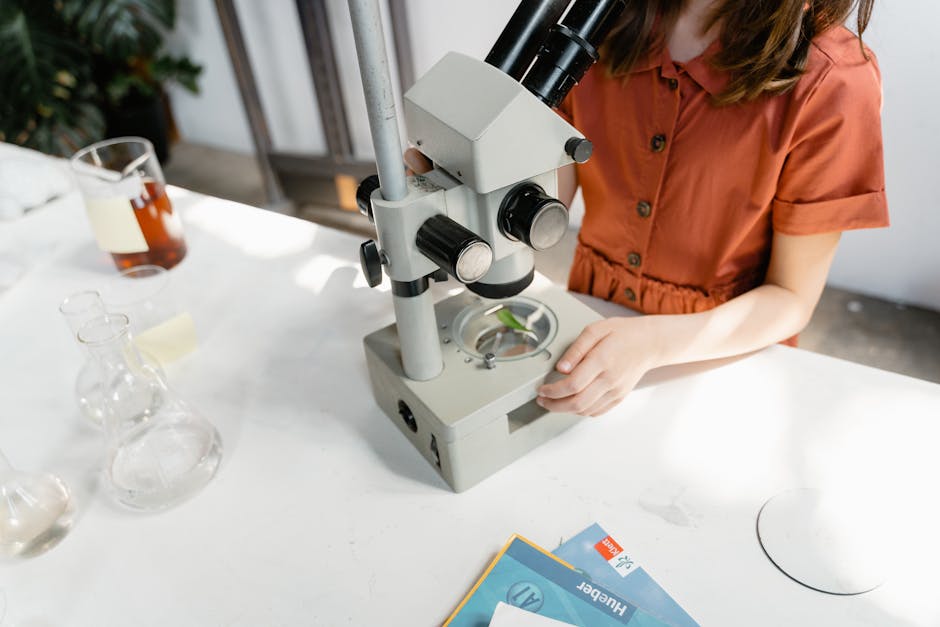
Unveiling the Unseen: The Remarkable Power of Micro-Observations
Ever feel like you’re on autopilot, moving through your day without truly seeing what’s around you? You’re not alone. In our fast-paced world, it’s easy to let the mundane blur into the background, missing the subtle details that hold immense potential. But what if I told you that within these overlooked moments lies a powerful tool for innovation, problem-solving, and a richer understanding of the world? Welcome to the realm of micro-observations.
Think about it: how many times have you noticed a small inefficiency, a fleeting expression, or an unusual pattern, only to dismiss it? These aren’t just random occurrences; they are whispers of insight waiting to be heard. Developing the habit of micro-observation can transform your perception, turning everyday experiences into fertile ground for discovery and personal evolution.
Table of Contents
- Why Micro-Observations Matter
- The Science Behind Noticing
- Cultivating Your Observational Skills
- Micro-Observations in Action
- A Step-by-Step Guide to Sharpening Your Micro-Observation Skills
- Conclusion: Embracing the Details
- References
Why Micro-Observations Matter
Micro-observations are the tiny, granular details that often escape our notice because they seem insignificant. Yet, it’s precisely these details that can reveal unmet needs, spark novel ideas, and provide solutions to complex problems. In fields ranging from product development to scientific research, the ability to spot subtle anomalies or patterns is often the catalyst for breakthroughs. Imagine noticing how certain shipping cartons were consistently damaged, leading to the innovation of Double Life Shipping Cartons that improved product protection. This is the power of observing the seemingly small.
Furthermore, in a world saturated with information, the ability to filter and identify relevant micro-observations is crucial. It’s not about seeing everything, but about seeing the right things. This selective attention, honed through practice, allows us to cut through the noise and focus on what truly matters, whether it’s understanding customer behavior or identifying a potential flaw in a process.
The Science Behind Noticing
Our brains are wired to notice the new, the unexpected, and the potentially threatening. This is an evolutionary survival mechanism. However, in modern life, this hyper-vigilance can be exhausting, leading us to tune out stimuli. Micro-observation training works by retraining our attention, not to be constantly on high alert, but to be deliberately curious and engaged with our environment. Cognitive science suggests that focused attention, a key component of observation, strengthens neural pathways associated with perception and memory.
Research in cognitive psychology highlights the role of ‘attention residue’ – the mental baggage left behind from a previous task, hindering our ability to focus on the present. Practicing micro-observations, especially through mindfulness, can help mitigate this, allowing for clearer perception and deeper processing of current stimuli. Understanding how our own cognitive biases can affect perception is also vital; being aware that we might overlook certain details because they don’t fit our preconceived notions is the first step to overcoming it.
Cultivating Your Observational Skills
Developing the capacity for micro-observation is a skill that can be learned and honed with consistent effort. It’s a journey of intentionality, moving from passive reception to active engagement with your surroundings.
Mindfulness as a Foundation
At its core, mindfulness is about paying attention to the present moment without judgment. This practice is the bedrock of effective observation. By quieting the internal chatter and focusing on sensory input – sights, sounds, smells, textures – you create the mental space to notice details you would otherwise miss. Regular mindfulness exercises, even just a few minutes a day, can significantly enhance your ability to be present and observant.
Asking the ‘Why’ and ‘How’ Questions
Once you notice something, don’t just let it pass. Engage with it by asking probing questions. Why is this happening? How is this designed? What is the underlying mechanism? This curious mindset, akin to how researchers approach Product Lifecycle Management (PLM): Boost Profitability & Innovation, encourages deeper exploration of everyday phenomena. This questioning can reveal unexpected insights.
The Power of Documentation
Our memories are fallible. To truly harness the power of micro-observations, it’s essential to record them. This could be a simple notebook, a voice memo app, or a dedicated journaling practice. Documenting what you observe, no matter how trivial it seems, creates a personal repository of insights and ideas. This collection can be invaluable when you’re looking for inspiration or need to recall a specific detail later in the New Product Development Lifecycle.
Micro-Observations in Action
The application of micro-observations extends far beyond theoretical exercises. They are practical tools that can enrich various aspects of life.
Innovation and Problem-Solving
Many groundbreaking innovations started with someone noticing a small problem or inefficiency. The invention of the Post-it Note, for example, stemmed from a weak adhesive that didn’t stick well. By observing this ‘failure’ differently, a new application was born. Similarly, observing how wildlife interacts with its environment can lead to responsible practices, as detailed in guides on Observing Wildlife Responsibly. Even understanding the lifespan of simple objects, like a light bulb with a Socket Extends Bulb Life, can be an outcome of meticulous observation.
Enhancing Relationships and Empathy
Paying attention to the subtle cues in human interaction – a fleeting expression, a change in tone, a body language shift – can significantly improve your emotional intelligence and empathy. Noticing these micro-observations allows you to better understand others’ feelings and respond more effectively, fostering deeper connections. It’s about seeing the person beyond their words.
Personal Growth and Self-Awareness
Observing your own thoughts, emotions, and behaviors without judgment is a powerful path to self-awareness. Noticing patterns in your reactions, triggers, or habits can reveal areas for personal growth. This introspective practice can help you understand your motivations and make conscious choices aligned with your values, much like how historical data might be found on Road Maps On Microfilm, offering a pathway to understanding past decisions.
A Step-by-Step Guide to Sharpening Your Micro-Observation Skills
Ready to start seeing the world with new eyes? Follow these steps:
- Set Intentions Daily: Before you start your day, decide to be more observant. Choose a specific focus, like observing people’s interactions, the details in nature, or the functionality of everyday objects.
- Practice Active Listening: When in conversations, focus not just on the words but on the tone, pauses, and non-verbal cues. Try to understand the underlying message.
- Engage Your Senses: When experiencing something new or familiar, consciously engage all your senses. What do you see, hear, smell, taste, and feel? Note the subtle differences.
- Ask ‘Why?’ and ‘How?’: When you encounter something interesting or unusual, don’t just accept it. Ask yourself why it’s designed that way or how it functions. This prompts deeper investigation.
- Seek Novelty: Intentionally expose yourself to new environments, experiences, or information. This creates more opportunities to notice new details.
- Review and Reflect: At the end of the day, take a few minutes to review your observations. What did you notice? What insights did you gain? Did anything surprise you?
- Document Your Findings: Use a journal, app, or voice recorder to jot down your observations. This reinforces the habit and creates a valuable record of your insights.
- Seek Feedback (Optional but Recommended): Discuss your observations with trusted friends or colleagues. Their perspectives can offer new layers of understanding.
Conclusion: Embracing the Details
Micro-observations are not just about noticing; they are about understanding. By cultivating this skill, you unlock a richer, more insightful experience of life. The world is teeming with subtle wonders and hidden solutions, waiting for the observant eye. Start today. Look closer. Ask more questions. You might be surprised at what you discover in the seemingly ordinary.
References
- Sacks, O. (2010). The Mind’s Eye. Alfred A. Knopf.
- Kahneman, D. (2011). Thinking, Fast and Slow. Farrar, Straus and Giroux.
- Norman, D. A. (2013). The Design of Everyday Things: Revised and Expanded Edition. Basic Books.
- Csikszentmihalyi, M. (1996). Creativity: Flow and the Psychology of Discovery and Invention. Harper Perennial.
- Klein, G. (2009). Streetlights and Smartphones: How Intuition Works. MIT Technology Review.
- Harvard Business Review. (n.d.). The Power of Observation.
Featured image by MART PRODUCTION on Pexels