Mastering TRIZ Separation Principles for Unstoppable Innovation
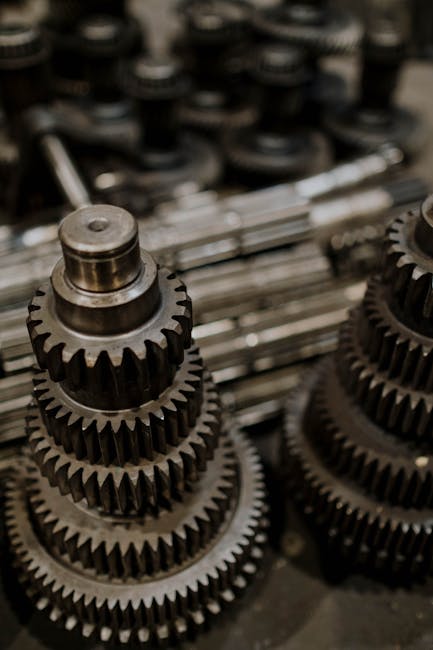
Let’s cut to the chase. In the trenches of innovation, we often face problems that feel like tangled messes. You can’t simply force a solution; you need a smarter approach. That’s where TRIZ comes in, and specifically, its powerful Separation Principles. Forget academic jargon; this is about hard-won insights for getting real results.
Table of Contents
- Understanding Separation Principles in TRIZ
- The 5 Separation Principles Explained
- Myth vs. Fact: Common Misconceptions about Separation
- Applying Separation Principles in Practice
- Executive Summary: Key Takeaways
- Further Reading & Frameworks
Understanding Separation Principles in TRIZ
The core idea behind TRIZ is that innovative solutions often follow universal patterns. The Separation Principles are a set of strategies for resolving technical contradictions by breaking down a complex problem into simpler, more manageable components. Instead of trying to solve a problem all at once, you divide it.
Why is this so critical for innovation? Because complex systems are, well, complex. Trying to change one aspect often negatively impacts another, creating those pesky technical contradictions. Separation allows you to isolate the conflicting elements, address them individually, and then reintegrate them without the negative interplay. It’s about targeted problem-solving, not brute force.
This aligns directly with the foundational concepts in TRIZ. If you’re new to TRIZ, understanding these core ideas is paramount. Check out TRIZ Fundamentals Explained: Your Guide to Inventive Problem Solving for a solid start.
- TRIZ Separation Principles break down complex problems by isolating conflicting elements.
- This method resolves technical contradictions by addressing issues individually.
- The five principles offer distinct strategies for deconstructing problems.
- Applying these principles leads to more targeted and effective innovative solutions.
The 5 Separation Principles Explained
TRIZ identifies five key ways to separate conflicting requirements or functions. Let’s break them down with practical implications.
Separation in Space
Concept: Make the conflicting elements exist in different physical locations or environments. This often involves dividing a single object or system into components that can be separated spatially.
Examples: A classic example is a tool with two functions that interfere. Instead of a single tool, you create two separate tools that can be used sequentially or are designed to be physically apart when one function is active.
Application: Think about a device that needs to be both rigid and flexible. You might design it with rigid components in one area and flexible joints or materials in another, spatially separated.
Separation in Time
Concept: Ensure the conflicting requirements are met at different points in time. The problematic interaction or state only occurs during a specific phase.
Examples: Consider a machine part that needs to be strong during operation but easily removable for maintenance. The ‘strength’ is required during use (time 1), and ‘removability’ is required after use (time 2).
Application: This is common in manufacturing processes where a material might need to be heated at one stage and cooled at another, with the conflicting states (hot vs. cool) never overlapping.
Upon Condition Between Part and Whole
Concept: Make a component or attribute of a system beneficial only when it’s part of the whole, or detrimental when it’s separated from it. The condition for its beneficial action is its integration within the system.
Examples: A locking mechanism that only works when the door is closed (part of the whole system) but can be freely manipulated when the door is open (separated).
Application: Imagine a safety feature that is only armed when the main system is active. The ‘safety’ is conditional on being part of the functioning whole.
Between Parts and the Whole System
Concept: This principle focuses on separating the system into its individual parts, or separating parts from the whole system when necessary. It’s about understanding the interactions and dependencies at different levels of granularity.
Examples: A modular electronic device where components can be individually upgraded or replaced without affecting the entire system. Or, conversely, a system where a specific part only functions correctly when integrated with the others.
Application: In software development, this could mean separating modules for independent testing or deployment. This relates to understanding how different First Principles Thinking can be applied at various system levels.
Separation Between Interacting Objects
Concept: If two objects influence each other negatively, separate them. This can mean physically separating them, or neutralizing their interaction.
Examples: Two chemicals that react explosively when mixed are kept in separate containers. In mechanics, this might be preventing two moving parts from rubbing against each other by introducing a barrier or a different type of interface.
Application: In product design, if a heat-generating component is too close to a heat-sensitive component, you might separate them with insulation or a ventilation gap.
Myth vs. Fact: Common Misconceptions about Separation
Myth: Separation is just about physically taking things apart.
Fact: Separation is a conceptual tool. It can be spatial, temporal, conditional, or even involve neutralizing interactions, not just physical disassembly.
Myth: Separation always makes a system more complex.
Fact: While it might introduce more components or steps, separation simplifies problem-solving by isolating contradictions. The resulting system design is often elegant and robust, despite apparent complexity. It’s about managing complexity, not avoiding it.
Applying Separation Principles in Practice
So, how do you actually use these principles on the factory floor or in your R&D lab?
- Identify the Contradiction: The first step, as with most TRIZ methodologies, is to clearly define the technical contradiction. What is the ideal situation, and what is the undesirable side effect? For instance, ‘I need the product to be strong, but also lightweight.’ The TRIZ Contradiction Matrix can be invaluable here, helping you pinpoint the conflicting parameters.
- Analyze the Conflict: Understand why these two states are currently incompatible. Is it spatial proximity? Simultaneous occurrence? Interaction between components?
- Select the Appropriate Separation Principle: Based on your analysis, choose the most fitting principle. If strength is needed in one part of the structure and lightness in another, ‘Separation in Space’ is a strong candidate. If a material needs two different properties at different stages of a process, ‘Separation in Time’ is key.
- Brainstorm Solutions: Once a principle is selected, brainstorm specific ways to implement it. Don’t censor ideas at this stage; even seemingly wild concepts can spark innovation. This is where you might leverage other TRIZ Tools & Techniques.
- Evaluate and Integrate: Refine the brainstormed solutions. Can the separated elements be easily recombined or managed? Does the new design truly resolve the contradiction without introducing worse problems? The goal is a net improvement, often leading to a higher level of ideality.
Anticipating Objections: You might think, ‘This sounds like it adds cost or complexity.’ It can, initially. But the payoff is a robust solution that avoids the pitfalls of compromise. Instead of a ‘good enough’ design that satisfies neither requirement fully, you get a design that excels in both, often with clever engineering.
Executive Summary: Key Takeaways
- TRIZ Separation Principles are powerful tools for resolving technical contradictions by dissecting problems.
- The five principles (Space, Time, Condition Between Part/Whole, Between Parts/Whole System, Interacting Objects) offer diverse strategies.
- These principles help isolate conflicting requirements, enabling targeted solutions.
- By applying separation, innovators can move beyond compromises and achieve higher levels of system ideality.
- Understanding and applying these principles, often in conjunction with other TRIZ tools, is crucial for breakthrough innovation.
Further Reading & Frameworks
- Altshuller, G. S. (1999). The Art of Invention: Unwinding the Creative Spiral. Technical Innovation Center.
- Jones, L. (2017). TRIZ Fundamentals: A Practical Guide to Creative Problem Solving. CreateSpace Independent Publishing Platform.
- Mann, D. L. (2007). Hands-On Systematic Innovation for Scientists and Engineers. CREAX Press.
- Savransky, S. D. (2000). Engineering of Creativity: Introduction to TRIZ Methodology and Tools. CRC Press.
- Ullman, D. G. (2010). The Mechanical Design Process: Beyond Optimization and Trial and Error. McGraw-Hill.
These resources delve deeper into TRIZ and related problem-solving methodologies, providing the theoretical backing and practical examples to further hone your innovative edge. Remember, mastering TRIZ is not just about learning principles; it’s about applying them consistently to conquer complex challenges and drive real innovation.