Agile Product Development for Startups
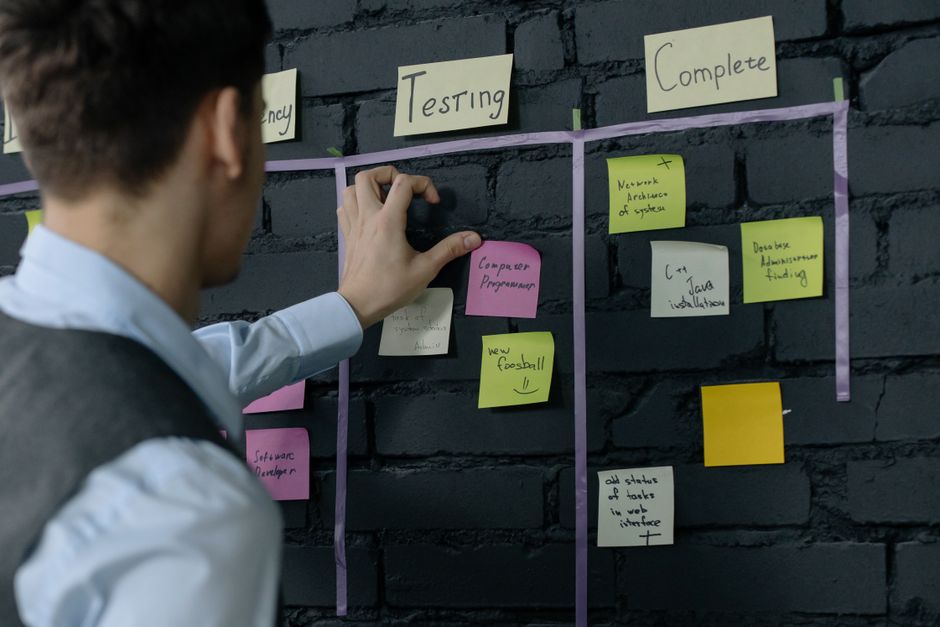
Table of Contents
- Understanding Agile Principles for Startup Agility
- Scrum Framework for Startup Product Development
- Kanban for Continuous Flow and Visualization
- Lean Startup Principles and Their Integration with Agile
- Essential Agile Practices for Startup Teams
- Scaling Agile within a Growing Startup
- Common Pitfalls and How to Avoid Them
- Measuring Success and Continuous Improvement
Understanding Agile Principles for Startup Agility
For a startup, the landscape is less a well-defined map and more an uncharted territory. This inherent uncertainty is precisely why embracing Agile Product Development is not just beneficial, but essential for survival and growth. At its heart, Agile is a philosophy that champions iterative development, breaking down large projects into smaller, manageable chunks. This means building, testing, and refining in cycles, rather than attempting to deliver a monolithic product all at once. This iterative approach is deeply intertwined with customer collaboration. Instead of building in a vacuum, Agile emphasizes constant feedback loops, ensuring your development efforts are always aligned with what your users actually need and want. This continuous dialogue is a powerful antidote to building what we think customers want. Crucially, Agile is about responding to change over strictly following a plan. In the volatile startup world, market shifts, new competitor moves, or unexpected user insights are not roadblocks, but signals to adapt and pivot.
Why this is a natural fit for startups:
- Navigating Uncertainty: Startups are inherently built on hypotheses. Agile’s iterative nature allows you to test these hypotheses rapidly, learning from each iteration whether you’re on the right track or need to course-correct. This is the essence of the Build-Measure-Learn Loop: Your Guide to Agile Innovation.
- Rapid Feedback Loops: Getting your product, or even a functional prototype, into the hands of users early and often is critical. This allows you to gather invaluable insights that can prevent costly mistakes and significantly reduce the risk of Product Development Failures: Avoid the Landmines & Launch Winners. This is where concepts like Minimum Viable Product (MVP): The Ultimate Definition & Smart Applications shine.
- Resource Optimization: Startups rarely have an abundance of resources. Agile’s focus on delivering value incrementally and prioritizing features based on market impact ensures that precious time and capital are spent on what matters most. Understanding principles like Resource Allocation in Agile Development: Master Your Team’s Potential is paramount.
To illustrate the difference, consider the contrast with traditional Waterfall methodologies:
| Agile | Waterfall |
|---|---|
| Iterative and incremental development, flexible planning, embraces change. | Linear, sequential phases, rigid planning, change is discouraged. |
| Continuous customer feedback and collaboration are central. | Customer involvement is typically at the beginning and end of phases. |
| Emphasis on delivering working software/product frequently. | Delivery of the final product at the end of the project. |
| Adapts quickly to market shifts and user feedback. | Can be slow to react to changes due to its structured nature. |
This leads us to the crucial mindset shift required for successful Agile adoption. It’s not just about adopting new processes; it’s about fostering a culture that embraces flexibility, prioritizes continuous improvement, and views failure not as an endpoint, but as a valuable learning opportunity. This aligns perfectly with the Lean Startup Methodology for New Product Development and its core tenet of learning. For instance, understanding Jobs to Be Done: Hire Products for Solutions helps teams focus on fundamental customer needs rather than superficial features, a key aspect of effective JTBD for Product Development: Build What Customers Actually ‘Hire’ thinking. When the inevitable missteps occur, viewing them as opportunities to refine your approach, rather than reasons to despair, is what distinguishes sustainable innovation from one-off successes. This is a critical takeaway for anyone engaged in New Product Development Strategies: Your Ultimate Guide to Launching Winners.
Scrum Framework for Startup Product Development
When embarking on the journey of Agile Product Development for your startup, the Scrum framework provides a robust, yet adaptable, structure. It’s a methodology designed for iterative development, perfect for navigating the inherent uncertainty and fast-paced evolution of the startup landscape. At its core, Scrum is built around three key roles, three essential artifacts, and a series of events that foster collaboration and continuous improvement.
The Scrum Roles are:
- Product Owner: This is the visionary. They are responsible for maximizing the value of the product resulting from the work of the Development Team. This involves managing the Product Backlog, clearly expressing Product Backlog items, and ensuring the backlog is visible, transparent, and understood. For a startup, this role is crucial for keeping the product aligned with market needs and business goals, often drawing heavily on understanding the "Jobs to Be Done" by customers – a concept explored deeply in JTBD for Product Development: Build What Customers Actually ‘Hire’.
- Scrum Master: The facilitator and coach. The Scrum Master helps everyone understand Scrum theory, practices, rules, and values. They remove impediments to the Development Team’s progress and ensure Scrum events take place and are positive, productive, and kept within the timebox. For lean startups, a resourceful Scrum Master can be the difference between chaos and controlled innovation.
- Development Team: A self-organizing and cross-functional group of professionals who do the work of delivering a potentially releasable Increment of "Done" product at the end of each Sprint. They are empowered to decide how best to accomplish their work. The size of the Development Team is typically small enough to remain nimble and can be a key factor in effective Resource Allocation in Agile Development: Master Your Team’s Potential.
The Scrum Artifacts provide transparency into progress and future plans:
- Product Backlog: A dynamic, ordered list of everything that might be needed in the product. It is the single source of requirements for any changes to be made to the product. It’s a living document that evolves as the startup learns and pivots.
- Sprint Backlog: A set of Product Backlog items selected for the Sprint, plus a plan for delivering the product Increment and realizing the Sprint Goal. It represents the work the Development Team has committed to completing in the current Sprint.
- Increment: The sum of all the Product Backlog items completed during a Sprint and the value of the increments of all previous Sprints. At the end of a Sprint, the new Increment must be "Done," meaning it is in a usable condition and meets the Scrum Team’s definition of "Done." This focus on delivering a usable Increment is a cornerstone of Lean Product Development and helps startups avoid Product Development Failures: Avoid the Landmines & Launch Winners.
The Scrum Events are time-boxed opportunities for inspection and adaptation:
- Sprint Planning: A meeting at the beginning of a Sprint where the Scrum Team collaborates to define what can be delivered in the upcoming Sprint and how that work will be achieved. This is where the Sprint Goal is established and the Sprint Backlog is created.
- Daily Scrum: A 15-minute event held daily for the Development Team to synchronize activities and create a plan for the next 24 hours. It’s a crucial checkpoint for identifying impediments early.
- Sprint Review: Held at the end of the Sprint to inspect the Increment and adapt the Product Backlog if needed. It’s an opportunity for stakeholders to provide feedback, directly influencing future development cycles. This aligns with the "Measure" phase of the Build-Measure-Learn loop central to Lean Startup Methodology for New Product Development.
- Sprint Retrospective: Occurs after the Sprint Review and prior to the next Sprint Planning. The Scrum Team inspects itself and creates a plan for improvements to be enacted during the next Sprint. This continuous improvement loop is vital for a startup’s agility.
This pragmatic approach to Scrum aligns perfectly with the principles of Lean Startup for Agile Innovation: Build, Measure, Learn Faster and can significantly reduce the risk of building products nobody wants, a common pitfall explored in articles on Failed Product Launches: Hard-Won Lessons for Innovators. The rapid iteration and feedback inherent in Scrum, combined with Rapid Prototyping: Fast, Smart Product Development, allows startups to quickly validate hypotheses and pivot based on real user data.
Kanban for Continuous Flow and Visualization
In the dynamic world of startup innovation, where agility and responsiveness are paramount, Kanban offers a powerful, visually intuitive approach to managing product development. Unlike prescriptive frameworks that dictate fixed iterations, Kanban is a system for managing the flow of work. Its strength lies in its simplicity and adaptability, making it an excellent choice for startups navigating the inherent uncertainties of bringing novel ideas to market. At its core, Kanban is built on three fundamental principles: visualizing your workflow, limiting work in progress (WIP), and managing flow.
Visualizing workflow is the cornerstone of Kanban. By representing each stage of your development process on a board, you create transparency for everyone on the team. This visual representation allows for immediate understanding of where tasks are, who is working on them, and what bottlenecks might be emerging. This aligns perfectly with the spirit of Agile Product Development, where clear communication and shared understanding are vital for success.
The second key principle, limiting work in progress (WIP), is perhaps the most impactful for startups. It combats the pervasive startup trap of trying to do too much at once. By setting explicit limits on how many tasks can be in any given stage, WIP limits force prioritization and prevent the team from becoming overwhelmed. This encourages a focus on finishing what’s started, which is crucial for delivering value and learning quickly. This concept is deeply intertwined with Lean Product Development and the idea of avoiding Product Development Failures: Avoid the Landmines & Launch Winners.
Managing flow, the third principle, is about optimizing the movement of work through the system. Once the workflow is visualized and WIP is limited, the focus shifts to identifying and removing impediments that slow down progress. This continuous pursuit of efficiency ensures that the team is consistently delivering value and making progress towards their goals. This proactive approach to problem-solving is essential for maintaining momentum, especially when exploring New Product Development Strategies: Your Ultimate Guide to Launching Winners.
To effectively manage this flow, Kanban relies on a few key metrics:
- Lead Time: The total time it takes for a work item to go from being requested to being delivered. For startups, minimizing lead time is critical for testing assumptions quickly and iterating based on real user feedback, a core tenet of the Lean Startup Methodology for New Product Development.
- Cycle Time: The time it takes for a work item to move through a specific part of the workflow, from when work begins on it until it is completed. Tracking cycle time helps identify inefficiencies within particular stages of development.
- Throughput: The number of work items completed within a given period. This metric provides a high-level view of the team’s delivery pace and capacity.
Designing a startup-friendly Kanban board requires careful consideration of your specific workflow. While boards can be customized infinitely, a basic, effective setup often includes columns like: "Backlog" (ideas and potential features), "To Do" (tasks ready to be worked on), "In Progress" (tasks currently being actively developed), "Testing/Review" (tasks undergoing QA or peer review), and "Done" (completed and delivered work). Crucially, each of these columns (or at least the "In Progress" and "Testing/Review" stages) should have a WIP limit. For example, a team might limit "In Progress" to 3 items, ensuring that no more than three tasks are actively being worked on simultaneously.
Kanban shines when flexibility is key and the work is continuous rather than batch-oriented. For startups focused on continuous delivery of features, bug fixes, and ongoing improvements, Kanban often proves more suitable than Scrum. Scrum’s fixed-length sprints and prescribed roles can sometimes feel rigid for early-stage companies that need to pivot quickly based on market feedback or unexpected opportunities. If your product development feels more like a stream of ongoing tasks rather than distinct, deliverable projects at the end of each iteration, Kanban’s focus on flow and continuous improvement will likely serve you better. This is particularly true when you’re aiming to deliver value incrementally and rapidly validate hypotheses, as advocated in the Master the Build-Measure-Learn Loop: Your Guide to Agile Innovation philosophy. Furthermore, for teams working on features that are constantly evolving, Kanban provides a clearer picture of progress and helps prevent the accumulation of unfinished work, thereby reducing the risk of Failed Product Launches: Hard-Won Lessons for Innovators. It’s also an excellent choice for teams leveraging techniques like Rapid Prototyping for Startups: Ignite Innovation, Validate Ideas Fast, where quick iterations and continuous refinement are the norm.
Kanban empowers teams to achieve greater efficiency and predictability by making their work visible and manageable, ultimately driving more successful product outcomes. It’s a methodology that embraces the core principles of Innovation & Creativity in Product Development by fostering an environment where bottlenecks are identified, work is prioritized effectively, and the team can focus on delivering the most valuable features to customers.
Lean Startup Principles and Their Integration with Agile
The startup journey is often a high-stakes gamble, where brilliant ideas can fizzle out if they don’t resonate with the market. This is precisely where the synergy between Lean Startup principles and Agile Product Development becomes an indispensable toolkit for innovators. Forget the notion of crafting a perfect, fully-featured product in isolation. Instead, we embrace an iterative, learning-centric approach that minimizes waste and maximizes our chances of building something truly valuable.
At the heart of this integration lies the Build-Measure-Learn feedback loop. This foundational concept, popularized by Eric Ries in "The Lean Startup," is the engine driving continuous improvement. You don’t start by building the ultimate solution; you start by building the smallest possible version to test your core assumptions. The ‘build’ phase is about creating a product or feature that allows you to collect data. The ‘measure’ phase is where you gather that data, analyzing user behavior and feedback rigorously. Finally, the ‘learn’ phase is crucial: what did you discover? Did your assumptions hold true? This learning then informs the next iteration of your build. It’s about Mastering the Build-Measure-Learn Loop: Your Guide to Agile Innovation.
This leads directly to the concept of the Minimum Viable Product (MVP). An MVP isn’t a half-baked product; it’s the most efficient way to begin the learning process. It’s the smallest set of features that allows you to deliver core value to early adopters and, crucially, gather feedback. Think of it as a Minimum Viable Product (MVP): The Ultimate Definition & Smart Applications designed to validate your core hypotheses about customer needs and market viability. This iterative approach, powered by Rapid Prototyping for Startups: Ignite Innovation, Validate Ideas Fast, allows you to quickly test different directions without significant investment, preventing many common Product Development Failures: Avoid the Landmines & Launch Winners.
The ultimate goal of this cycle is validated learning. This means proving, through empirical data, that your product or feature is on the right track. It’s about actively testing your riskiest assumptions, rather than relying on intuition or optimistic projections. This is the antidote to the dangerous "build it and they will come" mentality. Without validated learning, startups are essentially navigating blindfolded, increasing the likelihood of Failed Product Launches: Hard-Won Lessons for Innovators. Instead, we use data to pivot or persevere, ensuring our efforts are focused on what customers truly value. Understanding what customers actually need can be illuminated by frameworks like Jobs to Be Done, which helps you Stop Building Useless Stuff: How JTBD Revolutionizes Your Product Development.
The beauty of Agile ceremonies is their inherent structure, which perfectly accommodates Lean Startup experiments.
- Sprint Planning: Use this to define the scope of your next MVP feature or experiment. What specific hypothesis will you test this sprint?
- Daily Stand-ups: Keep the team focused on progress towards the experiment’s goals and identify any blockers to gathering data.
- Sprint Review: This is your “Measure” and “Learn” session. Present the MVP, share the collected data, and discuss what was learned. This is crucial for informing the next planning cycle.
- Sprint Retrospective: Reflect on the experiment itself. How could the build, measure, or learn process be improved for the next iteration?
By aligning these Agile practices with Lean Startup principles, startups can maintain agility, foster **
Innovation & Creativity in Product Development**, and ensure their **Resource Allocation in Agile Development: Master Your Team’s Potential** is directed towards creating truly impactful products. This methodology forms the bedrock of effective **Lean Startup Methodology for New Product Development**, ensuring that every iteration moves you closer to product-market fit.Essential Agile Practices for Startup Teams
For startups, where every dollar and every hour counts, adopting a robust Agile Product Development approach isn’t just a best practice; it’s a survival imperative. The speed at which you can validate ideas, respond to market shifts, and deliver value to customers can be the difference between a disruptive success and another entry in the annals of Product Development Failures: Avoid the Landmines & Launch Winners. Let’s dive into the essential agile practices that will fuel your startup’s innovation engine.
Understanding User Needs and Prioritizing Features with User Story Mapping
At the heart of successful product development lies a deep understanding of your users. User Story Mapping is a powerful visualization technique that helps teams understand user needs and prioritize features by arranging user stories on a two-dimensional map. This process moves beyond a simple flat backlog, laying out the user’s journey. You start by identifying the "big picture" – what tasks users need to accomplish. Then, you break these down into smaller, actionable user stories, mapping them to the overall workflow. This visual approach makes it much easier to identify gaps, understand dependencies, and most importantly, prioritize what truly matters to your users. This aligns perfectly with the principles of understanding "Jobs to Be Done," ensuring you’re building what customers actually need, not just what you think they need. For a deeper dive into this, explore JTBD Framework Fundamentals: Unlocking Customer Needs for Product Success.
Automating Development and Deployment with CI/CD
In the fast-paced startup environment, manual processes are a major bottleneck. Continuous Integration and Continuous Delivery (CI/CD) are game-changers. CI/CD pipelines automate the building, testing, and deployment of code. Every time a developer commits code, it’s automatically built and tested. If the tests pass, it can be automatically deployed to a staging or even production environment. This not only drastically reduces the time it takes to get new features into the hands of users but also significantly minimizes the risk of introducing bugs. This practice is a cornerstone of Lean Product Development, enabling that crucial rapid feedback loop.
Ensuring Quality with TDD and BDD
Quality isn’t a luxury; it’s a necessity. Test-Driven Development (TDD) and Behavior-Driven Development (BDD) are practices that embed quality from the ground up. In TDD, you write the test before writing the code that satisfies it. This forces you to think about the desired outcome and requirements upfront. BDD takes this a step further by using a more natural, readable language (often Gherkin) to describe expected behavior from the user’s perspective. This not only ensures the software behaves as intended but also improves communication between technical and non-technical team members. These methodologies contribute to building a stable, reliable product from day one.
Case Study: “SwiftLaunch” – Accelerating FinTech MVP Delivery
SwiftLaunch, a nascent FinTech startup, faced intense pressure to deliver a Minimum Viable Product (MVP) to a discerning market within six months. Their initial approach was bogged down by manual testing and infrequent deployments, leading to a shaky codebase and slow feature iteration. They adopted a rigorous CI/CD pipeline, integrated with TDD. Developers would write tests for user stories, then the code. Every commit triggered automated builds and tests, with successful builds automatically deployed to a staging environment for immediate QA review. This drastically reduced bug count by over 70% and allowed for weekly production releases. User feedback was incorporated rapidly, and the ability to pivot based on market response was crucial to their early success, enabling them to secure seed funding. This example highlights how essential agile practices can directly impact a startup’s ability to attract investment, much like securing Seed Funding for Creative Startups.
Fostering Collaboration and Knowledge Sharing with Pair and Mob Programming
For startups, leveraging every team member’s expertise is critical. Pair Programming, where two developers work together at one workstation, and Mob Programming, where the entire team works together on a single task, are powerful techniques for fostering collaboration and knowledge sharing. These practices not only improve code quality through immediate code reviews but also accelerate learning and onboard new team members faster. By working collectively, the team can tackle complex problems more effectively and reduce the risk of knowledge silos. This collaborative spirit is a vital component of effective Innovation & Creativity in Product Development.
Keeping the Product Backlog Actionable and Prioritized with Effective Backlog Refinement
A cluttered and outdated product backlog is a recipe for disaster, leading to wasted effort and missed opportunities. Effective Backlog Refinement (or Grooming) is an ongoing process where the product owner and the development team collaborate to ensure the backlog is well-understood, estimated, and prioritized. This involves breaking down large user stories into smaller ones, adding details, clarifying acceptance criteria, and re-prioritizing based on new information or changing market conditions. This ensures the team is always working on the most valuable items, maximizing the impact of your Resource Allocation in Agile Development: Master Your Team’s Potential. It’s about continuously refining your vision, much like the iterative process described in the Master the Build-Measure-Learn Loop: Your Guide to Agile Innovation.
Scaling Agile within a Growing Startup
As your startup’s success takes flight, the initial, tightly-knit Agile team that powered your early victories will inevitably grow. This expansion, while exciting, introduces a new set of challenges inherent in scaling Agile development. The very mechanisms that fostered rapid iteration and open communication in a small group – direct conversations, shared whiteboard sessions, and a unified vision – can become friction points. Suddenly, you’re grappling with communication, coordination, and consistency across a larger, more distributed workforce. Suddenly, what was once a quick chat becomes a multi-team sync, and the shared understanding of priorities can fray at the edges.
It’s tempting to look at established scaling frameworks like SAFe (Scaled Agile Framework) or LeSS (Large-Scale Scrum). While these frameworks offer valuable structures for enterprise-level transformations, their prescriptive nature and heavy overhead can often be a poor fit for the dynamic, often resource-constrained environment of an early-stage startup. For a growing startup, imposing such rigid structures too early can stifle the very agility and innovation that got you here. Instead, the real secret sauce lies in nurturing the foundations: focusing on team autonomy and cross-functional collaboration. Empowering small, self-organizing teams to own their domains, with clear lines of responsibility and the ability to make decisions quickly, is paramount. This autonomy fuels creativity and allows for rapid execution, mirroring the principles of Lean Startup for Agile Innovation.
Think of it this way: your initial success was built on a shared understanding of the "why" behind your product. As you scale, ensuring this clarity persists is vital. This is where developing an internal ‘Agile playbook’ becomes your indispensable guide. This isn’t a rigid rulebook, but rather a living document that codifies your startup’s unique approach to Agile Product Development. It should capture your preferred ceremonies, your approach to backlog refinement (perhaps incorporating insights from Jobs to Be Done: Hire Products for Solutions), your strategies for Rapid Prototyping for Startups: Ignite Innovation, Validate Ideas Fast, and how you manage Resource Allocation in Agile Development: Master Your Team’s Potential. This playbook acts as a consistent reference point, ensuring that as new teams join and existing ones evolve, the core principles of your agile practice remain intact, preventing the dilution of your innovative spirit and the specter of Product Development Failures: Avoid the Landmines & Launch Winners.
- Champion small, empowered, cross-functional teams.
- Define clear communication channels and feedback loops.
- Regularly review and adapt your internal Agile processes.
- Ensure a shared understanding of product vision and customer needs.
- Invest in tools that facilitate collaboration and transparency.
Ultimately, scaling Agile isn’t about adopting a one-size-fits-all framework. It’s about intelligently evolving your processes to maintain the speed, creativity, and customer-centricity that are the hallmarks of successful startups navigating the complex New Product Development Strategies: Your Ultimate Guide to Launching Winners landscape. Remember, your ability to adapt and learn, a core tenet of the Build-Measure-Learn Loop: Your Guide to Agile Innovation, is your greatest asset.
Common Pitfalls and How to Avoid Them
Even the most promising startups can stumble on their path to innovation. While a robust framework like Agile Product Development is crucial, its effective implementation is key to avoiding common pitfalls that can derail even the most creative ventures.
A frequent misstep is treating Agile as merely a set of rituals – stand-ups, sprints, and retrospectives – without internalizing its underlying principles. This superficial adoption leads to a mechanical process that stifles creativity and adaptability, hindering genuine Innovation & Creativity in Product Development. Remember, Agile is a mindset focused on iterative progress, customer collaboration, and responding to change.
Scope creep is another notorious killer of startup momentum. The allure of adding "just one more feature" can quickly balloon a project beyond its initial vision, leading to delayed launches and diluted focus. Learning to say "no" is a superpower. Prioritize ruthlessly, focusing on delivering a core value proposition. This aligns perfectly with the Lean Startup Methodology for New Product Development, which emphasizes building only what’s essential to test your hypotheses. If you find yourself struggling to define what "essential" means, delve into the concept of Jobs to Be Done (JTBD) for Product Development to truly understand what problem you’re solving for your users.
A lack of clear product vision or, consequently, poor prioritization, is a direct path to building a product nobody wants. Without a North Star, the team can drift, chasing perceived opportunities rather than strategic goals. This often leads to Product Development Failures, as resources are scattered and impact is minimized. Ensure your product roadmap is a living document, guided by market research and validated customer needs. This is where understanding User Persona Development for Creative Solutions becomes invaluable.
Insufficient stakeholder involvement and feedback is another significant hurdle. Startups thrive on agility, and that means constant communication with those who matter most: your users and investors. Regularly soliciting and integrating feedback ensures you’re building a product that resonates. This iterative loop is the heart of the Build-Measure-Learn Loop. Conversely, ignoring feedback can lead to costly rework and missed opportunities, ultimately contributing to Failed Product Launches: Hard-Won Lessons for Innovators.
Technical debt and quality issues are often sacrificed in the name of speed. While it’s tempting to cut corners to reach the market faster, this can cripple long-term scalability and innovation. Neglecting code quality, proper testing, and infrastructure can lead to a brittle product that’s difficult to maintain and update. Think of it as building a house on a shaky foundation – it might stand for a while, but it’s bound to crumble. For a deeper dive into this, consider resources like the IEEE’s Software Engineering standards.
Finally, resistance to change, whether from within the team or the broader organization, can be a silent killer of Agile adoption. Startups are inherently about change and disruption. If your team isn’t open to new ways of working, experimenting, and adapting, your Agile journey will be a difficult one. Foster a culture of continuous learning and psychological safety, where experimentation is encouraged and failures are treated as learning opportunities. This proactive approach to innovation is crucial for sustained success in the startup ecosystem.
Measuring Success and Continuous Improvement
Measuring success in the fast-paced world of startups isn’t about hitting arbitrary targets; it’s about validating your assumptions, delighting your customers, and iterating towards a sustainable business. For those embracing Agile Product Development, this means focusing on a different set of metrics than traditional models. Forget the endless Gantt charts and quarterly reports; think real-time feedback and demonstrable value.
Key Performance Indicators (KPIs) for Startup Agile Success
The beauty of Agile for startups lies in its adaptability. Your KPIs should reflect this, focusing on speed, customer impact, and learning.
- Velocity: While often associated with Scrum, velocity can be adapted. For startups, it’s less about the raw number of story points completed and more about the predictability of your team’s output. Can you consistently deliver working software or product increments within a defined timeframe? This predictability is crucial for forecasting and managing stakeholder expectations, especially when seeking Venture Capital for Startups or Seed Funding for Creative Startups.
- Customer Satisfaction: This is paramount. Are your early adopters genuinely happy? Are they using your product as intended? Metrics here can include Net Promoter Score (NPS), customer feedback surveys, support ticket trends, and even direct qualitative feedback from user interviews. This aligns perfectly with the philosophy behind JTBD for Product Development: Build What Customers Actually ‘Hire’.
- Time-to-Market (TTM): In the startup arena, speed is often a competitive advantage. How quickly can you go from an idea or a validated customer need (perhaps identified through Jobs to Be Done: Hire Products for Solutions) to a deployable Minimum Viable Product (MVP)? This isn’t about rushing; it’s about efficient iteration and validation. Think about the power of Rapid Prototyping for Startups: Ignite Innovation, Validate Ideas Fast.
- Customer Acquisition Cost (CAC) and Customer Lifetime Value (CLTV): As your startup grows, these financial metrics become critical for proving your business model’s viability. Agile development should aim to reduce CAC by ensuring you’re building what customers truly want, thereby increasing CLTV.
Leveraging Retrospectives for Actionable Insights
The retrospective meeting is the beating heart of continuous improvement in Agile. It’s a dedicated time for the team to reflect on the past sprint (or iteration), identify what went well, what could be improved, and most importantly, commit to specific actions. For startups, these aren’t just feel-good meetings; they’re critical junctures for course correction.
- Celebrate Wins: Acknowledge successes to boost morale and reinforce positive behaviors.
- Identify Bottlenecks: What slowed the team down? Was it technical debt, unclear requirements, or external dependencies?
- Brainstorm Solutions: Encourage creative problem-solving. Perhaps new tools or techniques could help, or maybe a different approach to Resource Allocation in Agile Development: Master Your Team’s Potential.
- Actionable Commitments: Crucially, the team must leave the retrospective with concrete, measurable actions to implement in the next iteration. Without this, retrospectives become a time-sink.
The Importance of a Feedback-Driven Culture
A startup that isn’t actively seeking and responding to feedback is a startup on the fast track to becoming irrelevant. This means fostering an environment where:
- Customers are Partners: Engage in Co-creation with Customers for New Product Ideas. Treat their input not as criticism, but as invaluable data.
- Internal Feedback is Encouraged: Team members should feel safe to offer constructive criticism and suggest improvements, even if it challenges the status quo.
- Data Informs Decisions: Beyond anecdotal evidence, actively collect and analyze usage data, support requests, and market trends. This fuels the Build-Measure-Learn Loop: Your Guide to Agile Innovation.
FAQ: How do I balance speed with quality in Agile product development?
This is a perpetual challenge. In Agile, the focus is on delivering a “minimum viable product” that is functional and meets core user needs, rather than a perfectly polished, feature-complete product. Quality is built-in through practices like automated testing, continuous integration, and code reviews. The idea is to deliver value incrementally and gather feedback early, which often prevents costly rework later. Remember, shipping an imperfect but valuable product that you can iterate on is often better than delaying a “perfect” product indefinitely. This also ties into avoiding the common pitfalls that lead to Product Development Failures: Avoid the Landmines & Launch Winners.
Adapting Agile Practices as the Startup Evolves
What works for a two-person founding team bootstrapping their MVP will look different for a startup with 20 employees seeking Series A funding. As your organization matures, so too should your Agile practices.
- Scaling Agile: You might move from a single Scrum team to multiple teams, requiring new coordination mechanisms like Scrum of Scrums or SAFe (Scaled Agile Framework) principles.
- Formalizing Processes: While maintaining agility, you might introduce more formal processes for areas like Product Lifecycle Management (PLM): Boost Profitability & Innovation or more structured approaches to User Persona Development for Creative Solutions.
- Deeper Metrics: As the company grows, financial metrics and long-term strategic indicators become more significant. You’ll want to integrate these with your Agile workflow. The goal is always to maintain the spirit of agility – responsiveness, adaptability, and customer-centricity – while scaling your operations.
FAQ: What are some common mistakes startups make when measuring Agile success?
One of the most common mistakes is focusing solely on output (e.g., lines of code, features delivered) rather than outcomes (e.g., customer adoption, revenue, problem solved). Another pitfall is not tailoring KPIs to the startup’s specific stage and goals. For instance, a pre-revenue startup should prioritize metrics related to user engagement and validation, while a scaling startup will focus more on CAC, CLTV, and market share. Finally, not acting on retrospective findings or ignoring negative customer feedback are critical errors that hinder progress. This can lead to what’s documented in Failed Product Launches: Hard-Won Lessons for Innovators.
Ultimately, measuring success in Agile product development for startups is about continuous learning and adaptation. It’s about building what customers need, doing it efficiently, and constantly striving to do it better. By embracing these principles, you’re not just developing a product; you’re building a resilient, innovative business poised for long-term success. This journey is intrinsically linked to the core tenets of Innovation & Creativity in Product Development and underpins the success of New Product Development Strategies: Your Ultimate Guide to Launching Winners.
Featured image by cottonbro studio on Pexels