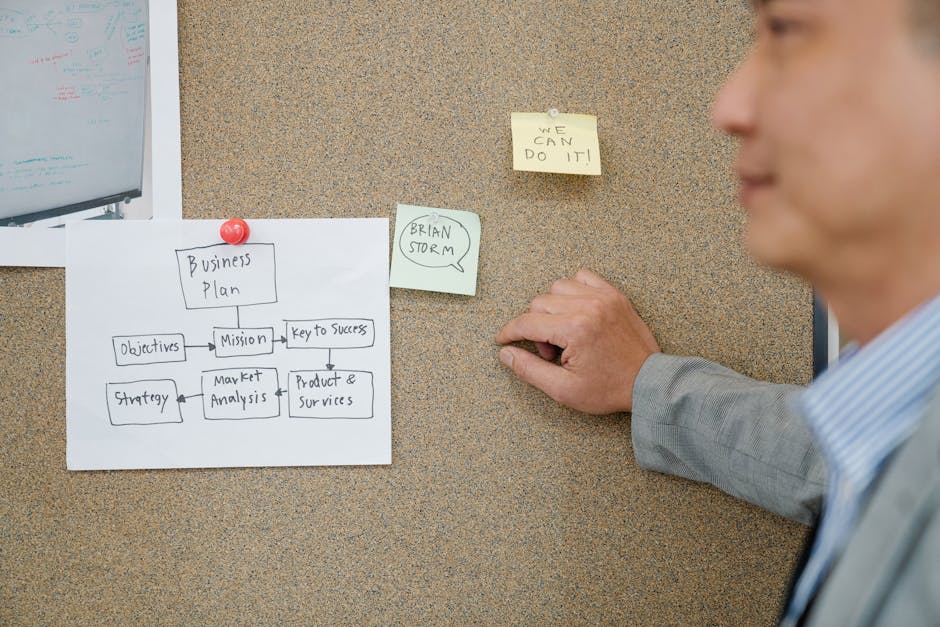
Effective brainstorming produces commercially viable solutions by enforcing strict operational boundaries between idea generation and idea evaluation. Rather than letting participants talk over one another in open debate, structured ideation requires individual silent generation followed by systematic combination. Teams that isolate divergence from convergence consistently generate double the volume of novel concepts compared to unstructured groups.
If structured ideation doubles output, why do most corporate teams still spend 60 minutes arguing around a conference table with nothing to show for it except a whiteboard of vague bullet points? The failure lies in cognitive friction: social loafing, evaluation apprehension, and production blocking systematically degrade raw group discussions. Solving this requires selecting the exact structural tool matched to your team size, technical complexity, and operational constraints.
Key Takeaways
- Isolate Generation from Filtering: Mixing critique into ideation reduces total concept volume by over 40% due to cognitive inhibition.
- Use Asynchronous Brainwriting: Silent, written techniques eliminate production blocking and prevent senior titles from monopolizing conversations.
- Anchor to Hard Boundaries: Define clear metrics (such as a 15% efficiency gain) rather than open-ended problem statements.
- Score Systematically: Evaluate concepts immediately after divergent rounds using weighted scoring matrices rather than subjective voting.
Table of Contents
The Mechanics of High-Yield Ideation
Ideation generates measurable commercial returns only when teams treat creativity as a disciplined sorting pipeline rather than an emotional release. Unstructured group chatter routinely fails because participants suffer from production blocking, where listening to a colleague prevents someone from formulating their own thought. Research by Michael Diehl and Wolfgang Stroebe published in the Journal of Personality and Social Psychology demonstrated that nominal groups—individuals working alone and combining ideas afterward—produce roughly twice as many unique concepts as interactive brainstorming groups of identical size.
Collaborative ideation becomes essential when technical challenges span disparate functional silos. An engineer, an industrial designer, and a procurement specialist each hold fragmented constraints that no single individual sees. Breakthrough systems emerge at these intersections. Consider how Tim Berners-Lee linked hypertext protocols to network architecture at CERN to establish the World Wide Web / Internet (1989). Similarly, teams developing complex mechanical hardware like the Transformer of Torque (TT) rely on rigorous functional decomposition rather than casual guesswork to solve rotational transfer problems. Exploring structured ideation methods replaces guesswork with predictable output, an approach outlined across practical Brainstorming Methods.
Essential Pre-Session Setup and Operational Rules
Divergent thinking requires restrictive constraints to yield practical results. Without precise problem boundaries, teams drift into broad, unbuildable abstractions that consume budget without solving underlying bottlenecks.
Frame Problems with Concrete Metrics
A target like "make our application faster" generates generic platitudes. A structured boundary like "reduce database checkout query latency by 450 milliseconds under a 10,000-concurrent-user load" forces the room to evaluate specific caching mechanisms and indexing architectures. Clear boundaries prevent team members from debating subjective taste and force them to confront operational realities.
Enforce the Four Foundational Rules
Alex Osborn codified the baseline operating parameters for brainstorming in 1953, and their behavioral logic remains essential today:
- Withhold Evaluation During Divergence: Negative feedback stops cognitive exploration immediately. Separate the divergent generation phase from convergent selection by a mandatory time buffer.
- Pursue Outlier Edge Cases: Extreme concepts alter baseline assumptions. An impractical idea often highlights a latent structural workaround that an incremental proposal misses.
- Prioritize Raw Volume: Target a minimum of 60 raw concept fragments per 30 minutes for an eight-person group. High-volume runs force participants past obvious, top-of-mind responses into original combinations.
- Splice and Expand: Direct participants to take two disparate ideas on the wall and combine them into a composite architecture.
Assemble Asymmetric Cross-Functional Teams
Homogeneous departments reinforce existing cognitive blind spots. Assemble working groups of five to seven professionals spanning technical execution, frontline customer support, and financial approval. When engineers interact directly with operators who wear Work Gloves With Transparent Cuffs in dirty factory environments, product features reflect actual field ergonomics rather than cleanroom assumptions. To keep remote contributors aligned during these multi-departmental sessions, facilitators rely on a 45-Minute Remote Brainstorming: A Visual Agenda (Template).
Classic Individual Divergent Methods
Solitary ideation exercises eliminate the social pressure that silences junior contributors during group discussions. Running individual exercises before group aggregation guarantees a broad baseline of concepts.
Targeted Freewriting
Targeted freewriting forces an engineer or strategist to write continuously for a strict 10-minute sprint without pausing or editing syntax. The exercise bypasses the executive control network that censors ideas before they reach paper. If a mental stall occurs, the writer inputs the exact phrase "waiting for concept" until cognitive momentum resumes. This method is effective for identifying hidden technical assumptions before drafting architectural specifications.
Radial Mind Mapping
Radial mind mapping visualizes systemic relationships by placing a single core problem at the center of a canvas and mapping radial branches outward through primary subsystems, secondary nodes, and edge constraints. Tony Buzan formalized this visual structure in 1974 to trace multidimensional dependencies that linear bullet points obscure. In enterprise software planning, radial branches make technical dependencies explicit, such as data latency bottlenecks within an end-to-end processing pipeline.
Reverse Brainstorming
Reverse brainstorming identifies critical failure modes by instructing participants to design mechanisms that intentionally create catastrophic failure. Instead of asking how to maximize system uptime, the prompt asks: "How do we guarantee an unrecoverable outage within four minutes of deployment?" Inverting the goal bypasses defensive organizational habits. Participants freely list single points of failure, unmonitored dependencies, and brittle code paths. Reversing each failure condition reveals mandatory preventative controls. To break assumptions about product utility, teams frequently run a Functional Fixedness Audit: 12 Questions (Checklist) to challenge standard equipment operating parameters.
Try This Today: Select one unresolved operational problem on your desk right now. Set a timer for 6 minutes, invert the problem statement ("How do I guarantee this project misses its deadline?"), and write down at least 8 concrete ways to force that failure. Reverse the top 3 items into defensive operational controls before your next team standup.
Structured Group Techniques for Rapid Volume
Silent written methods remove interpersonal dynamics that allow charismatic contributors to dominate conversations. By equalizing contribution time, structured protocols systematically maximize raw concept output.
Round Robin Ideation
Round Robin requires participants arranged in sequence to contribute one concrete proposal per turn without commentary or critique from the room. If a participant has no new concept to offer, they state "Pass" without justification. The facilitator records every contribution on a visible central matrix until the group completes three full revolutions. This format prevents senior executives from absorbing meeting time with lengthy anecdotes.
| Technique |
Optimal Group Size |
Session Duration |
Primary Strength |
Operational Risk |
| 6-3-5 Brainwriting |
6 participants |
30 minutes |
Generates 108 concepts silently |
Requires legible, concise inputs |
| SCAMPER Audit |
3 to 5 participants |
45 minutes |
Systematic modification of existing products |
Can produce incremental tweaks |
| Nominal Group (NGT) |
5 to 9 participants |
60 minutes |
Equalizes voting power mathematically |
Requires strict facilitator control |
| Delphi Method |
10 to 30 experts |
2 to 4 weeks |
Eliminates geographic and hierarchy bias |
High drop-out rates across rounds |
The 6-3-5 Brainwriting Protocol
Devised by Bernd Rohrbach in 1969, the 6-3-5 method organizes six participants to write three concepts across six rounds of five minutes each. Each contributor receives a standardized worksheet divided into three columns across six rows. In round one, contributors write three ideas in row one, then hand their worksheet clockwise. In round two, participants read the preceding ideas and use them as triggers to generate three new variations or alternative designs. After 30 minutes of silent execution, the team produces 108 distinct concept variants without uttering a single word. To organize high-volume ideas into coherent clusters, product architects often apply a Lotus Blossom Grid: 64-Idea Canvas (Free Template).
The SCAMPER Modification Heuristic
Developed by Bob Eberle, SCAMPER applies seven specific transformational verbs to an existing product, architecture, or service workflow:
- Substitute: Swap out a core input, raw material, or vendor API dependency.
- Combine: Merge two independent functional capabilities into a single unified service module.
- Adapt: Apply an operational workaround from an unrelated industry to solve an internal bottleneck.
- Modify / Magnify: Increase speed, transaction scale, or mechanical durability by a factor of 10.
- Put to Another Use: Repurpose waste heat, unindexed database logs, or dormant manufacturing capacity.
- Eliminate: Strip out middle management approvals, UI screens, or mechanical fasteners entirely.
- Reverse: Invert the sequencing order of the delivery or processing pipeline.
In materials design, applying SCAMPER prompts engineers to rethink traditional protective garments, generating prototypes such as Waterproof Paper Boots to solve single-use industrial contamination challenges. For advanced consumer packaged goods, applying the "Put to another use" prompt famously turned brewer’s yeast byproduct into Vegemite.
Visual and Analogical Problem Framing
Text-based ideation often falls into familiar corporate jargon that masks logistical barriers. Visualizing processes and applying forced analogical associations forces participants to confront physical and behavioral realities directly.
Sequential Storyboarding
Storyboarding uses chronological panels to trace how an actor or system interacts with a product across distinct temporal states. Originally developed within the Walt Disney Studios animation pipeline during the 1930s, this visual protocol exposes operational handoff breakdowns that narrative documents conceal. Storyboarding forces developers to trace every handoff explicitly when designing real-time data ingestion pipelines, as seen in complex enterprise architectures exploring What the Future of Retrieval Augmented Generation Looks Like.
😈 Devil’s Advocate
The strongest objection: Structured brainstorming frameworks waste engineering hours. Brilliant inventions stem from domain experts spending hundreds of hours in deep, solitary analytical thinking, not from multidisciplinary workshops writing sticky notes.
Where it’s right: If the underlying problem is fundamentally mathematical, algorithmic, or deeply specialized, a divergent workshop will produce superficial ideas. General brainstorming cannot invent a new cryptographic cipher or resolve an asynchronous race condition.
The honest answer: Divergent brainstorming is not a replacement for domain expertise. It is a tool for identifying cross-functional integration requirements, surface-level interface gaps, and customer touchpoints. Use solitary analysis for specialized engineering, and reserve structured ideation for systemic coordination problems.
Forced Analogical Association
Forced association takes a randomly selected external image, physical artifact, or biological system and requires the team to map its attributes onto the current engineering problem. When an industrial robotics group is stuck on gripper compliance, forcing an analogy with an octopus tentacle or a surgeon’s scalpel disrupts standard mechanical assumptions. The technique breaks functional fixedness, a psychological barrier studied extensively in problem-solving research available on Google Scholar. Teams struggling with creative stagnation also run a structured 45-Minute Candle Problem Workshop (With Debrief Slides) to systematically overcome perceptual inertia.
Expert Consensus and Rigorous Decision Frameworks
Generating hundreds of raw ideas creates an operational liability if a team lacks a rigorous convergence mechanism. Prioritizing concepts requires structured decision tools that prevent office politics from driving the product roadmap.
Nominal Group Technique (NGT)
Devised by Andre Delbecq and Andrew Van de Ven in 1971, the Nominal Group Technique balances independent generation with mathematical prioritization across five distinct phases:
- Silent Generation: Participants spend 15 minutes drafting concepts individually on cards.
- Public Registry: Each participant submits ideas sequentially to a shared master list without debate.
- Serial Discussion: The facilitator reviews each item for clarity, eliminating duplicates without permitting value judgments.
- Preliminary Voting: Each contributor secretly assigns points (typically ranking their top five choices from 1 to 5).
- Mathematical Aggregation: Scores are totaled across the group to reveal the highest-value concepts objectively.
To evaluate these ranked proposals against hard business constraints, portfolio leaders employ a 10-Point Novelty vs Feasibility Audit (Worksheet) or score candidate features using an Excel-ready 5-Criteria Idea Scoring Rubric (Excel Template).
The Delphi Forecasting Protocol
Conceived by Norman Dalkey and Olaf Helmer at the RAND Corporation during the 1950s, the Delphi Method gathers consensus from geographically dispersed specialists through iterative, blind surveys. The central coordinator distributes an initial qualitative questionnaire, compiles the findings, and returns an anonymized summary along with a secondary questionnaire. Experts adjust their forecasts based on peer arguments over two to four rounds without ever meeting face-to-face. This process neutralizes high-status individuals from swaying opinions when evaluating complex industry transformations, such as projecting workforce trends in What the Future Of HR Looks Like.
Mitigating Social Friction and Cognitive Biases
Group dynamics naturally trigger defensive behavioral routines that undermine creative problem-solving. Facilitators must monitor for known psychological pitfalls that suppress high-value ideas.
Combatting Dominance and Social Loafing
Research published in the Harvard Business Review and covered by business outlets like Forbes highlights that the presence of high-ranking leaders regularly silences dissenting technical staff. When a vice president speaks first, anchoring bias causes subsequent participants to limit their ideas to incremental variations of that executive’s suggestion. To insulate teams from hierarchical pressure, modern innovation units often adopt the Pixar Braintrust Protocol: 5 Rules (With Full Script), which separates evaluative authority from executive command.
Focusing on Root Frustrations
Teams run out of productive concepts when they ideate around surface-level product features rather than operational pain points. To unlock high-leverage problems, facilitators redirect the inquiry to customer irritations, cataloged systematically by identifying What Annoys You. Exploring structural annoyances yields meaningful improvements, such as restructuring engineering requirements through a House of Quality QFD: User Input to Specs (With Template). Further empirical analyses on how group dynamics impair raw output are detailed in studies by Bernard Nijstad on Google Scholar and research by Paul Paulus on Google Scholar.
Copy-Paste Facilitator Session Blueprint
Facilitating an effective 45-minute divergent ideation workshop requires exact time discipline and structured interventions. Distribute this agenda to participants 24 hours prior to the session along with the background briefing materials.
Copy-Paste Template: 45-Minute Rapid Divergence Script
SESSION BRIEFING & OPERATIONAL SCRIPT
Target Focus: [INSERT PROBLEM STATEMENT WITH METRIC, E.G., 20% REDUCTION IN CYCLE TIME]
Facilitator: [INSERT NAME] | Time-Box: Exactly 45 Minutes

[00:00 - 05:00] THE BOUNDARY ANCHOR
Facilitator script:
"Welcome. Today we have one specific operational bottleneck to solve: [INSERT EXACT PROBLEM].
Our rules today are strict:
1. No verbal critique, debate, or validation during the first 25 minutes.
2. Ideas must target our metric: [INSERT TARGET METRIC].
3. Wild outliers are mandatory; incremental fixes are banned.
Let's begin silent writing."

[05:00 - 15:00] SILENT 6-3-5 DIVERGENT SPRINT
- Distribute physical worksheets or open shared collaborative canvas.
- 6 participants write 3 concrete proposals per round.
- Advance the page clockwise every 3 minutes across 3 rounds.
- Facilitator prompt at Minute 10: "Push past your default answers. If your idea does not break an existing operational assumption, discard it and write a bolder one."

[15:00 - 25:00] SCAMPER RE-ENGINEERING PASS
Facilitator prompt:
"Review your sheet. Pick the single most unusual concept from your peer. You have 10 minutes to run it through three filters:
1. ELIMINATE: Remove the most expensive component or step.
2. COMBINE: Merge it with an existing legacy system.
3. REVERSE: Invert the order in which the customer or user experiences it."

[25:00 - 35:00] PUBLIC MATRIX MAPPING
- Each contributor posts their top 2 modified concepts to the central wall.
- Facilitator reads each card aloud in 15 seconds.
- Group eliminates exact duplicates; strictly no debating viability.

[35:00 - 45:00] CONVERGENT RANKING (NOMINAL VOTE)
Facilitator script:
"You each have 5 sticky dots (or 5 points in the digital voting tool).
Allocate your points independently based on two criteria:
- Technical novelty (Does it give us an asymmetric advantage?)
- 90-day execution viability (Can we prototype this in one sprint?)
Voting is silent. You have 3 minutes to vote."

IMMEDIATE POST-SESSION ACTION ITEM:
Facilitator compiles the top 3 ranked concepts into the Concept Viability Matrix by 5:00 PM today.
Executing structured sessions ensures that team hours yield concrete engineering and operational roadmaps. By deploying silent generation, maintaining strict facilitation timers, and applying objective convergence matrices, organizations systematically convert collective intellect into measurable market advantages.
Sources & Further Reading
- Buzan, T. (1974). Use Your Head. BBC Books.
- Delbecq, A. L., & Van de Ven, A. H. (1971). A Group Process Model for Problem Identification and Program Planning. Journal of Applied Behavioral Science, 7(4), 466–492.
- Diehl, M., & Stroebe, W. (1987). Productivity loss in brainstorming groups: Toward the solution of a riddle. Journal of Personality and Social Psychology, 53(3), 497–509.
- Eberle, B. (1996). SCAMPER: Games for Imagination Development. Prufrock Press.
- Osborn, A. F. (1953). Applied Imagination: Principles and Procedures of Creative Problem-Solving. Charles Scribner’s Sons.
- Rohrbach, B. (1969). Kreativ nach Noten: Das 6-3-5 Gehirnsturmen. Absatzwirtschaft, 12, 73–75.
Featured image by Felicity Tai on Pexels