From Bust to Breakthrough: Essential Lessons from Business Failures
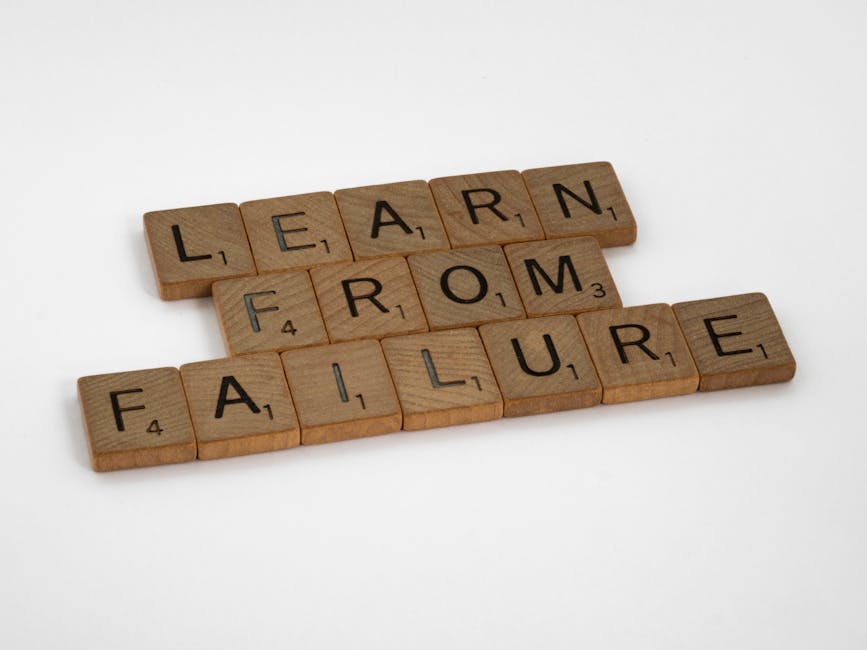
The Inevitable Stumble: Understanding Business Failures
Every entrepreneur dreams of a smooth ascent to success, but the reality of building a business is often a winding road, marked by unexpected potholes and outright roadblocks. Failure, while often perceived as a definitive end, is more accurately a powerful, albeit painful, teacher. Understanding the common pitfalls and extracting actionable insights is not just beneficial; it’s essential for long-term survival and growth.
Table of Contents
- The Inevitable Stumble: Understanding Business Failures
- Why Businesses Collapse: Common Culprits
- Extracting Wisdom: Lessons Learned from the Ashes
- The Power of Agility and Adaptation
- Financial Prudence: The Bedrock of Sustainability
- Customer Focus: The North Star of Business
- Strategic Vision and Execution
- Building a Resilient Team and Culture
- A Step-by-Step Guide: Navigating Post-Failure Recovery
- The Analogy of a Failed Recipe
- Frequently Asked Questions
- What are the most common reasons for startup failure?
- How can I learn from a competitor’s failure?
- Is it possible to recover from a business failure?
- References
Why Businesses Collapse: Common Culprits
The reasons behind business failures are diverse, ranging from strategic missteps to external market shifts. Recognizing these patterns can help aspiring and established businesses fortify their foundations.
- Lack of Market Need: Building a product or service that no one genuinely wants is a common, yet avoidable, mistake. It’s like opening a vegan steakhouse – the fundamental demand is missing.
- Running Out of Cash: Poor financial management, overspending, or an inability to secure adequate funding can cripple even the most promising ventures.
- Inadequate Business Model: A flawed or unsustainable Business Model Innovation strategy can lead to profitability issues from the outset.
- Poor Management Team: A lack of experience, infighting, or an inability to adapt can doom a company.
- Competitive Pressure: Underestimating competitors or failing to differentiate can lead to being outmaneuvered in the market.
- Pricing/Cost Issues: Setting prices too high or too low, or having uncontrollable costs, can erode profit margins.
- Product/Service Flaws: A subpar offering that doesn’t meet customer expectations can lead to dissatisfaction and lost business.
- Marketing and Sales Weaknesses: Inability to reach and convert target customers is a critical failure point.
- Ignoring Customer Feedback: Failing to adapt to Customer-Centric Service Design needs can alienate the very people who keep the business alive.
- Timing: Launching too early or too late can mean missing the market window.
Extracting Wisdom: Lessons Learned from the Ashes
When a business falters, it’s not just about the loss; it’s about the invaluable lessons that can be salvaged. These lessons, hard-won through experience, can inform future endeavors and strengthen current strategies.
The Power of Agility and Adaptation
Markets are dynamic. What worked yesterday might not work today. Businesses that fail often do so because they are too rigid, unwilling or unable to pivot when conditions change. The rise of AI & Automation in the Workplace is a prime example of how quickly industries must adapt.
Financial Prudence: The Bedrock of Sustainability
Cash flow is the lifeblood of any business. Many failures stem from a lack of understanding or control over financial resources. This isn’t just about having money; it’s about managing it wisely, forecasting effectively, and having contingency plans.
Customer Focus: The North Star of Business
Businesses exist to serve customers. Neglecting their needs, failing to listen to feedback, or offering a poor experience is a direct path to irrelevance. A strong Customer-Centric Service Design approach is paramount.
Strategic Vision and Execution
Having a clear vision is essential, but so is the ability to execute the strategy. This involves setting realistic goals, understanding the competitive landscape, and making informed decisions about resource allocation. Exploring Disruptive Business Models can be part of this strategic foresight.
Building a Resilient Team and Culture
People are the engine of any business. A strong, cohesive team with clear leadership and a culture of learning and accountability is crucial. This includes effective knowledge sharing, perhaps through Knowledge Management Systems (KMS).
A Step-by-Step Guide: Navigating Post-Failure Recovery
Recovering from a business failure, or learning from another’s, requires a structured approach. Think of it like rebuilding after a storm – you need to assess the damage, clear the debris, and plan for a stronger structure.
- Objective Post-Mortem Analysis: Conduct a thorough, unbiased review of what went wrong. Gather data, interview key stakeholders, and identify root causes without assigning blame.
- Document Key Learnings: Systematically record all insights gained. This creates a valuable knowledge base for future projects, similar to effective Knowledge Management Systems (KMS).
- Identify Pivot Opportunities: Based on the analysis, determine if there are salvageable aspects or new directions that can be pursued.
- Re-evaluate Business Fundamentals: Review your market understanding, business model, financial projections, and competitive strategy with fresh eyes.
- Seek Expert Advice: Consult with mentors, advisors, or industry experts who can provide objective feedback and guidance.
- Develop a Revised Plan: Create a new, robust plan incorporating the lessons learned. This might involve a completely new Business Model Innovation or a refined version of the original.
- Secure Necessary Resources: Ensure adequate funding, talent, and operational capabilities are in place for the revised plan.
- Implement and Monitor Closely: Execute the new plan with diligent oversight, tracking key performance indicators and remaining adaptable.
The Analogy of a Failed Recipe
Imagine you’re baking a cake, and it comes out flat and burnt. Failure isn’t the end of your baking journey. Instead, you examine the recipe:
- Was the oven temperature too high (like poor financial controls)?
- Did you use the wrong ingredients (like a faulty product strategy)?
- Did you forget a crucial step (like inadequate market research)?
Each mistake teaches you something. The next time, you adjust the temperature, check your ingredients, and follow the steps more carefully. Business is no different; each ‘failed cake’ is a chance to refine your ‘recipe’ for success.
Frequently Asked Questions
What are the most common reasons for startup failure?
The most frequently cited reasons include lack of market need, running out of cash, an ineffective business model, and issues with the management team. Often, it’s a combination of these factors.
How can I learn from a competitor’s failure?
Analyze their business model, market strategy, and publicly available information about their challenges. Look for patterns in their product development, customer acquisition, and operational execution. Understanding their mistakes can help you avoid similar pitfalls, much like analyzing the impact of Industrial Internet of Things (IIoT) on industry leaders.
Is it possible to recover from a business failure?
Absolutely. Many successful entrepreneurs have experienced significant failures before achieving their breakthroughs. The key is to learn from the experience, adapt your approach, and apply those lessons to future ventures. This resilience is a hallmark of great business leaders, who might begin by simply finding the right name, perhaps using a Using a Business Name Generator: Mapping Out a Path to Success tool as a first step.
References
- Sarasvathy, S. D. (2009). The exploration of entrepreneurship as a field of study. Entrepreneurship Theory and Practice, 33(6), 1233-1248. scholar.google.com
- McGrath, R. G. (2013). The Smart Trap: How]to Avoid the Decision Pitfalls that Can Wreck Your Strategy. Harvard Business Review Press. hbr.org
- Bhasin, K. (2012). Why Startups Fail. Forbes. forbes.com
- Cooper, R. G. (2001). Winning at New Products: Accelerating the Buy Process from Idea to Launch, 2nd Edition. Perseus Publishing. archive.org
- National Bureau of Economic Research. (2012). Why Startups Fail. nber.org
- MIT Sloan School of Management. Research & Thought Leadership. mitsloan.mit.edu
- Audia, P. O., & Zweig, D. (2009). When Entrepreneurs Intend to Exit: The Role of Exit Intentions in Firm Performance. Organization Science, 20(1), 238–252. jstor.org
- Harvard Business Review. (2018). HBR Guide to Overcoming Failure. hbr.org
Featured image by Brett Jordan on Pexels