3-Day Smart Factory Sprint: Full Agenda (Scripted)
As an Amazon Associate I earn from qualifying purchases. Product links on this page are affiliate links — they cost you nothing extra.
⏱ 29 min read
The 72-Hour Smart Factory Hackathon Framework
A smart factory innovation sprint is a scripted 3-day co-creation hackathon that pairs floor operators with IT engineers to build working hardware and software prototypes for immediate plant deployment. By compressing discovery, coding, and physical wiring into 72 hours, manufacturing teams bypass multi-month steering committees and validate functional fixes directly on active production lines. The framework replaces speculative slide decks with rapid, on-machine experimentation that solves verified frontline bottlenecks.
The central question is straightforward: why risk millions on lengthy enterprise rollouts when you can test a functional deployment on the factory floor by Friday afternoon?
The Pilot Purgatory Trap
Traditional industrial modernization projects run on slow 6-month cycles. A steering committee commissions an audit, consultants spend 90 days drafting user stories, and corporate procurement negotiates vendor contracts for half a year before a single sensor touches a machine. According to research published by McKinsey & Company on scaling digital manufacturing, approximately 74% of digital factory initiatives remain stuck in pilot purgatory without generating measurable operational profit.
The primary cause of these failed rollouts is structural isolation: software engineers architect systems in corporate hubs without input from the operators running the equipment. When a developer builds an inventory tracking application requiring three screen taps with protective gloves, the operator leaves the tablet docked on a charging cradle and logs scrap counts on a cardboard box with a grease pencil. Applying user-centric product innovation directly to factory floor tools prevents the anatomy of a failed innovation project from repeating itself on your assembly line.
A 72-hour sprint resolves this problem by enforcing direct collaboration between physical machine operators and software developers. Rather than debating requirements across email threads, teams work together on site to capture signals from programmable logic controllers and wire an edge gateway to feed telemetry into real-time dashboards.
Recommended gear
Teltonika RUT241
A compact industrial 4G router built for unattended equipment, giving connected devices in the field a managed link back to base.
Affiliate link
🕰️ How It Really Happened: General Motors and the $40 Billion Robot Ghost Town
In the 1980s, General Motors Chairman Roger Smith allocated roughly $40 billion to automate automotive assembly plants, spearheaded by the flagship Detroit-Hamtramck facility. As journalists Paul Ingrassia and Joseph B. White documented in Comeback: The Fall and Rise of the American Automobile Industry, executive leadership implemented complex robotics without collaborating with line technicians. When the automated line launched in 1985, massive system errors paralyzed the plant floor. Uncalibrated machine-vision systems misidentified parts, causing robotic sprayers to paint each other instead of passing car bodies. Automated guided vehicles crashed into structural support beams, and robot welders fused sheet-metal doors shut. Line workers lacked the training or permission to adjust the software, leaving hundreds of partially assembled Buick and Cadillac models stranded on the floor while engineers struggled to rewrite code in remote offices. GM spent more on unworkable automation during this decade than the combined market capitalization of Toyota and Honda, yet the Hamtramck line produced fewer cars per hour than older, manual plants. The investment collapsed because corporate engineers designed complex technological solutions in isolation from the frontline workers who ran the line.
Source: Comeback: The Fall and Rise of the American Automobile Industry by Paul Ingrassia and Joseph B. White
Bridging the OT and IT Cultural Divide
Industrial plants run on two fundamentally different technical cultures that rarely speak the same dialect.
Operational technology refers to the dedicated hardware, input/output modules, and industrial control systems that directly manage physical equipment, assembly cells, and plant floor machinery. Information technology encompasses the enterprise network software, databases, cloud infrastructure, and security frameworks used to process commercial business data.
Plant technicians prioritize uptime, deterministic cycle times measured in milliseconds, and personnel safety. IT specialists focus on network throughput, data normalization, container orchestration, and cloud access security. When these two teams operate in silos, projects stall over competing technical priorities. OT views external network connections as security hazards; IT views legacy machinery protocols as obsolete liabilities.
While a traditional software product team might opt for a standard 5-day agile innovation sprint agenda, industrial manufacturing operations cannot afford 40 hours of off-line strategy sessions. The 72-hour sprint enforces mutual accountability through shared tactical milestones:
[Day 1: Define & Interface]
Line Operator + IT Dev
Map real machine bottleneck
Extract live sensor signal
           |
           v
[Day 2: Build & Validate]
Wire hardware to edge box
Code working local logic
Display real-time cycle data
           |
           v
[Day 3: Deploy & Measure]
Mount rig to running asset
Run continuous 2-hour shift
Sign off on measurable ROI
By lunch on Day 2, the IT developer understands why millisecond latencies cause stamping tools to trip emergency stops. By the same afternoon, the maintenance electrician sees how standard edge protocols turn dormant analog temperature readings into predictive maintenance alerts.
The hardware, sensor inputs, and human roles required to run this sprint on your own production lines follow a strict schedule. Check the sprint preparation checklist below to assemble your team and staging hardware before Day 1 begins.
Key Takeaways
- A 3-day sprint compresses factory automation validation cycles from 6 months down to 72 hours.
- Sprint squads must maintain a strict 1-to-1 ratio between plant operators and software engineers.
- Stage-gate evaluations at hour 16 eliminate technically unviable automation ideas before prototype assembly.
- Winning sprint concepts require a bounded scope delivering measurable ROI within 30 operational days.
Table of Contents
- The 72-Hour Smart Factory Hackathon Framework
- Team Ratios and Pre-Sprint Plant Floor Audits
- Day 1 Schedule: Problem Framing and Gemba Walks
- Day 2 Schedule: Rapid Edge-Computing and IoT Prototyping
- Day 3 Schedule: Factory Floor Validation and Judging
- The Complete 3-Day Facilitator Run-of-Show Script
- Sources & Further Reading
Team Ratios and Pre-Sprint Plant Floor Audits
A smart factory innovation sprint requires a strict five-person team roster and an isolated network sandbox configured 14 days before the event to prevent operational disruptions. Plant floors operate on tight tolerances, where an accidental command packet can trigger an emergency stop, costing an average of $22,000 per hour in unscheduled downtime according to the International Society of Automation (ISA). Uncontrolled technical experimentation inside an active manufacturing environment is dangerous. You must isolate your sprint teams, secure your live operational technology (OT) network, and validate your candidate use cases before anyone touches a keyboard.
Every sprint squad must feature exactly five distinct functional roles. Packing a team with software developers produces clever web dashboards that fail the first time metal shavings drift into a cooling fan. You need balanced frontline domain knowledge and hardware authority.
- 1 Line Operator: The team member who runs the physical asset daily and understands machine quirks, unrecorded micro-stops, and shift-to-shift variances.
- 1 Control Systems Engineer: The owner of ladder logic, safety interlocks, and hardware integrations across plant programmable logic controllers.
- 1 Data Analyst: The specialist who queries time-series databases, normalises dirty sensor streams, and builds statistical process control models.
- 1 Full-Stack Developer: The engineer who designs the local edge application, visual interfaces, and message queuing protocols.
- 1 Safety Specialist: The operational auditor who enforces regulatory standards, ergonomics, and physical machine safeguarding.
A programmable logic controller is a ruggedised industrial computer that monitors inputs from factory machinery and makes automated decisions based on custom logic programs to control manufacturing outputs.
McKinsey & Company’s manufacturing transformation benchmark found that cross-functional frontline agile pods cut digital pilot implementation failure rates by 38% compared to corporate IT-led initiatives. Involving the frontline operator early neutralises user adoption resistance before code is deployed. The safety specialist ensures your sprint complies with operational reality, which is essential for understanding risk appetite in innovation projects that interact with high-voltage industrial machinery.
Data prep must begin precisely two weeks (14 days) prior to Day 1. The controls engineer extracts at least 30 consecutive days of uncompressed time-series PLC tag logs sampled at 1-second intervals. These logs are scrubbed and transferred to an isolated cloud environment or a local network test bench. An industrial IoT edge gateway running on a segregated virtual local area network (VLAN) pulls read-only broker traffic via OPC Unified Architecture (OPC UA) or MQTT protocols.
The National Institute of Standards and Technology provides clear guidance in NIST Special Publication 800-82 on industrial control system security, mandating a segmented demilitarized zone (DMZ) between enterprise IT networks and operational shop-floor assets. Never wire a sprint laptop directly into a production switch cabinet. Every data feed used during the three-day sprint must come from an air-gapped mirror or a strictly unidirectional data diode.
Boundary conditions protect life, equipment, and regulatory compliance. Every prototype built during the sprint must obey hard technical boundaries:
- Read-Only Operations: Zero outbound write commands to any production PLC or distributed control system (DCS). Bidirectional controls remain locked behind plant change-management procedures.
- OSHA Machine Guarding Compliance: Prototypes must not alter or bypass physical guards, optical light curtains, or emergency stop pull cords governed by the OSHA 29 CFR 1910.212 standard.
- Functional Safety Standards: Any hardware attached to the machine cell must satisfy ISO 13849-1 architecture rules, ensuring safety circuits remain isolated from sprint prototypes.
- Operator Field of View: Sprint user interfaces cannot obstruct the line operator’s primary visual safety path or clear access to mechanical e-stop buttons.
Screening use cases beforehand prevents teams from wasting 72 hours chasing dead ends. Unlike a purely digital 5-day agile innovation sprint, industrial projects face mechanical, electrical, and data latency limitations.
Use the checklist below to clear or disqualify proposed use cases during the pre-sprint plant floor audit.
Copy-Paste Template: Smart Factory Use-Case Readiness Checklist
USE CASE READINESS ASSESSMENT
Evaluated Machine / Cell: [INSERT ASSET NAME / LINE NUMBER]
Date of Plant Audit: [YYYY-MM-DD]
Auditor / Safety Lead: [INSERT NAME AND TITLE]

SECTION 1: DATA AVAILABILITY (Must pass all 3 to proceed)
[ ] YES / [ ] NO : Historical PLC/SCADA tag data is exported and covers at least 30 operational days.
[ ] YES / [ ] NO : The required tag telemetry is sampled at a frequency of 1 Hz (1 second) or faster.
[ ] YES / [ ] NO : Signal noise and missing values do not exceed 5% of the total dataset.

SECTION 2: NETWORK & CYBERSECURITY ISOLATION (Mandatory pass)
[ ] YES / [ ] NO : The target dataset resides entirely in an isolated sandbox or read-only DMZ broker.
[ ] YES / [ ] NO : The sprint development environment has zero outbound write access to operational controllers.
[ ] YES / [ ] NO : Network transmission relies exclusively on read-only OPC UA, MQTT, or extracted CSV/Parquet files.

SECTION 3: PHYSICAL & SAFETY CONSTRAINTS (Mandatory pass)
[ ] YES / [ ] NO : The proposed solution requires no changes to physical machine guarding or safety circuits.
[ ] YES / [ ] NO : The prototype interface can be monitored without diverting operator attention from active machine hazards.
[ ] YES / [ ] NO : OSHA 1910.212 and ISO 13849-1 boundaries remain completely intact.

SECTION 4: OPERATIONAL RELEVANCE (At least 2 must apply)
[ ] YES / [ ] NO : The problem addresses an unrecorded downtime cause that exceeds 10 hours per month.
[ ] YES / [ ] NO : The problem directly impacts scrap rate, with an estimated loss exceeding $5,000 per month.
[ ] YES / [ ] NO : The proposed workflow eliminates a manual paper-based logging step for line operators.

GATE DECISION:
[ ] APPROVED FOR SPRINT: All technical and safety gates passed.
[ ] REJECTED: Reason for failure: [DETAIL SPECIFIC TAG, ISOLATION, OR SAFETY DEFICIENCY]
Controls Engineer Sign-off: [INSERT NAME]
Safety Specialist Sign-off: [INSERT NAME]
Once your roster is locked and your sandbox environment passes this readiness audit, you can drop into the hour-by-hour operational cadence of Day 1.
Day 1 Schedule: Problem Framing and Gemba Walks
Day 1 of a smart factory innovation sprint converts messy line-level complaints into three testable engineering problems by 5:00 PM. Cross-functional teams cannot build viable hardware or software prototypes without an unfiltered baseline of what happens on the factory floor.
A gemba walk is a structured visit to the factory floor where teams observe real production conditions, watch how operators handle machinery, and identify bottlenecks directly instead of relying on second-hand reports.
Day 1 Agenda: 8:30 AM – 5:00 PM
Unlike a 5-Day Agile Innovation Sprint Agenda (With Template), a 3-day industrial sprint compresses discovery into 8.5 hours. Every team contains one plant operator, one mechanical or electrical engineer, one software developer, and one operations leader.
- 8:30 AM – 9:00 AM: Orientation and Boundary Setting. Brief teams on sprint safety protocols, personal protective equipment (PPE) requirements, and plant boundaries. Lock the sprint goal: produce proof-of-concept solutions that target line productivity, safety, or quality.
- 9:00 AM – 11:30 AM: Live Gemba Walk. Cross-functional squads shadow line operators across assigned workcells. Teams document operational hitches without offering immediate fixes.
- 11:30 AM – 12:30 PM: Observation Debrief (Working Lunch). Squads cluster raw floor notes into categories: equipment downtime, manual data capture, and operator movement.
- 12:30 PM – 2:30 PM: Problem Statement Hardening. Teams extract one primary bottleneck from their observations. Facilitators force teams to isolate root causes using The Power of Asking “Why” in Innovation across 5 targeted iterations.
- 2:30 PM – 4:00 PM: Metric Mapping and Baseline Verification. Teams pull programmable logic controller (PLC) logs or workcell paper logs to verify that the target problem occurs at least 5 times per shift.
- 4:00 PM – 5:00 PM: Hour-8 Gate Review. Plant leadership reviews each problem charter. Teams receive an unconditional pass, a mandated pivot, or outright rejection.
Gemba Facilitator Prompts: Floor Friction Points
Engineers often listen to machinery while ignoring how people interact with it. Facilitators must keep teams focused on three specific categories of waste identified in research from the Lean Enterprise Institute:
- Unrecorded Micro-stoppages: Look for pauses shorter than 180 seconds. A study by the National Institute of Standards and Technology found that unlogged micro-stoppages account for up to 70% of unaccounted machine downtime. Ask the operator: "How many times per hour do you tap this guide rail to clear a misfeed?"
- Manual Data Entry: Look for paper forms, dry-erase boards, and dual entry. If an operator reads a digital display and writes the value on a paper clipboard, that is a failed interface. Ask the operator: "What information do you record here that you also type into the terminal at end-of-shift?"
- Physical Ergonomic Friction: Look for awkward wrist angles, repeated reaching above shoulder height, and unnecessary steps. Ask the operator: "Which part of this cycle causes physical strain by hour 6 of your shift?"
Narrowing Complaints to Measurable Statements
Line teams regularly bring vague grievances to sprint teams, such as "Station 4 is unreliable" or "The scrap rate on Line 2 is too high." These general complaints lead to bloated projects that fail within 72 hours. Use this 4-step framework to build enforceable engineering scopes:
Step 1: Capture the Raw Symptom
Record the verbatim complaint directly from the machine operator or shift supervisor. Avoid correcting their terminology or assuming the underlying technical cause at this stage.
Step 2: Track the Specific Event Horizon
Identify the exact physical location, cycle step, and operating conditions where the symptom occurs. Determine if the issue is continuous, cyclical, or tied to specific product changeovers.
Step 3: Quantify the Metric Gap
Replace descriptive words like "slow" or "faulty" with a measured difference between expected performance and actual output. Use units such as seconds lost per cycle, parts rejected per 1,000 units, or manual keystrokes per shift.
Step 4: Draft the Bounded Problem Charter
Assemble the findings into a single declarative sentence with an explicit performance target: "Station 4 experiences 14 micro-jams per 8-hour shift during pallet transfer, creating 42 minutes of unlogged downtime; the sprint team will build an automated guide adjustment that reduces jams to fewer than 2 per shift."
The Hour-8 Gate Review Protocol
At 4:00 PM, the sprint stops. Work cannot proceed to circuit assembly, software mockups, or CAD modeling without explicit sign-off from the Plant Operations Director.
[ Problem Charter Submitted ]
              |
              v
    { Meets 3 Criteria? }
       /              \
     YES               NO
     /                  \
[ Approved ]      [ Pivot / Reject ]
Proceed to        Re-scope by 6:00 PM
Day 2 Build       or exit sprint
The review board evaluates each squad against three objective rules:
- The 48-Hour Execution Ceiling: The proposed concept must be fully buildable, testable, and demonstrable on the plant floor using tools, microcontrollers, edge devices, or sensors already on-site or arriving by 8:00 AM on Day 2. Any design requiring custom sheet metal fabrication with a 5-day lead time is instantly rejected.
- Zero Architectural Security Breaches: The planned prototype cannot bridge plant air-gaps, bypass active programmable safety interlocks, or write directly to production databases without an isolated sandbox.
- KPI Traceability: The scope must target a single measurable metric: Overall Equipment Effectiveness (OEE), cycle time, scrap reduction, or operator touch time. If the team cannot state their metric denominator within 30 seconds, the facilitator returns the charter for revision.
Teams that fail the Hour-8 review receive a mandatory 60-minute revision window to adjust their scope before dinner. Once the gate is cleared, teams submit their component pick-lists for Day 2 prototyping. Take a look at the bill-of-materials requisition template in the next section to see how hardware assets are allocated before the morning build begins.
Day 2 Schedule: Rapid Edge-Computing and IoT Prototyping
Day 2 of a smart factory sprint converts static process maps into running machine code, requiring teams to deliver raw sensor telemetry to an operational dashboard within ten hours. McKinsey’s 2023 Digital Factory benchmark indicates that 70% of manufacturing Internet of Things (IoT) pilots stall because teams build analytical software before verifying physical connectivity on the line.
Edge computing is a distributed computing architecture that collects, filters, and analyzes physical sensor measurements directly on the plant floor near the target equipment rather than routing uncompressed operational streams across an external cloud network.
Teams must follow a disciplined hourly cadence from physical instrumentation to UI delivery to avoid building theoretical architectures that fail in production.
The 10-Hour Prototyping Agenda (8:30 AM – 6:30 PM)
- 08:30 – 09:30 | Sensor Deployment & Non-Invasive Instrumentation: Squads mount split-core current transformers, magnetic tri-axial vibration sensors, and thermocouple probes to target assets. Teams must verify raw electrical signal ranges (0–10V or 4–20mA) with a digital multimeter before wiring to field controllers.
- 09:30 – 11:30 | Industrial Network Interfacing & Edge Ingestion: Technicians wire field signals into an edge computing hub to poll machine registers via local industrial protocols. Teams targeting higher-level logic can contrast this real-time implementation with alternative planning horizons found in a 5-Day Agile Innovation Sprint Agenda (With Template).
- 11:30 – 13:00 | Telemetry Normalization & Payload Packaging: Engineers format raw register values into standardized JSON payloads over an MQTT broker such as Eclipse Mosquitto. The sprint engineering lead confirms message payloads remain under 100 kilobytes per transmission to avoid factory local area network congestion.
- 13:00 – 14:00 | Working Lunch & Supervisory UI Architecture: Squads translate line-worker requirements into ergonomic telemetry dashboards, using rapid Wireframing for UI/UX Innovation to separate machine alarms from standard operational counters.
- 14:00 – 16:00 | Bidirectional Pipeline Assembly: Software developers link the normalized edge broker to the visualization engine, using open-source workflow builders like Node-RED to build logic triggers.
- 16:00 – 17:00 | The Hour-16 Architecture Review Check: Facilitators, plant IT security leads, and controls engineers inspect every squad’s data pipeline for compliance, edge memory load, and latency constraints.
- 17:00 – 18:30 | Stress Testing & Evening Alignment: Teams induce simulated load anomalies on machines to verify that edge nodes capture threshold breaches and surface visual alerts within three seconds.
Pro-Tip: Avoid tapping directly into programmable logic controller (PLC) core control code during hackathons. Use non-invasive clip-on current transducers and external industrial optical sensors to gather machine telemetry without voiding machine tool warranties or triggering emergency stop trips.
Vertical Signal Pipeline Architecture
Keep edge data flows strictly layered to prevent plant network instability during testing.
[Legacy Machine Tool]
       |
  (Analog Signal)
       v
[Field Sensor / Transducer]
       |
  (4-20mA / Modbus)
       v
[Industrial Edge Gateway]
       |
  (Local MQTT Broker)
       v
[Local Processing Engine]
       |
  (Websocket / HTTPS)
       v
[Operator Tablet Dashboard]
Scripted Facilitation: Resolving Hardware-Software Handshakes
Legacy machinery often presents serial communication deadlocks when pairing 30-year-old PLCs with modern edge processors. The Aberdeen Group reports that unplanned industrial downtime costs companies an average of $260,000 per hour, making plant operations managers hesitant to allow unfamiliar hardware connections. Facilitators must intervene with scripted mediation protocols when mechanical, software, and plant engineers hit technical deadlocks.
FACILITATOR SCRIPT: RESOLVING SERIAL CONNECTION DROPOUTS
Facilitator: "The edge processor cannot poll the machine register over RS-485. Where does the loop break?"
Controls Engineer: "The PLC serial port settings are locked. We do not have the original ladder logic documentation."
Software Engineer: "We cannot build our streaming analytics dashboard without continuous feed data."
Facilitator (Action): "We will not modify the internal PLC registers today. Handshake resolution rule: Controls Engineer installs a split-core current sensor on the main spindle motor lead. Software Engineer sets the edge node to sample analog voltage from that sensor via an independent converter module. Baud rate check: Match the gateway serial buffer to 115,200 baud, 8 data bits, no parity. Test message transmission within ten minutes."
FACILITATOR SCRIPT: IT/OT NETWORK PERMISSION BARRIERS
Plant IT Lead: "This edge microcomputer cannot connect to the corporate Wi-Fi. Company policy prohibits unmanaged devices on internal subnets."
Software Engineer: "We need outbound connectivity to run our containerized visualization tools."
Facilitator (Action): "We enforce total physical network isolation for the sprint. Deploy an unmanaged, four-port industrial Ethernet switch directly at the cell. Point the edge gateway and the local visualization dashboard to an internal static subnet: 192.168.1.X. No factory traffic crosses the corporate firewall. The plant network stays air-gapped."
Pro-Tip: Equip every squad with a hardware kit containing an isolated unmanaged switch, static IP assignment cheat-sheets, and pre-configured edge runtime containers. Teams burn up to four hours of prototyping time resolving corporate Dynamic Host Configuration Protocol (DHCP) lease rejections if this environment is not staged beforehand.
The Hour-16 Architecture Review Check
At 4:00 PM (Hour 16 of the overall sprint), all development stops for a 60-minute technical audit. Facilitators and plant engineering leads review each prototype against three operational non-negotiables derived from the International Society of Automation (ISA) standards:
- Telemetry Latency Under 250 Milliseconds: Real-time cycle time updates must propagate from physical contact to the visual screen in under 250 milliseconds. Measure this using a physical stopwatch against an optical switch trigger. If round-trip latency exceeds 500 milliseconds, teams must strip heavy parsing libraries from their edge scripts and replace them with raw byte-array parsing.
- Edge Compute Memory Footprint Below 75%: Run diagnostic monitors on the local hardware gateway. If edge CPU utilization consistently exceeds 70% or RAM leaks consume more than 75% of available capacity, the pipeline will fail under multi-shift operation. Teams must enforce a telemetry sampling downsample: drop sensor polling frequency from 1,000 Hertz to 50 Hertz for non-vibration metrics. Applying Systems Thinking for Disruptive Innovation prevents squads from overloading edge processors with redundant telemetry layers.
- Adherence to the ISA-95 Purdue Model: Systems must respect standard industrial network segmentation. Sensors and edge processors exist at Levels 1 and 2 (sensing and direct control). The hackathon visualization dashboard exists strictly at Level 3 (operations management). Direct write-commands from the Level 3 dashboard back down to Level 1 machine actuators are forbidden to preserve physical safety.
Evening Alignment Protocol
By 6:30 PM, each squad must execute a single live physical test for the facilitation room before checking out.
LIVE DEMONSTRATION CHECKLIST (EVENING PROTOCOL)
[ ] Step 1: Physical asset operator engages the machine spindle or pneumatic clamp.
[ ] Step 2: Edge gateway status LED confirms active packet transmission.
[ ] Step 3: MQTT broker monitor displays an incoming structured payload with matching timestamp.
[ ] Step 4: The operator dashboard displays a dynamic state change (e.g., IDLE to RUNNING).
[ ] Step 5: Disconnect the edge gateway power cable; dashboard must register a "COMMUNICATION STALE" warning within 5 seconds.
Passing this five-step run ensures that Day 3 begins with reliable plant floor instrumentation rather than speculative software mockups.
Now that the edge-computing pipeline delivers validated operational telemetry, the challenge shifts to pricing the solution, quantifying downtime reduction savings, and pitching plant executives on Day 3.
Day 3 Schedule: Factory Floor Validation and Judging
Day 3 transforms digital proofs-of-concept into verified shop-floor reality, forcing teams to prove their solutions under live operating conditions before facing plant leadership. Unlike software-only hackathons where code runs in isolated sandboxes, a smart factory sprint demands physical validation against cycle times, safety protocols, and real machine vibration.
Telemetry is the automated communications process by which measurements and operational data are collected from physical sensors on machine components and transmitted to receiving equipment for real-time monitoring.
08:30 Safety Brief & Line Allocation
  |
  v
09:00 Staggered 30-Min Test Runs
  |
  v
11:30 Data Hardening & ROI Modeling
  |
  v
12:30 Shift-Supervisor Pitch Dry Run
  |
  v
13:30 Executive Demos & 5-Min Pitches
  |
  v
15:00 Funding Deliberation (Scorecard)
  |
  v
15:45 Pilot Awards & Implementation Plan
Day 3 Schedule: 8:30 AM to 4:00 PM
The final day runs on an unyielding schedule to mirror the precision of factory operations. While a 5-Day Agile Innovation Sprint Agenda (With Template) permits flexible review windows, a compressed manufacturing sprint requires strict timeboxing to avoid disrupting scheduled production shifts.
- 08:30 – 09:00 | Safety Briefing and Line Assignment: Plant safety officers review lock-out/tag-out (LOTO) boundaries and allocate teams to specific work cells.
- 09:00 – 11:30 | Staggered 30-Minute Floor Runs: Teams conduct non-invasive stress tests on assigned machinery during scheduled changeovers or buffer intervals.
- 11:30 – 12:30 | Data Consolidation and Payback Math: Teams extract sensor logs, calculate scrap variance, and lock down production payback figures.
- 12:30 – 13:30 | Operator Dry Runs: Teams pitch their solution directly to off-shift machine operators to iron out usability flaws.
- 13:30 – 15:00 | Executive Demos and Formal Pitches: Cross-functional teams present five-minute operational business cases to plant leadership.
- 15:00 – 15:45 | Steering Committee Deliberation: Executives apply the 4-metric evaluation scorecard to determine capital allocation.
- 15:45 – 16:00 | Pilot Funding Awards: Leadership announces the winning solutions and commits initial capital for formal plant trials.
Running Non-Disruptive 30-Minute Machine Validations
Testing prototypes on an active line carries financial risk. A plant producing 120 units per hour cannot sacrifice throughput for an unproven innovation experiment. According to the National Institute of Standards and Technology (NIST) Special Publication 800-82, testing on operational technology systems must never compromise system integrity or human safety.
To validate prototypes without stopping production, enforce three non-negotiable rules:
- Read-Only Data Ingestion: Connect through passive optical taps or secondary sensor arrays rather than writing directly to machine programmable logic controllers (PLCs). Install an external industrial IoT gateway to parse vibration and temperature feeds via standard MQTT protocols without touching the core control network.
- Buffer-Zone Testing: Schedule each 30-minute run during natural micro-stoppages, tool changeovers, or against decoupled end-of-line quality stations.
- The Red-Button Protocol: A designated line technician stands beside the primary emergency stop at all times, holding unilateral authority to abort the trial if cycle times slip by more than 3 seconds per part.
The Standardized 5-Minute Executive Pitch
Manufacturing executives do not sit through speculative presentations. Pitching requires clear evidence, direct language, and strict adherence to Value Innovation Principles. Teams deliver their findings using a standardized five-minute script:
[00:00-01:00] Problem & Baseline Loss
      |
[01:00-02:00] Live Floor Telemetry
      |
[02:00-03:00] Validated Scrap Reduction
      |
[03:00-04:00] Unit Economics & Payback
      |
[04:00-05:00] 90-Day Pilot Resource Request
- Minute 1: The Specific Line Failure. State the baseline metric. Example: "Station 4 stamps fail at an unpredicted rate of 4.2%, causing 18 hours of unplanned downtime each month."
- Minute 2: Validated Shop-Floor Telemetry. Present physical data captured during the 09:00 test window. Show raw sensor feeds from Fanuc robotic arms or Siemens S7 controllers proving early anomaly detection.
- Minute 3: Measurable Defect Reduction. Quantify operational gains. Show how the intervention prevents component damage before parts reach downstream assembly.
- Minute 4: Capital Payback. Present the capital expenditure (CapEx) breakdown and target return. A viable sprint project must project a payback period under 180 days.
- Minute 5: Pilot Plan and Budget Ask. Close with an exact dollar figure, between $25,000 and $50,000, to deploy a 90-day multi-station pilot.
The 4-Metric Evaluation Scorecard
A 2023 manufacturing study by McKinsey & Company noted that over 70% of industrial IoT deployments stall in pilot phases due to poor alignment with plant-floor economics. Plant directors evaluate hackathon proposals using a weighted 100-point rubric that balances risk and execution:
| Evaluation Metric | Weight | Key Assessment Question |
|---|---|---|
| Operational Feasibility | 25 Pts | Can the solution run continuously without adding maintenance burden or PLC overhead? |
| Financial Payback | 25 Pts | Does the net scrap reduction achieve cash-flow breakeven inside 6 months? |
| Scalability | 25 Pts | Can engineering replicate this setup across 10 identical lines within 30 days? |
| Operator Usability | 25 Pts | Can a Tier-1 line worker execute the workflow with under 15 minutes of onboarding? |
This balanced framework reflects an organization’s documented risk appetite in innovation, ensuring leadership funds projects with immediate operational viability rather than speculative prototypes.
🃏 Draw a card: Factory floor validation stress-tests
Pick a number before you peek — no rerolls.
Card 1
How would an aircraft carrier deck crew handle this handoff under high-stress, zero-margin-for-error conditions?
Card 2
What happens to this system if the primary sensor input disconnects entirely mid-cycle?
Card 3
Explain this solution to a third-shift operator who has worked this line for twenty years without using digital interfaces.
Card 4
Strip 50% of the hardware budget away immediately: what pure software change captures half the projected value?
Card 5
What is the single most boring operational friction point this tool creates for the maintenance team during weekly sanitation?
Card 6
Run a premortem: assume this pilot is shut down 60 days after deployment. What specific line failure killed it?
Once scoring wraps and leadership announces the winning pilot, the hardest phase begins: translating a three-day proof into an industrial-grade operating procedure that survives daily plant-floor scrutiny.
The Complete 3-Day Facilitator Run-of-Show Script
A successful 3-day smart factory innovation sprint requires strict minute-by-minute facilitation script enforcement to convert plant floor telemetry into deployable edge prototypes before the 72-hour mark. Edge computing is a distributed computing architecture that processes operational sensor data directly on or near the physical machinery rather than transmitting it to a centralized cloud data warehouse. Without rigid boundaries, cross-functional engineering teams stall during protocol translation between operational technology (OT) networks and enterprise IT stacks.
According to a manufacturing study by McKinsey & Company, approximately 70% of industrial internet-of-things (IIoT) projects fail to progress beyond the pilot phase. You prevent this failure mode by running timed intervals that force hardware connectivity checks within the first 4 hours of Day 1.
3-Day Smart Factory Sprint Plan
Gate: If live sensor data cannot reach edge compute nodes by 16:00 on Day 1, pause builds and use recorded PLC telemetry dumps instead of raw streams.
Minute-by-Minute Facilitator Script
Day 1: Problem Definition, Network Access, and Ingestion
- 08:30 – 08:45 | Kickoff Speech (Verbatim):
"Welcome to the Smart Factory Innovation Sprint. You have 72 hours to build working software and hardware solutions for Line 4 and Line 7. Our benchmark is operational viability, not theoretical architecture. A good project solves one root cause on the shop floor without crashing production throughput. Today is about pipeline verification. If your team does not show live packet transfers by 16:00, you will switch to historical comma-separated value dumps. Plant engineers, pair with software leads now. Choose your target station, open your terminals, and begin." - 10:15 | Timekeeper Prompt (Standup):
"Teams, you are 90 minutes in. Confirm your target machine’s data feed format immediately. If you need special firewall approvals from OT security, file tickets before 10:30 or lose connectivity for the day." - 13:00 | Midday Reset:
"Lunch is at your stations. Your Wireframing for UI/UX Innovation must reflect actual machine-operator workflows, not corporate dashboards. Spend 15 minutes interviewing the shift technician before you write downstream code." - 16:00 | Hard Verification Gate:
"Stop active development. Every team must demonstrate a verified ping and incoming payload to the technical lead. If you do not have incoming packets, drop your network listeners and unpack the historical test dataset now."
Day 2: Core Algorithm, Architecture, and Edge Integration
- 08:30 – 08:40 | Morning Sync (Verbatim):
"Day 2 is about functional logic. Yesterday you established raw connectivity; today you convert those raw signals into actionable control decisions. Do not try to solve every secondary defect across the facility. Solve the primary anomaly signature you scoped yesterday. By 16:00 today, every team must run automated unit checks against live or simulated failure states." - 11:30 | Anti-Scope Drift Intervention:
"Halt discussions for two minutes. Look at your sprint board. If your team is discussing cloud data synchronization, delete those tickets. Focus entirely on the edge device running on the machine cell. If you cannot calculate the metric locally, you will not win production clearance." - 14:00 | System Stability Check:
"Check your process memory and socket connections. Teams running edge gateways must verify hardware thermals and CPU margins under heavy load right now."
- 17:00 | Standup and Day 2 Wrap:
"Commit your code to the designated local repository. Tomorrow morning at 09:00, we start rehearsal runs on the test rig. Back up your configurations to offline flash media before leaving."
Day 3: Hardening, Line Testing, and Leadership Showcase
- 08:30 – 08:40 | Final Sprint Launch (Verbatim):
"This is Day 3. Development ends at 12:00 sharp. From 12:00 to 14:00, you will test deployment routines, freeze code, and practice your operational pitch. Plant managers evaluate your project on three metrics: mean time between failures, operator cognitive load, and ease of physical deployment. Make sure your prototypes survive unexpected sensor disconnections." - 11:45 | 15-Minute Development Warning:
"Step away from keyboard configurations in 15 minutes. No new features will be judged. Finalize your automated demonstration sequence." - 12:00 | Code Freeze:
"Fingers off keyboards. Code freeze is active. If your deployment pipeline is broken, shift your demonstration to static edge logs. Move to slide preparation." - 14:00 – 16:00 | Pitch Showcase and Operator Review:
"Judges are on the floor. Teams have exactly 5 minutes to present the operational challenge, demonstrate live edge processing on the rig, and show the human-machine interface. You have 3 minutes of question-and-answer from the operations director."
While running this script, apply Systems Thinking for Disruptive Innovation to ensure isolated software wins do not introduce hidden bottlenecks into broader material-handling workflows. If teams require extended multi-week cycles for complex physical retooling, review our 5-Day Agile Innovation Sprint Agenda (With Template) to scale the timeline safely.
Sprint Obstacle Troubleshooting Matrix
Unexpected hardware lockouts and data anomalies break sprint velocity quickly. Use this matrix to implement field-tested fixes within a 15-minute response window:
| Symptom / Point of Failure | Root Cause | Immediate On-Floor Action |
|---|---|---|
| Sensor Telemetry Packet Drop | Industrial Wi-Fi saturation or packet queue buffer overflow on the local gateway. | Switch edge collector to static RS-485 serial communication or bind directly via Cat6 industrial Ethernet cabling. |
| Scope Drift Toward Enterprise IT | Team attempts to route live PLC data into cloud business software instead of edge nodes. | Enforce The Anatomy of a Failed Innovation Project rules: strip cloud dependencies and restrict calculation scripts to local microcontrollers. |
| OT vs IT Security Protocol Deadlock | Plant engineers refuse to open inbound TCP ports for external development laptops. | Deploy a dual-NIC boundary router; run development software inside a segmented subnet using read-only MQTT broker mirrors. |
| Incompatible PLC Protocols | Machinery uses legacy serial formats (such as Modbus RTU) that modern sprint frameworks cannot parse. | Inject an open-source parsing daemon via Node-RED to normalize payloads into standard JSON strings at the gateway layer. |
| Hardware Access Failure | Physical machinery becomes unavailable due to an unscheduled production run. | Tap the mirror port of an upstream network switch or pipe pre-recorded PCAP packet captures into the team’s local bridge. |
30-Day Post-Sprint Pilot Charter Template
Securing pilot approval demands immediate transition documentation. The International Society of Automation (ISA) establishes rigid criteria under the ISA-95 standard for moving experimental systems into operational production environments. Do not write lengthy proposals; complete this standard charter template within 24 hours of sprint completion:
==================================================
SMART FACTORY PROTOTYPE PILOT CHARTER (30-DAY LINE TRIAL)
==================================================

1. PILOT IDENTIFIERS
   - Prototype Name: [Project Name & ID]
   - Target Production Cell: [e.g., Facility 2, Assembly Line 4]
   - Sprint Team Lead: [Name, Title, Department]
   - Operations Line Sponsor: [Shift Lead / Plant Floor Supervisor]

2. OPERATIONAL PROBLEM STATEMENT
   - Root Anomaly: [Concrete defect, unplanned downtime, or scrap rate]
   - Baseline Performance Metric: [Current downtime %, e.g., 4.2% shift variance]
   - Quantified Improvement Target: [Target metric, e.g., < 1.5% scrap rate]

3. DEPLOYMENT ARCHITECTURE & CONSTRAINTS
   - Physical Edge Hardware: [Specific industrial PC / Gateway model]
   - Data Protocol Standard: [e.g., OPC UA / MQTT via local edge broker]
   - Network Ingestion Mode: [Read-only sensor tap / PLC bridge]
   - Fail-Safe Isolation Plan: [Physical air-gap / toggle switch line override]

4. 30-DAY IMPLEMENTATION MILESTONES
   - Day 01 - 05: Install enclosure hardware and run baseline dry-line pings.
   - Day 06 - 15: Run passive algorithmic data logging alongside operations.
   - Day 16 - 25: Display real-time telemetry to shift technicians for feedback.
   - Day 26 - 30: Run comparative statistical performance review vs. control cells.

5. HARD STOP & GO/NO-GO CRITERIA
   - Abort Threshold 1: > 0.05% CPU-induced packet drop across PLC telemetry.
   - Abort Threshold 2: Any physical safety interlock disruption (Immediate E-Stop).
   - Sign-Off Requirement: Written confirmation from shift supervisor on Day 30.

APPROVAL SIGNATURES:

Engineering Lead: ______________________ Date: ___________
Plant Manager:    ______________________ Date: ___________
==================================================
Print this charter, map your target plant cell metrics into the fields, and secure the plant manager’s physical signature before opening terminal shells on Day 1.
Sources & Further Reading
Industrial innovation sprints succeed by pairing rapid software prototyping methods with proven lean manufacturing principles. When you align production supervisors, software engineers, and automation technicians around a fixed 72-hour timeline, cross-functional collaboration replaces months of departmental friction.
Operational Technology refers to the dedicated hardware and software systems that directly monitor, control, and execute physical operations across industrial machinery, factory automation networks, and manufacturing production lines.
Deploying rapid sprints directly to the shop floor requires rigorous operational governance. A study by McKinsey & Company revealed that industrial Internet of Things implementations delivered up to a 30% reduction in machine downtime when cross-functional site teams owned the solutions locally rather than waiting for central corporate initiatives. Furthermore, the World Economic Forum documented across its Global Lighthouse Network of 132 advanced manufacturing sites that targeted frontline digital interventions generate productivity improvements between 15% and 30%. You can anchor your own three-day agenda in these established field frameworks:
- Jake Knapp, John Zeratsky, and Braden Kowitz, Sprint: How to Solve Big Problems and Test New Ideas in Just Five Days (2016) — Establishes the structured rapid ideation, triage, and prototyping cycle adapted for industrial workflows.
- John Shook, Managing to Learn: Using the A3 Management Process (Lean Enterprise Institute, 2008) — Provides the root-cause discipline and consensus-building templates that focus technical teams on real plant constraints.
- World Economic Forum, Global Lighthouse Network: Shaping the Next Chapter of the Fourth Industrial Revolution (2023) [https://www.weforum.org] — Supplies verified operational benchmark data and scaling patterns from global top-tier automated facilities.
- Mike Rother, Toyota Kata: Managing People for Improvement, Adaptiveness and Superior Results (2009) — Details the structured coaching cycles that allow teams to iterate through technical obstacles toward defined target conditions.
- McKinsey & Company, Capturing Value at Scale in Digital Manufacturing (2022) [https://www.mckinsey.com] — Outlines the organizational architecture and bottom-up problem statements required to prevent digital pilots from stalling out.
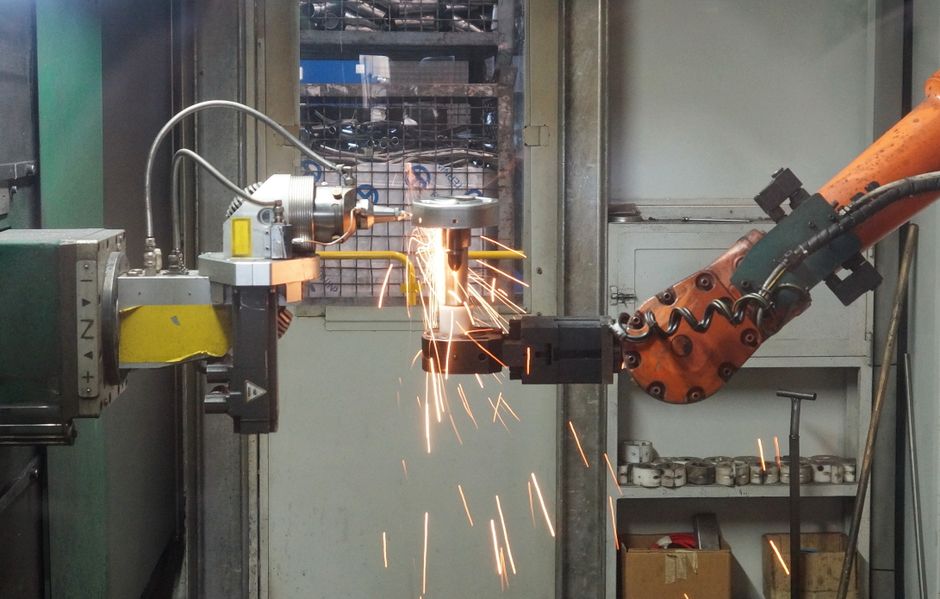
Featured image by alex on Pexels