3D Printing for Concept Visualization
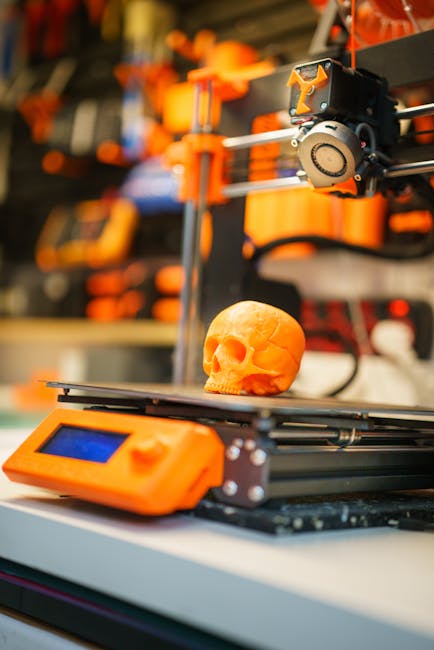
Table of Contents
- Understanding 3D Printing: The Foundation for Visualization
- The Role of 3D Printing in Visualizing Concepts
- Designing for 3D Printed Visualization
- Applications Across Industries
- Benefits and Advantages of 3D Printed Visualization
- Challenges and Considerations
- The Future of 3D Printing in Concept Visualization
Understanding 3D Printing: The Foundation for Visualization
At its core, 3D printing, or additive manufacturing, is a revolutionary approach to creation. Unlike traditional subtractive methods that carve away material, additive manufacturing builds objects layer by painstaking layer from a digital design. This fundamental principle unlocks unparalleled design freedom and agility, making it an indispensable tool for concept visualization. Imagine transforming abstract ideas into tangible forms with remarkable speed and precision.
Several key 3D printing technologies are particularly well-suited for bringing concepts to life. Fused Deposition Modeling (FDM) is perhaps the most accessible, extruding thermoplastic filament layer by layer. It’s a workhorse for quick, cost-effective iterations and basic form studies. For more intricate details and smoother surface finishes, Stereolithography (SLA) utilizes UV lasers to cure liquid photopolymer resin. This technology excels at producing highly detailed prototypes that closely resemble final production parts. Selective Laser Sintering (SLS), on the other hand, uses a laser to fuse powdered materials, typically nylon or other polymers, creating strong, functional parts without the need for support structures. This makes it ideal for complex geometries and even end-use parts.
The choice of material significantly impacts the outcome of your concept models. For FDM, common filaments like PLA (Polylactic Acid) offer ease of use and biodegradability, perfect for early-stage design exploration. ABS (Acrylonitrile Butadiene Styrene) provides greater strength and temperature resistance, suitable for models that require more durability. SLA resins offer a wide range of properties, from rigid and clear to flexible and even castable for further development. For SLS, nylon powders are a popular choice due to their excellent mechanical properties, allowing for robust and functional prototypes. The ability to select materials that mimic the intended final product’s feel and function is crucial for effective visualization and gathering insightful feedback.
The journey from a nascent idea to a physical concept model via 3D printing is a streamlined and iterative process. It begins with a digital design, typically created in CAD (Computer-Aided Design) software. This 3D model serves as the blueprint for the printer. Once finalized, the design is exported in a common file format, such as STL or 3MF. This file is then processed by "slicer" software, which digitally cuts the model into hundreds or thousands of thin layers and generates the machine instructions (G-code) for the 3D printer. The printer then executes these instructions, depositing or curing material layer by layer. The resulting printed object can then be removed from the build platform, cleaned, and post-processed (e.g., sanding, painting, assembly) to achieve the desired aesthetic and functional qualities. This rapid iteration cycle significantly accelerates the feedback loop, allowing teams to quickly refine their ideas. For a deeper dive into the benefits of this rapid prototyping, explore our article on 3D Printing Prototyping: Speed, Cost, & Design Freedom.
Case Study: Automotive Interior Mock-up
A major automotive manufacturer was developing a new in-car infotainment system. Early digital renderings and UI/UX designs were promising, but the team struggled to convey the tactile feel and spatial integration of the proposed dashboard layout to stakeholders, including design engineers and marketing teams. They utilized FDM printing to create full-scale, physical mock-ups of the dashboard section featuring the new screen, buttons, and central console. By printing in a neutral grey PLA, they focused on form, ergonomics, and how the components would interact with the driver. This allowed for immediate physical evaluation, leading to adjustments in button placement and screen angle that were only apparent in the physical form. This direct interaction proved invaluable for aligning the vision of diverse teams and informed crucial decisions before committing to expensive tooling. This process is analogous to how a well-defined process map, like one generated through Service Blueprinting: Map Your Service for Innovation, can clarify complex service interactions for stakeholders.
This ability to rapidly materialize ideas makes 3D printing an unparalleled ally when presenting concepts to various stakeholders. Understanding who these key individuals are and what motivates them is crucial for buy-in. For more on this vital aspect of innovation, refer to Unmask Your Idea’s Allies: Identifying Key Stakeholders for Novel Concepts. The iterative nature of 3D printing directly supports the rapid prototyping cycles essential for validating designs and gathering feedback, a process that has been extensively studied in fields like product development. For instance, research in academic journals often highlights the significant impact of early prototyping on reducing development costs and time-to-market.
The Role of 3D Printing in Visualizing Concepts
In the dynamic landscape of innovation and creativity, the journey from a nascent idea to a fully realized product or service is often fraught with ambiguity. This is where 3D printing emerges as a revolutionary tool, acting as a powerful bridge between the abstract realm of 2D designs and the tangible reality of physical forms. No longer are groundbreaking concepts confined to sketches on a whiteboard or lines of code; they can be held, touched, and experienced, transforming the very process of ideation.
One of 3D printing’s most significant contributions lies in its ability to drastically enhance stakeholder understanding and communication. Imagine presenting a complex architectural model or a new ergonomic device solely through digital renderings. While effective for some, it rarely captures the full essence of a design. A physical 3D print, however, offers an immediate and intuitive grasp of scale, proportion, and form. This tangible representation allows everyone from investors to end-users to truly see the vision, fostering richer discussions and reducing the likelihood of misunderstandings. This is particularly crucial when you’ve worked to Unmask Your Idea’s Allies: Identifying Key Stakeholders for Novel Concepts, ensuring everyone involved is aligned and enthusiastic.
Furthermore, 3D printing is an indispensable catalyst for early-stage design iteration and refinement. The ability to rapidly produce physical prototypes means designers can test multiple variations of a concept in a matter of hours or days, rather than weeks or months. This swift feedback loop allows for immediate identification of areas for improvement, enabling iterative adjustments that lead to a more robust and user-centric final design. This agility is a core tenet of modern product development, as highlighted by the principle of 3D Printing Prototyping: Speed, Cost, & Design Freedom. It’s about getting it wrong, quickly and affordably, so you can get it right.
Perhaps most critically, 3D printing empowers teams to identify design flaws and potential usability issues long before committing to expensive tooling and mass production. A concept that looks brilliant on screen might reveal ergonomic discomfort, structural weaknesses, or manufacturing challenges when materialized. By producing functional prototypes, these potential pitfalls can be uncovered and addressed at the earliest possible stage, saving significant time and resources down the line. This proactive problem-solving is invaluable, akin to the foresight gained from Service Blueprinting: Map Your Service for Innovation, where potential friction points are identified and smoothed out in advance.
The impact of this tangible feedback loop is well-documented across industries. For example, the aerospace sector has widely adopted 3D printing for rapid prototyping of complex components, allowing for swift validation of aerodynamic designs and internal structures, as explored in publications like Aerospace America. Similarly, the medical field leverages this technology to create patient-specific anatomical models for surgical planning, dramatically improving outcomes and reducing risks by allowing surgeons to "practice" on a physical representation of the patient’s anatomy, a practice detailed in research featured in journals such as The Lancet Digital Health. Ultimately, 3D printing transforms abstract ideas into concrete realities, accelerating the innovation cycle and fostering a more collaborative and effective design process.
Designing for 3D Printed Visualization
Transforming a nascent idea into a tangible, three-dimensional representation is a pivotal step in the innovation journey. When leveraging 3D printing for concept visualization, meticulous design considerations are paramount. It’s not just about creating a pretty model; it’s about ensuring it’s manufacturable and effectively communicates your vision.
Key Considerations for CAD Modeling: Printability, Tolerances, and Scale
The transition from digital design to a physical print hinges on a few critical elements. Printability is the first hurdle. This involves understanding the limitations and strengths of your chosen 3D printing technology. Will the chosen design feature overhangs that require extensive support structures? Are there delicate features that are prone to breaking during printing or post-processing? Designing with these factors in mind from the outset significantly streamlines the printing process and reduces potential failures.
Equally important are tolerances. These refer to the acceptable variations in the dimensions of a printed part. For concept models, extreme precision might not always be necessary, but understanding the typical tolerances of your printing method is crucial. If parts need to fit together, or if critical dimensions need to be maintained, these must be accounted for in your CAD model. For instance, if you’re designing a mechanism that needs to move, you’ll need to factor in a small gap between mating parts to prevent them from fusing together during the printing process.
Finally, scale plays a vital role in visualization. A concept model might be printed at a fraction of its real-world size to convey overall form and proportion, or at a larger scale to highlight intricate details. Ensure your CAD model is designed at the correct scale from the beginning, or that you have a clear plan for scaling it accurately within your slicing software. Misjudging scale can lead to a concept that, while beautifully printed, fails to accurately represent the intended product or environment. For a deeper dive into the advantages of 3D printing in this context, explore the benefits of 3D Printing Prototyping: Speed, Cost, & Design Freedom.
Optimizing Model Geometry for Different Printing Technologies
The world of 3D printing isn’t monolithic. Different technologies – such as Fused Deposition Modeling (FDM), Stereolithography (SLA), and Selective Laser Sintering (SLS) – have distinct strengths and weaknesses that influence how you should model your concept.
For FDM, which builds objects layer by layer from extruded thermoplastic, minimizing the need for support structures is often key. This can be achieved by designing with angled surfaces rather than steep overhangs, and orienting the model on the build plate to maximize self-supporting features. SLA, which uses UV light to cure liquid resin, excels at producing highly detailed and smooth surfaces. Models for SLA can often be more complex, but consider the removal of internal cavities or the need for drainage if printing hollow objects. SLS, which fuses powdered material with a laser, is excellent for producing robust parts and often requires less support due to the nature of the powder bed. However, fine details can sometimes be lost if the laser power or powder granularity isn’t optimized. Understanding these nuances allows you to tailor your geometry for the most effective and efficient print. As highlighted in a report by McKinsey & Company on the future of manufacturing, technology selection is a strategic decision.
Techniques for Creating Detailed and Accurate Concept Models
Achieving a high level of detail in your concept visualizations is essential for conveying intricate design elements and functional aspects. Techniques like using filleted edges and chamfers can significantly improve the aesthetic appeal and perceived quality of a printed model, making it feel more polished and less like a rough prototype. These small refinements can dramatically enhance how a stakeholder perceives the design.
For complex geometries, consider breaking down your model into smaller, manageable parts that can be printed separately and then assembled. This approach not only simplifies printing by reducing the need for complex supports but also allows for easier correction or modification of individual components. Multi-material printing, where available, can also be leveraged to represent different material properties or aesthetic finishes within a single model, adding another layer of realism. Furthermore, incorporating text or intricate patterns directly into the model requires careful attention to minimum feature size for your chosen printing technology.
The clarity of your concept model can directly influence the understanding of all involved. When presenting these visualizations, it’s crucial to have a clear understanding of who you’re presenting to. This process of identifying your audience is vital, and resources on Unmask Your Idea’s Allies: Identifying Key Stakeholders for Novel Concepts can provide valuable guidance.
Software Tools and Workflows for Preparing Models for Printing
The journey from a fully realized CAD design to a printable file involves specialized software. CAD (Computer-Aided Design) software like SolidWorks, Autodesk Fusion 360, or Blender are your primary tools for creating the initial 3D models. Once your design is complete, the next crucial step is to export it into a format compatible with slicing software, typically STL or 3MF.
Slicing software, such as Cura, PrusaSlicer, or Simplify3D, acts as the bridge between your 3D model and the 3D printer. It takes your digital model and "slices" it into thousands of thin horizontal layers, generating the G-code instructions that the printer follows. Within the slicer, you’ll define crucial print parameters like layer height, infill density, print speed, and support structures. This is where you optimize the geometry discussed earlier, orienting the model for printability and ensuring adequate support where needed.
For more complex workflows, especially when visualizing service interactions or user journeys, consider integrating concepts from tools like Service Blueprinting: Map Your Service for Innovation. While blueprinting is a conceptual mapping tool, the physical models derived from it can offer a tangible representation of touchpoints and user experiences, enhancing communication and understanding among teams and stakeholders.
| Software Category | Examples | Primary Function |
|---|---|---|
| CAD Software | SolidWorks, Fusion 360, Blender | 3D Model Creation and Design |
| Slicing Software | Cura, PrusaSlicer, Simplify3D | Model Preparation for Printing, G-code Generation |
| Mesh Editing Tools | Meshmixer, Netfabb | Model Repair, Simplification, and Preparation for Printing |
These tools, combined with a well-defined workflow, empower you to translate abstract concepts into tangible, informative visualizations that accelerate the innovation process.
Applications Across Industries
The transformative power of 3D printing for concept visualization extends far beyond a single niche, permeating virtually every sector driven by innovation and creativity. Its ability to quickly translate digital designs into tangible, inspectable objects offers a universal advantage for idea validation, stakeholder communication, and accelerated development cycles.
In Product Development, the impact is immediate and profound. From sleek consumer electronics to intricate industrial components, 3D printing allows designers and engineers to rapidly prototype iterations of their ideas. This means fewer costly mistakes down the line and a much shorter path from concept to a functional proof-of-concept. The insights gained from holding and testing these physical models are invaluable, informing design refinements and ensuring that the final product truly meets user needs. The principle of 3D Printing Prototyping: Speed, Cost, & Design Freedom is not just a theoretical advantage; it’s a practical reality that allows businesses to outpace their competitors.
For Architecture and Real Estate, 3D printing offers a powerful way to visualize complex spatial relationships and design aesthetics. Instead of relying solely on 2D drawings or static renderings, architects and developers can now produce highly detailed physical models of buildings, entire neighborhoods, and urban master plans. These tactile representations are instrumental in client presentations, public consultations, and internal design reviews, fostering a shared understanding and facilitating crucial feedback. Imagine presenting a towering skyscraper or a sprawling new development as a miniature replica – the impact on stakeholder buy-in and design refinement is immense. This directly aids in Unmasking Your Idea’s Allies: Identifying Key Stakeholders for Novel Concepts, as tangible models make abstract ideas accessible to a wider audience.
The Automotive and Aerospace industries, notorious for their complex engineering and stringent safety requirements, have also embraced 3D printing for visualization. From the aerodynamic contours of a new car to the intricate internal mechanisms of an aircraft engine, visualizing these components in three dimensions before mass production is critical. It allows engineers to identify potential fitment issues, test ergonomic considerations, and communicate design intent effectively across large, multidisciplinary teams. This visual clarity is essential for understanding the entire system.
In Medical and Healthcare, the applications are perhaps the most life-changing. Patient-specific anatomical models, printed from CT scans or MRIs, provide surgeons with an unprecedented tool for pre-operative planning. These models allow them to rehearse complex procedures, anticipate challenges, and even explain surgical approaches to patients with a clarity that words alone cannot achieve. Furthermore, 3D printed guides can enhance surgical precision, leading to better outcomes. The visualization of these complex biological structures can significantly improve the entire patient journey, aligning with the principles of effective service design, as explored in Service Blueprinting: Map Your Service for Innovation.
Finally, the realms of Art, Design, and Fashion are experiencing a renaissance thanks to 3D printing. Sculptors can bring intricate, previously unachievable forms to life. Jewelers can create bespoke, highly detailed pieces with unparalleled precision. And in fashion, designers are exploring the creation of custom-fit apparel, avant-garde accessories, and even entire garments that push the boundaries of traditional manufacturing. The ability to iterate on complex forms and textures quickly allows these creators to explore their vision with remarkable freedom. A prime example of this is the way 3D printed designs have begun to feature prominently in high fashion runways, showcasing the material’s potential for both aesthetic and functional innovation. Forbes has reported on the growing integration of additive manufacturing in this creative sector.
Case Study: Personalized Prosthetics in Medicine
A startup company specializing in pediatric prosthetics used 3D printing to create highly customized and aesthetically pleasing prosthetic limbs for children. Instead of relying on generic, often uncomfortable, and stigmatizing designs, they were able to scan a child’s residual limb and then design a prosthetic that fit perfectly and could be personalized with vibrant colors and characters. This not only improved the physical comfort and functionality for the child but also significantly boosted their confidence and self-esteem. The rapid prototyping allowed for quick adjustments based on feedback from the child and their parents, leading to a final product that was a perfect blend of medical necessity and personal expression, demonstrating the power of 3D printing in improving quality of life.
Benefits and Advantages of 3D Printed Visualization
The leap from a spark of an idea to a tangible reality has always been a crucial, yet often arduous, journey. For innovators and creators, the ability to quickly and affordably visualize nascent concepts is paramount. This is where 3D printing for concept visualization shines, offering a transformative approach that accelerates the entire ideation process.
One of the most compelling advantages of 3D printing lies in its sheer speed and cost-effectiveness when contrasted with traditional prototyping methods. Gone are the days of lengthy manufacturing lead times and prohibitive tooling costs for early-stage models. With 3D printing, designers can iterate on a physical representation of their concept within hours or days, at a fraction of the expense. This rapid prototyping capability, as detailed in 3D Printing Prototyping: Speed, Cost, & Design Freedom, allows for swift validation and refinement, ensuring that resources are invested in designs that are already well-shaped and understood.
Furthermore, 3D printing liberates us from the constraints of conventional manufacturing. It empowers the creation of complex geometries and intricate details that would be prohibitively difficult or impossible to achieve through subtractive methods like machining or injection molding. This opens up entirely new avenues for design exploration, allowing for the visualization of novel forms, functional integrations, and ergonomic considerations that might otherwise remain confined to the digital realm. Imagine visualizing a bio-mimetic product or an advanced aerodynamic surface – 3D printing makes these ambitious designs tangible for evaluation.
The act of holding a physical prototype dramatically transforms collaboration and feedback loops. Instead of relying solely on 2D drawings or digital renderings, teams can engage with a tangible representation of the concept. This fosters a shared understanding, sparks more insightful discussions, and allows for more nuanced feedback from a wider range of stakeholders. When everyone, from engineers to marketing professionals to potential end-users, can interact with a physical model, the alignment of vision and functionality improves significantly. This is particularly valuable when you consider the diverse perspectives that can be brought to bear on an idea, as discussed in Unmask Your Idea’s Allies: Identifying Key Stakeholders for Novel Concepts.
Ultimately, this accelerated and more inclusive visualization process leads to a significant reduction in the risk of design errors and market rejection. By identifying potential flaws or areas for improvement early in the development cycle, costly mistakes can be avoided. Thoroughly visualized concepts are better understood, leading to more informed decision-making and a higher probability of market acceptance. It’s a proactive approach to innovation that mitigates uncertainty and builds confidence in the direction of development. The process of refining a concept through tangible visualization can also be seen as a form of iterative service design, where the end product’s user experience is mapped and improved, akin to what is achieved through Service Blueprinting: Map Your Service for Innovation.
FAQ: How quickly can I get a 3D printed prototype?
The turnaround time for a 3D printed prototype can vary depending on the complexity of the design, the size of the object, and the printing technology used. However, for many concept visualization models, you can expect to receive them within 24 hours to a few days, a stark contrast to traditional prototyping methods that could take weeks or months.
FAQ: What materials can be used for concept visualization 3D prints?
The range of materials available for 3D printing is extensive and continues to grow. For concept visualization, common choices include various plastics like PLA and ABS, which are affordable and easy to print. More advanced applications might utilize resins for higher detail, or even flexible filaments to simulate specific material properties. For a deeper dive into the material science behind 3D printing, resources like the National Institute of Standards and Technology (NIST) offer valuable insights into material characterization and standards.
Challenges and Considerations
While the allure of rapid, tangible concept visualization through 3D printing is undeniable, navigating its practical application requires a keen understanding of its inherent challenges and considerations.
Material Limitations and Aesthetic Qualities: The universe of 3D printable materials is vast and ever-expanding, but each comes with its own set of properties that can impact the final aesthetic. From the stark, matte finish of some plastics to the slightly grainy texture of certain resins, achieving a perfectly polished, production-ready look straight off the printer can be a significant hurdle. For early-stage concepts, the focus is often on form and function, but for presentations to stakeholders – whose buy-in is crucial, as discussed in Unmask Your Idea’s Allies: Identifying Key Stakeholders for Novel Concepts – the visual fidelity can be just as important as the underlying idea. Understanding material strengths, flexibility, translucency, and color options is paramount to selecting the right technology and medium for your visualization.
Achieving Desired Levels of Detail and Surface Finish: The resolution of 3D printers varies dramatically. While high-end industrial machines can render intricate details with astonishing accuracy, more accessible desktop printers might struggle with fine filigree or sharp edges, leading to a less refined output. The surface finish is another critical factor. Layers from the printing process can be visible, requiring post-processing to achieve a smooth, paintable surface. This is where an understanding of 3D Printing Prototyping: Speed, Cost, & Design Freedom becomes vital; while 3D printing offers design freedom, achieving a specific level of finish might necessitate trade-offs in speed or cost.
Case Study: Reimagining Ergonomics with SLA Printing
A startup developing a novel ergonomic grip for power tools faced a challenge: traditional manufacturing methods were too slow and expensive for iterative design testing. They opted for Stereolithography (SLA) printing, known for its high detail and smooth surface finish. Initially, they were disappointed by the slight translucency of the standard resin and the visible layer lines on tighter curves. However, by experimenting with opaque resins and employing careful post-processing techniques like vapor smoothing, they were able to produce highly convincing prototypes. These visually appealing and functionally accurate models were instrumental in securing early funding and demonstrating the product’s potential to investors and potential users.
Post-Processing Requirements: It’s a common misconception that 3D printed models are ready for immediate use straight from the printer. Support structures, essential for printing complex geometries, must be carefully removed, often leaving behind small marks or blemishes. Sanding, filling, and priming are frequently required to achieve a smooth, uniform surface, especially if painting or coating is intended. For highly polished finishes, techniques like multi-stage sanding, polishing compounds, or even professional spray painting might be necessary. This added step can significantly increase the time and cost associated with bringing a concept to life, impacting the overall project timeline and requiring careful planning, much like mapping out your service journey with Service Blueprinting: Map Your Service for Innovation.
Scalability and Accessibility of 3D Printing Services: While desktop 3D printers are becoming increasingly affordable and accessible for individuals and small teams, scaling up to print larger objects or batches of prototypes can present its own set of challenges. Access to industrial-grade printers with larger build volumes and a wider range of advanced materials is often through specialized service bureaus. Evaluating these services requires consideration of their turnaround times, material offerings, quality control processes, and pricing structures. For businesses looking to integrate 3D printing into their workflow, understanding the landscape of these service providers is crucial for making informed decisions about outsourcing versus in-house capabilities. As highlighted by research in fields like additive manufacturing, the industry is rapidly evolving, with companies constantly pushing the boundaries of what’s possible in terms of speed, material science, and accessibility. For a deeper dive into the economic aspects of additive manufacturing, sources like the Formnext conference often provide valuable insights into current trends and future developments.
The Future of 3D Printing in Concept Visualization
The pace of innovation is accelerating, and at the heart of this surge lies the transformative power of 3D printing for concept visualization. We’re not just talking about early-stage mock-ups anymore; we’re entering an era where the physical manifestation of an idea is as fluid and dynamic as the digital realm itself. This evolution is being driven by several key advancements that are reshaping how we bring novel concepts to life.
One of the most significant drivers is the relentless progress in materials science and printing resolution. Gone are the days of limited plastic options and grainy finishes. Today, we’re seeing an explosion of advanced materials, from high-strength composites and biocompatible resins to flexible elastomers and even conductive inks. This diversity allows for prototypes that not only look the part but also mimic the functional properties of the final product, offering unprecedented fidelity in concept testing. Coupled with ever-increasing printing resolutions, these materials enable us to capture intricate details and subtle design nuances, making the visualization process incredibly rich and informative.
Beyond the tangible, the future of concept visualization is inherently interactive. The integration of 3D printing with augmented reality (AR) and virtual reality (VR) is creating immersive experiences that were once the stuff of science fiction. Imagine holding a 3D-printed prototype in your hand and then, with a simple gesture, overlaying it with digital information, viewing its internal components in a VR environment, or collaboratively iterating on its design with stakeholders across the globe. This fusion of physical and digital allows for a much deeper understanding of a concept, facilitating quicker feedback loops and more informed decision-making. This is particularly vital when trying to get buy-in from Unmask Your Idea’s Allies: Identifying Key Stakeholders for Novel Concepts.
Furthermore, artificial intelligence is stepping in to optimize the very process of bringing concepts to the printer. AI-driven design tools are now capable of analyzing a digital model and automatically suggesting modifications to enhance its printability, reducing waste and improving structural integrity without compromising the core design intent. This means fewer design-for-manufacturing headaches and more time spent on innovation. This synergistic relationship between AI and 3D printing is paving the way for more complex and functional prototypes to be realized with greater efficiency.
Perhaps the most profound impact of these advancements is the democratization of prototyping. 3D Printing Prototyping: Speed, Cost, & Design Freedom has fundamentally lowered the barriers to entry for individuals and small businesses. Startups can now iterate on complex designs at a fraction of the cost and time previously required, fostering a more dynamic and inclusive innovation ecosystem. This rapid iteration cycle accelerates the entire innovation process, allowing for more experimentation and a greater chance of discovering breakthrough solutions. This shift also has implications for how we map out service offerings, aligning with principles of Service Blueprinting: Map Your Service for Innovation. The ability to quickly produce tangible representations of services or user experiences can be invaluable.
The ongoing evolution of 3D printing is not just about faster or cheaper production; it’s about unlocking new dimensions of understanding and collaboration. As we continue to push the boundaries of what’s possible with materials, resolution, and digital integration, the concept visualization landscape will become increasingly dynamic, interactive, and accessible, accelerating the pace of innovation across every industry. For a deeper dive into the future of manufacturing and its implications, consider insights from publications like McKinsey & Company’s reports on advanced manufacturing which frequently highlight the role of additive manufacturing.
Featured image by Jakub Zerdzicki on Pexels