Agile for Product Innovation
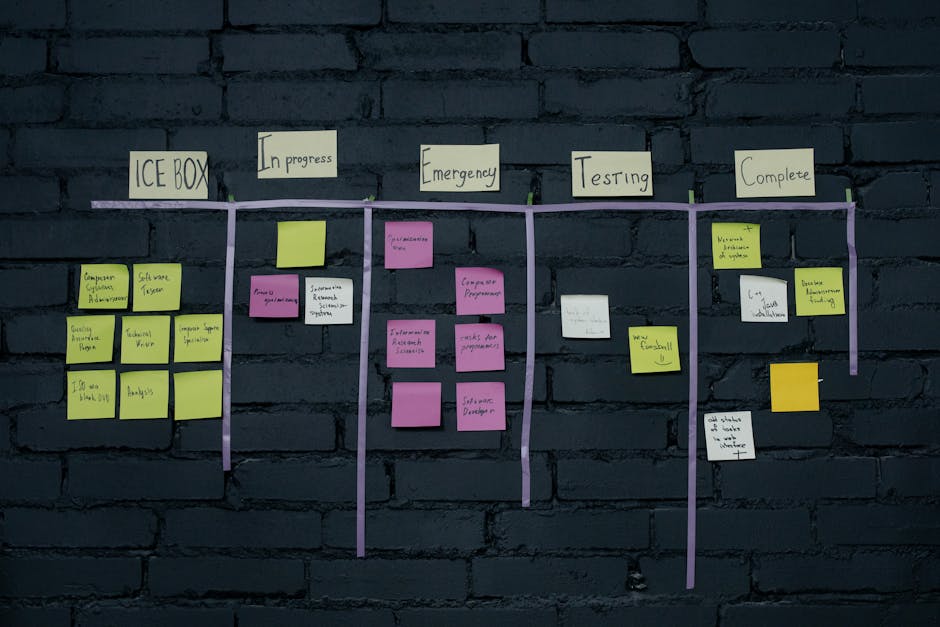
Table of Contents
- Understanding Agile Principles in the Context of Innovation
- Scrum Framework for Agile Product Innovation
- Kanban for Continuous Innovation and Flow
- Lean Startup Principles Integrated with Agile
- Agile Methodologies for Idea Generation and Validation
- Challenges and Best Practices for Agile Product Innovation
Understanding Agile Principles in the Context of Innovation
Agile, often associated with the world of software development, is far more than just a set of methodologies for coding. At its heart, Agile embodies a mindset and a set of core values that are profoundly applicable to driving Innovation & Creativity. It prioritizes individuals and interactions over processes and tools, working solutions over comprehensive documentation, customer collaboration over contract negotiation, and responding to change over following a rigid plan. This philosophical underpinning makes Agile a powerful engine for innovation, particularly when the path forward is uncertain, as is often the case with groundbreaking new products or services.
The iterative and adaptive nature of Agile is precisely what fosters exploration and learning, cornerstones of effective innovation. Instead of aiming for a perfect, fully-formed product from day one, Agile encourages breaking down large, complex ideas into smaller, manageable chunks. This allows teams to build, test, and learn rapidly in cycles. Each iteration, or sprint, presents an opportunity to experiment with new hypotheses, gather feedback, and pivot based on real-world insights. This constant cycle of experimentation and learning is crucial for validating assumptions, discovering unmet needs, and ultimately shaping a product that truly resonates with its target audience. This is the essence of the Master the Build-Measure-Learn Loop: Your Guide to Agile Innovation concept, which is fundamental to Lean Startup for Agile Innovation: Build, Measure, Learn Faster.
This iterative approach stands in stark contrast to traditional project management, which often relies on linear, waterfall-style planning. In a traditional model, extensive upfront planning is followed by a lengthy execution phase, with feedback typically arriving only at the end. For innovation, where the goal is to discover what the market actually wants or needs, this approach can be inefficient and even detrimental. It locks teams into a predetermined path, making it difficult and costly to adapt to new information or market shifts. Agile, on the other hand, embraces emergent requirements and welcomes change, allowing for more flexible and responsive product development. This adaptability is essential for navigating the inherent uncertainties of true innovation, and it underpins the effectiveness of Agile Product Development.
Crucially, Agile innovation thrives on robust customer feedback loops. By delivering working increments of the product early and often, Agile teams can gather invaluable insights from actual users. This direct feedback allows for course correction, feature refinement, and a deeper understanding of customer pain points and desires. This continuous dialogue ensures that the innovation process remains customer-centric, leading to products that are not only novel but also highly relevant and desirable. This emphasis on user validation is a key differentiator when compared to approaches that might rely more heavily on internal assumptions or market research alone. Effective feedback integration can also inform choices around Sustainable Product Design Innovation, ensuring that new products meet evolving consumer and environmental expectations. For startups, adopting these principles from the outset can be a game-changer, as highlighted in our discussion on Agile for Startup Innovation and Agile Product Development for Startups. The successful implementation of Agile innovation also requires careful consideration of Resource Allocation for Agile Innovation Teams.
Scrum Framework for Agile Product Innovation
The Scrum framework, a popular Agile Innovation Frameworks: Drive Faster, Smarter Breakthroughs within the broader Agile Product Development landscape, offers a robust structure for navigating the inherent uncertainties of product innovation. At its heart, Scrum is built around iterative cycles, fostering rapid learning and adaptation crucial for discovering product-market fit.
Key Roles for Innovation Ignition:
Scrum defines three essential roles, each playing a vital part in fueling innovation:
- Product Owner: This individual is the visionary, holding the ultimate responsibility for maximizing the value of the product. For innovation, the Product Owner acts as the compass, constantly scanning the horizon for market needs, customer pain points, and emerging opportunities. They translate abstract ideas into tangible features and prioritize the Product Backlog, ensuring the team is always pursuing the most impactful innovations.
- Scrum Master: More than just a process facilitator, the Scrum Master is a servant-leader who coaches the team, removes impediments, and champions the Scrum values. In an innovation context, they foster an environment where experimentation is encouraged, psychological safety is paramount, and the team can freely explore What Is Innovation?. They help shield the team from distractions, allowing them to focus on creative problem-solving and Unlocking Innovation with First Principles.
- Development Team: This self-organizing and cross-functional group is responsible for delivering a potentially releasable Increment of the product at the end of each Sprint. For innovation, the Development Team is the engine of creativity. Their diverse skills and collaborative spirit enable them to rapidly prototype, test hypotheses, and transform nascent ideas into working solutions. They are the embodiment of Agile Innovation Teams: The Unbeatable Power of Collaborative Breakthroughs.
Core Events for Accelerated Learning:
Scrum’s events are meticulously designed to promote continuous feedback and rapid iteration, accelerating the innovation cycle:
- Sprint Planning: This event sets the stage for a focused period of work, typically 1-4 weeks. The team collaborates to define a Sprint Goal and select Product Backlog items to work on, creating a Sprint Backlog. For innovation, this involves identifying specific hypotheses to test or features to explore within the Sprint.
- Daily Scrum: A brief, 15-minute synchronization meeting where the Development Team inspects progress toward the Sprint Goal and identifies any impediments. This daily touchpoint ensures transparency and allows for quick course correction, vital for staying agile in the face of evolving insights.
- Sprint Review: At the end of each Sprint, the team demonstrates the Increment to stakeholders and gathers feedback. This is a critical moment for innovation, allowing for crucial validation of assumptions and providing direction for future development. It’s where the Master the Build-Measure-Learn Loop: Your Guide to Agile Innovation truly comes alive.
- Sprint Retrospective: Following the Sprint Review, the team reflects on the past Sprint – what went well, what could be improved, and what actions to take in the next Sprint. This continuous improvement loop is fundamental to building more effective Agile Product Development for Startups and fostering a culture of learning.
Artifacts Guiding the Innovation Journey:
Scrum’s artifacts provide transparency and structure to the product development process, particularly in the quest for product-market fit:
- Product Backlog: A dynamic, ordered list of everything that might be needed in the product. For innovation, this is the fertile ground for ideas, market research findings, user stories, and experimental outcomes. The Product Owner continuously refines and re-prioritizes this backlog based on learnings.
- Sprint Backlog: The set of Product Backlog items selected for the Sprint, plus the plan for delivering the Increment and realizing the Sprint Goal. This represents the team’s commitment for the Sprint and serves as a roadmap for focused innovation efforts.
- Increment: The sum of all the Product Backlog items completed during a Sprint and the value of the increments of all previous Sprints. This is the tangible output of innovation, a piece of potentially shippable product that can be tested, validated, and used to gather real-world feedback, directly informing the Lean Startup for Agile Innovation: Build, Measure, Learn Faster cycle.
Case Study: Pivoting a Fintech App with Scrum
A fintech startup was developing a novel budgeting app. Early user testing revealed that while the core budgeting features were appreciated, users were more interested in personalized financial advice. The Product Owner, using feedback from Sprint Reviews, re-prioritized the Product Backlog to focus on AI-driven recommendations. The Development Team, empowered by the Scrum Master, quickly iterated through several recommendation algorithms during Sprints. Each Sprint Review provided valuable data on user engagement with different advice types. This iterative approach, guided by Scrum events and artifacts, allowed the startup to pivot effectively, ultimately discovering a stronger product-market fit and a more sustainable business model. This exemplifies how Scrum facilitates Agile for Startup Innovation.
Adapting Scrum for Early-Stage Discovery:
While Scrum is often associated with mature product development, its principles are highly adaptable for early-stage product discovery and experimentation. In this phase, the focus shifts from delivering a polished product to validating core assumptions about the problem and solution.
- Shorter Sprints: Consider very short Sprints (e.g., 1 week) to maximize the frequency of learning.
- Experiment-Focused Backlog Items: The Product Backlog might contain more experimental tasks, such as "validate customer need for X" or "prototype solution Y to test feasibility."
- Leaner Reviews: Sprint Reviews might focus on learning and feedback rather than a fully functional increment, incorporating user interviews and prototype testing.
- Emphasis on Viability: The "Increment" might be a functional prototype, a detailed user flow, or a set of validated customer insights, all contributing to the understanding of product viability. This aligns with the core principles of Innovation & Creativity in Product Development.
By embracing the structure of Scrum, teams can harness its power to de-risk innovation, reduce waste, and systematically uncover breakthrough products that truly resonate with the market, contributing to Product Lifecycle Management (PLM): Boost Profitability & Innovation. Teams might also leverage techniques like SCAMPER for Product Innovation during Sprint Planning or within Sprints to spark new ideas. Moreover, effective Resource Allocation for Agile Innovation Teams is crucial for ensuring these innovative endeavors have the necessary support.
Kanban for Continuous Innovation and Flow
Innovation isn’t a one-off sprint; it’s a continuous journey of discovery, iteration, and refinement. For teams striving for perpetual breakthroughs, Kanban offers a powerful, visually intuitive framework to manage the ebb and flow of creative work, ensuring a steady stream of value delivery. At its core, Kanban is about visualizing your workflow, limiting work in progress, and optimizing for flow. This approach, deeply rooted in the principles of Agile Product Development, is particularly adept at fostering Innovation & Creativity in Product Development.
Visualizing the Innovation Workflow with a Kanban Board
Imagine your entire innovation process, from a nascent idea to a fully realized product feature, laid out before you. That’s the power of a Kanban board. Typically comprising columns representing stages of your workflow – such as "Ideas," "Backlog," "Design," "Development," "Testing," and "Done" – it provides an immediate, at-a-glance understanding of where every initiative stands. This transparency is crucial for effective Agile Innovation Teams: The Unbeatable Power of Collaborative Breakthroughs. Whether you’re exploring new avenues inspired by customer feedback or applying frameworks like SCAMPER for Product Innovation, the board serves as a central hub for the entire team. This visual representation supports Visual Thinking for Innovation: See Your Ideas Come to Life, making complex innovation pipelines digestible and actionable.
Managing Work in Progress (WIP) Limits to Prevent Bottlenecks and Maintain Focus
One of Kanban’s most impactful features is the imposition of Work in Progress (WIP) limits. These limits, applied to individual columns or swimlanes, dictate the maximum number of tasks that can be in a particular stage at any given time. Why is this critical for innovation? Without WIP limits, teams can easily become overloaded, context-switching between too many initiatives. This leads to stalled progress, increased errors, and diminished creativity. By limiting WIP, Kanban forces teams to focus on completing existing work before starting new tasks. This encourages collaboration and problem-solving to unblock items, thereby preventing the dreaded bottlenecks that can cripple an innovation pipeline. This focused approach is vital when considering Resource Allocation for Agile Innovation Teams and ensuring efficient progress through the The Ultimate Guide to the Innovation Process: From Idea to Impact.
FAQ: How do WIP limits directly contribute to better innovation outcomes?
WIP limits force prioritization and focus. Instead of spreading resources thinly across many ideas, teams concentrate on moving a smaller number of high-potential initiatives through the pipeline efficiently. This reduces the risk of good ideas getting lost or stalled due to overload. It also promotes a “stop starting, start finishing” mentality, which is key to demonstrating progress and learning quickly, aligning with the core tenets of the Master the Build-Measure-Learn Loop: Your Guide to Agile Innovation and Lean Startup for Agile Innovation: Build, Measure, Learn Faster.
Measuring Lead Time and Cycle Time for Innovation Throughput
Kanban provides invaluable metrics for understanding and optimizing your innovation throughput. Lead time is the total time it takes for an item to move from being requested (e.g., added to the backlog) to being completed. Cycle time, on the other hand, measures the time an item spends actively being worked on, from the moment work begins on it to when it’s finished. By diligently tracking these metrics, teams gain deep insights into the efficiency of their innovation process. Are certain stages consistently taking longer than others? Are there opportunities to streamline handoffs or reduce wait times? These data points are fundamental for continuous improvement and informed decision-making. They help answer crucial questions about the speed and predictability of innovation, feeding directly into Innovation Metrics for Product Development: Measure What Matters. For example, understanding lead times for new feature development can inform the Product Lifecycle Management (PLM): Boost Profitability & Innovation strategy.
Applying Kanban for Ongoing Feature Development and Improvement Post-Launch
The utility of Kanban extends far beyond the initial product development phase. Once a product is launched, the journey of innovation doesn’t end; it evolves. Kanban is exceptionally well-suited for managing the continuous stream of improvements, bug fixes, and new feature requests that arise post-launch. Teams can maintain a dedicated Kanban board, or a section of a larger board, to track these ongoing activities. This ensures that customer feedback is integrated, market shifts are responded to, and the product remains competitive and relevant. Whether you’re adapting to new market demands, refining user experience based on analytics, or even considering the long-term impact of Sustainable Product Design Innovation, Kanban provides the structure to keep these iterative cycles flowing smoothly. This iterative improvement is a hallmark of effective Agile Product Development for Startups and established organizations alike, contributing to sustained growth and market leadership.
FAQ: Can Kanban be used for disruptive innovation or purely exploratory work?
Absolutely. While Kanban excels at managing predictable flows, it can be adapted for more exploratory innovation. For purely exploratory work, the “Ideas” or “Discovery” columns might have looser WIP limits, or the focus might shift to rapidly cycling through small experiments to validate hypotheses. Frameworks like Agile Innovation Frameworks: Drive Faster, Smarter Breakthroughs often integrate Kanban principles with methods for exploring novel concepts, perhaps inspired by techniques like unlocking innovation with Unlocking Innovation with First Principles. The key is to adjust the board’s structure and WIP limits to suit the nature of the innovation being pursued, ensuring continuous learning and adaptation.
In essence, Kanban empowers innovation teams to move with agility, clarity, and purpose. By visualizing the work, controlling the flow, and measuring progress, it transforms the often chaotic process of innovation into a more predictable and sustainable engine for creating value. This structured yet flexible approach is fundamental to achieving consistent breakthroughs and staying ahead in today’s rapidly evolving landscape.
Lean Startup Principles Integrated with Agile
The magic of Agile for product innovation truly ignites when it embraces the foundational principles of the Lean Startup methodology. This isn’t about choosing one over the other; it’s about a powerful synergy that accelerates learning and reduces waste. At its core, Lean Startup offers a framework for navigating the inherent uncertainty of innovation. The central engine of this framework is the Build-Measure-Learn feedback loop, a concept we explore in detail in our guide to Master the Build-Measure-Learn Loop: Your Guide to Agile Innovation. This loop aligns beautifully with Agile sprints. Each sprint becomes an opportunity to build a small, testable increment of a product, measure its impact with real users, and learn from the data gathered. This iterative cycle allows teams to quickly validate assumptions and adapt their direction based on empirical evidence, a stark contrast to traditional, rigid development cycles. You can learn more about this powerful synergy in Lean Startup for Agile Innovation: Build, Measure, Learn Faster.
The Minimum Viable Product (MVP), a cornerstone of Lean Startup, serves as a critical Agile artifact for validated learning. An MVP isn’t a stripped-down version of a fully-formed product; it’s the smallest possible iteration that allows a team to gather the most learning about customers with the least effort. Within an Agile sprint, developing an MVP allows teams to test core hypotheses about customer needs and market viability early and often. This focus on validated learning is paramount to avoiding the creation of products nobody wants, a common pitfall in product development.
The outcomes of these Agile sprints, fueled by MVP testing, directly inform critical pivot or persevere decisions. If the data from a sprint indicates that a core assumption is incorrect or that the market reception is not as expected, the team must be empowered to pivot – to change a fundamental aspect of the product strategy. Conversely, if the learning validates the current direction, the team perseveres, doubling down on what’s working. This agile decision-making process, informed by real-world feedback, is crucial for navigating the often chaotic landscape of Innovation & Creativity in Product Development.
Furthermore, Lean Startup principles promote hypothesis-driven development and experimentation within Agile frameworks. Instead of embarking on development with a fixed plan, teams formulate explicit hypotheses about their product, its features, and its target audience. Each Agile sprint then becomes an experiment designed to test these hypotheses. This experimental mindset, coupled with robust Innovation Metrics for Product Development: Measure What Matters, ensures that development efforts are always focused on learning and reducing risk. This approach is particularly potent for Agile Product Development for Startups, where resources are often scarce and the need for rapid validation is paramount. Integrating these Lean principles elevates Agile from a mere project management methodology to a potent engine for true product innovation.
- Embracing the Build-Measure-Learn loop is essential for iterative product development.
- MVPs are powerful tools for gathering validated learning in short development cycles.
- Data-driven decisions are crucial for determining whether to pivot or persevere with product strategy.
- Hypothesis-driven experimentation underpins successful Agile innovation.
Agile Methodologies for Idea Generation and Validation
The journey from a nascent idea to a market-ready product is rarely a straight line. It’s a dynamic process, often characterized by experimentation, learning, and adaptation. Agile methodologies, long embraced in software development, offer a powerful framework for navigating this creative landscape, particularly in the crucial early stages of idea generation and validation. At its core, agile is about embracing change and responding to feedback, making it an ideal partner for Innovation & Creativity in Product Development.
Design Thinking and Agile Discovery
The empathetic and iterative nature of Design Thinking aligns beautifully with Agile’s discovery phases. Design Thinking’s emphasis on understanding user needs through empathy, defining problems, ideating solutions, prototyping, and testing (Unlock Innovation: Your Ultimate Guide to the Design Thinking Process) provides a robust methodology for the "what" and "why" of a product. Agile, on the other hand, excels at the "how" and "when," providing the iterative structure to bring those discovered insights to life. By integrating Design Thinking principles into the initial sprints of an Agile product development cycle, teams can ensure they are building the right product, not just building the product right. This early validation is critical to avoid wasted resources, a key consideration in Resource Allocation for Agile Innovation Teams.
Brainstorming and Ideation within Agile Sprints
Agile sprints, typically short, time-boxed periods of work, foster a concentrated environment for creative thinking. Traditional brainstorming sessions can be enhanced with agile techniques. Consider using techniques like "Crazy Eights" for rapid idea sketching, or "Round Robin" where each team member builds on the previous idea. For more structured ideation, tools like SCAMPER for Product Innovation can be integrated into sprint planning or dedicated ideation sessions. These methods encourage divergent thinking, generating a multitude of potential solutions to a defined problem, which then feed into the sprint backlog. The focus is on generating a high volume of ideas within a defined timeframe, fostering a sense of urgency and creativity, and is a fundamental aspect of Agile Product Development.
Rapid Prototyping and A/B Testing for Validation
The power of Agile lies in its ability to quickly translate ideas into tangible forms for testing. Rapid prototyping, whether through wireframes, mockups, or even low-fidelity functional prototypes, allows teams to get feedback early and often. This aligns perfectly with the Master the Build-Measure-Learn Loop: Your Guide to Agile Innovation approach, a cornerstone of both Agile and Lean Startup for Agile Innovation: Build, Measure, Learn Faster methodologies. A/B testing takes this a step further by allowing teams to present different versions of a feature or product to segments of users to empirically determine which performs better against specific metrics. This data-driven validation is crucial for making informed decisions about product direction and feature prioritization, directly informing Innovation Metrics for Product Development: Measure What Matters. For instance, a tech company might A/B test two different onboarding flows to see which leads to higher user retention.
User Story Mapping for Visualizing the Customer Journey
Understanding the user’s experience is paramount in innovation. User Story Mapping, a technique often employed within Agile frameworks, offers a powerful visual tool for mapping out the customer journey. It involves arranging user stories (simple descriptions of a feature from an end-user perspective) visually to represent the flow of user interaction with a product. This holistic view helps teams identify key touchpoints, potential pain points, and opportunities for improvement. By understanding the entire journey, teams can prioritize features that deliver the most value to the customer at each stage, ensuring a more cohesive and user-centric product. This approach is fundamental to creating products that not only solve problems but also delight users, contributing to overall Product Lifecycle Management (PLM): Boost Profitability & Innovation.
| Agile Phase | Design Thinking Component | Ideation Techniques | Validation Methods | Key Output |
|---|---|---|---|---|
| Discovery/Empathize | User Research, Persona Development | Brainstorming, Mind Mapping | Interviews, Surveys | Deep understanding of user needs |
| Define | Problem Framing, "How Might We" Statements | SCAMPER for Product Innovation | Affinity Diagramming | Clearly defined problem statement |
| Ideate | Idea Generation | Crazy Eights, Round Robin | Cross-functional Collaboration | Diverse set of potential solutions |
| Prototype | Low-fidelity Mockups, Wireframes | User Story Mapping | Peer Reviews, Internal Demos | Tangible representation of ideas |
| Test | User Testing, Feedback Collection | A/B Testing, Usability Testing | Analytics, Metrics Analysis | Validated insights and iteration direction |
This structured yet flexible approach allows Agile Innovation Teams to move rapidly from abstract concepts to validated product features, ensuring that innovation efforts are both creative and grounded in user needs and market realities. It’s about building a culture where experimentation is encouraged and learning is continuous, driving faster, smarter breakthroughs that underpin Agile Innovation Frameworks: Drive Faster, Smarter Breakthroughs.
Challenges and Best Practices for Agile Product Innovation
Agile product innovation is a powerful engine for growth, but like any high-performance system, it faces its share of hurdles. Navigating these challenges effectively is key to unlocking its full potential.
Overcoming Resistance to Change and Fostering an Agile Culture
The most significant roadblock to agile product innovation is often human. Resistance to change, deeply ingrained hierarchical structures, and a fear of failure can stifle the very creativity that agile seeks to nurture. To combat this, a strong emphasis on Agile Change Leadership for Innovation is paramount. Leadership must champion agile principles, not just in word but in deed, by demonstrating trust, transparency, and a willingness to adapt. Education and continuous communication about the benefits of agile – faster feedback loops, increased customer satisfaction, and a more dynamic response to market shifts – are crucial. Fostering a culture where experimentation is encouraged and failure is seen as a learning opportunity, rather than a career-ender, is vital. Teams should feel empowered to explore new ideas, perhaps utilizing frameworks like SCAMPER for Product Innovation to brainstorm creatively.
Balancing Innovation Freedom with Process Adherence
A common misconception is that agile means chaos. In reality, agile provides a structure that enables innovation. The challenge lies in finding the sweet spot between giving teams the freedom to explore novel solutions and ensuring that development remains focused, efficient, and aligned with business objectives. This often involves adopting specific Agile Innovation Frameworks and ensuring that Product Lifecycle Management (PLM): Boost Profitability & Innovation principles are integrated. While the initial ideation and discovery phases might allow for broader exploration, the execution phases require disciplined adherence to sprints, backlog management, and defined quality standards. The Build-Measure-Learn Loop is a cornerstone here, ensuring that learning from each iteration informs the next step, maintaining focus without stifling creativity.
Managing Stakeholder Expectations in an Iterative Development Cycle
The iterative nature of agile can be a double-edged sword when it comes to stakeholder management. While it allows for early and frequent delivery of working product increments, it also means that the final vision may evolve. Setting clear expectations from the outset is critical. Stakeholders need to understand that agility is about adapting to feedback and market changes, not about constant scope creep or unfinished work. Regular demonstrations, transparent backlog visibility, and open communication channels are essential. Explaining the value of continuous feedback and how it leads to a better final product can help assuage concerns. Consider the principles outlined in Lean Startup for Agile Innovation: Build, Measure, Learn Faster, as this methodology heavily emphasizes customer feedback and iterative development, which directly addresses stakeholder engagement.
Metrics for Measuring Innovation Success in an Agile Environment
Measuring innovation in an agile context requires a shift from traditional, rigid metrics. Instead of solely focusing on the time and cost to deliver a specific feature, we need to assess the impact of that innovation. This includes metrics like customer adoption rates, user engagement, market share growth, and even the rate of successful experiments. Articles on Innovation Metrics for Product Development: Measure What Matters offer valuable guidance. Additionally, tracking metrics related to team velocity, predictability, and the reduction of technical debt can indirectly indicate a healthy agile innovation process. The ultimate goal is to align metrics with the overarching business strategy, ensuring that innovation efforts are driving meaningful results.
Tools and Technologies That Support Agile Innovation
A robust ecosystem of tools can significantly streamline and enhance agile product innovation. For collaboration and communication, platforms like Slack, Microsoft Teams, and Jira are indispensable. For ideation and visualization, tools supporting Visual Thinking for Innovation: See Your Ideas Come to Life can be incredibly effective. Prototyping tools, continuous integration/continuous deployment (CI/CD) pipelines, and cloud-based development environments all contribute to faster iteration and more efficient feedback loops. Considering the long-term impact, an understanding of how these innovations fit into the broader lifecycle is also key, hence the importance of looking into Product Lifecycle Management (PLM): Boost Profitability & Innovation.
- Prioritize open communication and transparency with all stakeholders.
- Empower teams to experiment and view failures as learning opportunities.
- Define clear, measurable innovation goals aligned with business objectives.
- Leverage agile frameworks and tools that support collaboration and rapid iteration.
- Continuously gather and act upon customer feedback throughout the development process.
- Invest in training and development to build an agile-ready workforce.
- Regularly review and adapt metrics to ensure they reflect true innovation success.
Featured image by cottonbro studio on Pexels