The Printing Press: Gutenberg’s Innovation in Information Dissemination
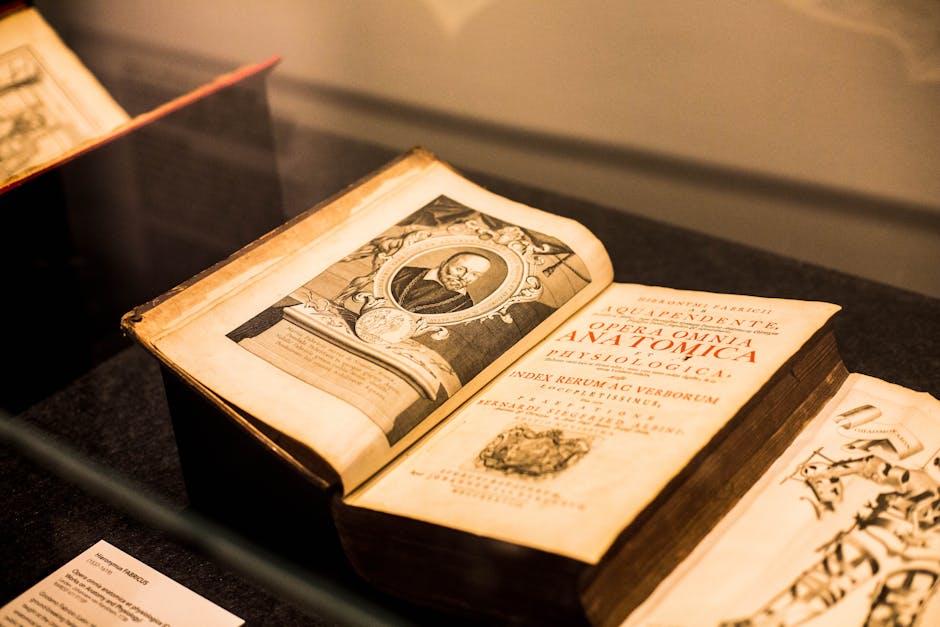
Table of Contents
- The World Before the Printing Press: A Landscape of Scarce Information
- Johannes Gutenberg: The Man and His Vision
- The Key Innovations of Gutenberg’s Printing Press
- The Immediate Impact: Revolutionizing Information Dissemination
- Long-Term Consequences: Shaping the Modern World
- Legacy and Enduring Significance of the Printing Press
The World Before the Printing Press: A Landscape of Scarce Information
Before Johannes Gutenberg’s transformative invention, the world of information was a vastly different, and significantly more restricted, landscape. The very concept of widespread knowledge dissemination was a distant dream, hampered by the arduous and costly methods of text reproduction. Imagine a world where every single book, every legal document, every scientific treatise, had to be painstakingly copied by hand. This was the reality for centuries.
The Era of the Scribe: A Bottleneck of Knowledge
The primary method of replicating texts was through manual transcription by scribes. These were often highly skilled individuals, typically monks in monasteries or educated clerks, who dedicated countless hours to copying manuscripts. This process was not only incredibly time-consuming but also rife with potential errors. A single misplaced stroke or a moment of inattention could introduce inaccuracies that would then be perpetuated in subsequent copies. Furthermore, the sheer labor involved meant that producing even a single book was an expensive undertaking, making written works a luxury item.
This inherent scarcity meant that access to books and, by extension, to knowledge, was severely limited. Primarily, these precious resources were confined to the libraries of religious institutions and the hands of the wealthy elite. The vast majority of the population remained largely untouched by the intellectual currents of their time, creating a stark divide in societal understanding and progress. The slow pace of knowledge dissemination meant that innovations, discoveries, and philosophical ideas spread at a glacial pace, significantly impeding societal advancement.
While some rudimentary forms of printing existed, such as woodblock printing, these too had significant limitations. In this method, an entire page of text or an image would be carved into a wooden block. While it allowed for multiple copies, the process of carving each block was still laborious, and the blocks themselves were prone to wear and tear, making them impractical for producing large quantities of text or for making corrections. This method was more suited for images and short texts rather than the complex, lengthy works that formed the backbone of knowledge.
The limitations of this pre-print era highlight the magnitude of the innovation that was to come. It underscores why The Printing Press: Gutenberg’s Revolution in Information Dissemination was not merely an improvement, but a fundamental paradigm shift. It was a truly What Is Innovation? moment that would redefine the very fabric of human society.
To better understand the challenges of disseminating information in such a limited environment, consider the following comparison:
| Aspect | Manual Transcription (Pre-Gutenberg) | Woodblock Printing (Rudimentary) |
|---|---|---|
| Speed of Production | Extremely Slow (Months/Years per book) | Slow (Carving time, limited pages per block) |
| Cost | Very High (Labor, materials) | High (Carving time, materials) |
| Accuracy | Prone to human error, inconsistent | Consistent for the carved image, but errors in carving are permanent |
| Scalability | Extremely Limited | Limited (Block wear, setup time for new pages) |
| Accessibility of Knowledge | Exclusive to clergy and wealthy elite | Slightly more accessible, but still limited by cost and effort |
This stark contrast sets the stage for understanding the monumental impact of Gutenberg’s invention, a true example of What is Disruptive Innovation? Examples & Types. The world was primed for a revolution in how ideas could travel and how collective human understanding could be built.
Johannes Gutenberg: The Man and His Vision
Before the thunderous roar of modernity, the world of information moved at a glacial pace. Books were painstakingly copied by hand, a laborious process that limited their availability and inflated their cost. It was into this world that Johannes Gutenberg, born around 1400 in Mainz, Germany, emerged not just as a craftsman, but as a visionary who would irrevocably alter the course of human history. While precise details of his early life are shrouded in the mists of time, we know he hailed from a patrician family and was deeply immersed in the goldsmithing and metalworking trades. This intimate knowledge of metallurgy would prove to be the bedrock of his monumental innovation.
Gutenberg’s background was steeped in the intricate, hands-on world of metal manipulation. He understood alloys, the properties of different metals, and the precise techniques required to shape them. This expertise wasn’t merely a hobby; it was a fundamental skill set that allowed him to approach the challenge of printing with a unique perspective. He wasn’t just thinking about making ink flow or paper press; he was considering the very building blocks of reproducible text. His experiments likely involved countless hours of trial and error, a testament to his persistence and The Psychology of Risk in Innovation: Taming Your Inner Skeptic.
The genius of Gutenberg lay in his ability to synthesize existing technologies and elevate them through his inventive spark. He didn’t invent printing itself – woodblock printing had been around for centuries. However, he recognized its limitations: the blocks were static, prone to wear, and could only be used for one specific text. Gutenberg’s breakthrough was the concept of movable type. He developed a system of individual metal characters, cast from a matrix, that could be arranged and rearranged to form any text. This was a radical departure, a true example of What Is Innovation?. He combined his metallurgical prowess to create durable, precisely cast type, with his understanding of the screw press (likely adapted from wine or olive presses) to apply even pressure. The development of an oil-based ink that would adhere to metal type, rather than being absorbed by wood, was another critical piece of this complex puzzle. It’s this masterful combination of disparate elements that truly defines an innovation ecosystem, as explored in our guide to Unlocking Breakthroughs: Your Comprehensive Guide to Innovation Ecosystems.
The crowning achievement of Gutenberg’s tireless work, and the most tangible evidence of his genius, is the legendary 42-line Bible, also known as the Gutenberg Bible. Produced around 1455, it was the first major book to be printed in the West using movable type. The sheer beauty and uniformity of its pages, with their crisp text and intricate illumination (often added by hand after printing), stunned contemporaries. It was a testament to the quality achievable with his system, proving that mass-produced books could rival the artistry of manuscripts. This Bible wasn’t just a religious text; it was a powerful demonstration of The Printing Press: Gutenberg’s Revolution in Information Dissemination and a harbinger of the information age.
To better understand the transformative nature of Gutenberg’s contribution, consider the following comparison:
| Aspect | Pre-Gutenberg Era (Manuscript Copying) | Gutenberg’s Printing Press |
|---|---|---|
| Production Speed | Extremely slow (months to years per book) | Significantly faster (hundreds of pages per day) |
| Cost of Books | Prohibitively high, accessible only to elites | Drastically reduced, making books more accessible |
| Information Dissemination | Limited, slow, prone to errors | Rapid, widespread, standardized |
| Standardization | Inconsistent due to human error and variations in copying | High degree of uniformity and accuracy |
Gutenberg’s work embodies the essence of transformative innovation, shifting an entire paradigm. It wasn’t a small tweak; it was a fundamental redefinition of how knowledge was created, shared, and consumed, much like the impact of innovations discussed in articles on What is Disruptive Innovation? Examples & Types or Understanding Disruptive vs. Sustaining Innovation. His vision, coupled with his practical skills, laid the foundation for the Renaissance and the subsequent explosion of literacy and scientific discovery.
The Key Innovations of Gutenberg’s Printing Press
Gutenberg’s genius wasn’t in inventing a single device, but in the masterful synthesis of several existing and novel elements. This fusion created a truly disruptive innovation, fundamentally altering how information was created and shared. At its core lay the development of movable type, a revolutionary departure from the laborious process of hand-copying or carving entire pages. Imagine individual metal letters, each a tiny, perfect specimen, that could be meticulously arranged to form words, sentences, and entire pages. This meant that once a page was printed, the type could be disassembled and reused for another, a concept that unlocked unprecedented efficiency.
Crucial to the success of this movable type was the invention of an oil-based ink that adhered perfectly to the metal surfaces. Earlier water-based inks, used for woodblock printing, simply wouldn’t stick to metal and would smear, rendering the process ineffective. Gutenberg’s innovation here was finding a way to create an ink that was viscous enough to coat the metal type evenly, yet fluid enough to transfer cleanly to paper.
Furthermore, Gutenberg ingeniously adapted the screw press, a mechanism already familiar from winemaking and olive pressing. This provided the necessary uniform pressure to transfer the ink from the type to the paper efficiently and consistently. The mechanical advantage of the screw press transformed a tedious manual task into a repeatable, scalable process.
Underpinning these elements was the meticulous process of casting uniform metal type. This was perhaps the most challenging aspect, requiring immense precision. Gutenberg developed a system for creating molds and casting individual letters from a metal alloy (typically lead, tin, and antimony) that was both durable and had a low melting point. Achieving uniformity in size and depth for each letter was paramount to ensuring that the printed pages were legible and visually consistent. This attention to detail in manufacturing is a hallmark of true innovation, allowing for scalability and mass production, much like how modern manufacturing relies on precise component standardization. Understanding how these pieces fit together is akin to Service Blueprinting: Map Your Service for Innovation, visualizing the entire interconnected process.
- Development of movable type: individual metal letters that could be arranged and rearranged.
- The invention of oil-based ink suitable for metal type.
- The adaptation of the screw press (wine or olive press) for printing.
- The meticulous process of casting uniform metal type with precision.
These innovations didn’t emerge in a vacuum. Gutenberg’s work exemplifies The Ultimate Guide to the Innovation Process: From Idea to Impact, a journey of problem-solving and refinement. His ability to see how disparate technologies could be combined to solve a fundamental problem is a powerful lesson in What Is Innovation?. His press was a clear example of What is Disruptive Innovation? Examples & Types, fundamentally changing an entire industry and society. The impact of this technological leap is so profound that it is often referred to as The Printing Press: Gutenberg’s Revolution in Information Dissemination.
The Immediate Impact: Revolutionizing Information Dissemination
Before Johannes Gutenberg perfected his movable-type printing press, the creation of a single book was a painstaking, laborious process. Scribes, often working in monasteries, would meticulously copy texts by hand, a method that was not only incredibly slow but also prone to errors and prohibitively expensive. This severely limited the circulation of knowledge, confining it largely to the elite, the clergy, and wealthy institutions. Gutenberg’s innovation wasn’t just an improvement; it was a complete paradigm shift, a true moment of What Is Innovation? that fundamentally altered the course of human history.
The immediate impact was nothing short of revolutionary. Suddenly, books could be produced in mass quantities at an unprecedented speed and at a fraction of the former cost. This democratization of information was the engine that powered vast societal changes. Most notably, it fueled the Protestant Reformation. For the first time, religious texts, particularly the Bible, became accessible to ordinary people. Individuals could now engage directly with scripture, fostering personal interpretation and challenging the established authority of the Catholic Church. This wasn’t just about religious doctrine; it was about empowering individuals with direct access to foundational texts, a principle that echoes in modern movements seeking open access to information.
Beyond religious texts, the printing press led to the standardization of texts and languages. As more copies of a work were produced from a single typesetting, variations and scribal errors were drastically reduced. This consistency helped to solidify vernacular languages, fostering national identities and laying the groundwork for modern literature and scholarship. It allowed for the more reliable transmission of scientific discoveries, philosophical treatises, and historical accounts, creating a more robust and interconnected intellectual landscape.
The explosion in book production also birthed entirely new professions. The craft of printing itself became a skilled trade, requiring expertise in typesetting, ink making, and press operation. Booksellers emerged to distribute these newly abundant works, creating vibrant marketplaces for ideas. Furthermore, the increased availability of texts spurred a growth in scholarship. Individuals who previously lacked access to extensive libraries could now build personal collections and engage in deeper study, contributing to the Renaissance’s flourishing of arts, sciences, and humanities. This interconnected web of creation, distribution, and consumption is akin to what we explore in Unlocking Breakthroughs: Your Comprehensive Guide to Innovation Ecosystems.
- Mass production of books at unprecedented speed and reduced cost.
- Increased accessibility of religious texts, fostering the Reformation.
- The standardization of texts and languages.
- The rise of new professions: printers, booksellers, and scholars.
Gutenberg’s invention exemplifies What is Disruptive Innovation? Examples & Types because it didn’t just improve existing methods; it fundamentally changed the market and rendered old ways of information dissemination obsolete. It was a foundational innovation that paved the way for future advancements in communication and education, a testament to the power of creative solutions to societal challenges.
Long-Term Consequences: Shaping the Modern World
Gutenberg’s printing press was not merely a technological advancement; it was a fundamental paradigm shift that irrevocably altered the trajectory of human civilization. Its long-term consequences ripple through nearly every aspect of the modern world, demonstrating a potent example of What Is Innovation?.
The Renaissance, that glorious rebirth of art, literature, and philosophy, found its wings clipped by the speed of manuscript copying. The printing press, however, acted as a supercharger, allowing for the unprecedented dissemination of classical knowledge and the burgeoning humanist ideas. Suddenly, the wisdom of ancient Greece and Rome, previously confined to a select few, could reach a wider audience, igniting intellectual curiosity and fueling creative expression. This rapid exchange of ideas laid critical groundwork for future intellectual leaps.
Similarly, the Scientific Revolution owes an immense debt to Gutenberg’s invention. Prior to the press, scientific discoveries were painstakingly copied by hand, prone to error and slow to circulate. The ability to mass-produce identical texts meant that groundbreaking theories and experimental results could be shared rapidly and accurately among scholars across vast distances. This fostered collaboration, accelerated the pace of discovery, and allowed for the rigorous peer review that is the bedrock of scientific progress. Think of the impact on fields like astronomy and physics; findings could be debated and built upon in months, not decades.
The Enlightenment, with its emphasis on reason, individual rights, and political reform, was powered by the printed word. Philosophical treatises, political pamphlets, and essays critiquing existing power structures circulated with a speed and reach unimaginable before. This democratized access to complex ideas, fostering critical thinking and fueling movements for social and political change. The very notion of an informed citizenry, essential for democratic societies, was intrinsically linked to the proliferation of printed materials.
This leads us to a crucial, overarching consequence: the democratization of knowledge. Before the printing press, literacy was largely the preserve of the elite – clergy, nobility, and a small scholarly class. Gutenberg’s innovation drastically reduced the cost and increased the availability of books, making them accessible to a burgeoning middle class. This spurred a dramatic rise in literacy rates, empowering individuals with the tools for self-education and intellectual growth. Education itself began to transform, moving from oral traditions and rare manuscripts to widespread access to texts. This accessibility is a powerful catalyst for Unlock Innovation: Your Ultimate Guide to the Design Thinking Process by enabling a broader base of individuals to engage with complex problems and generate novel solutions.
FAQ: How did the printing press impact the cost of books?
The most significant impact was a dramatic reduction in cost. Hand-copied manuscripts were incredibly labor-intensive and time-consuming to produce, making them prohibitively expensive for most people. The printing press, through its mechanized process, allowed for the mass production of books at a fraction of the previous cost, making them affordable for a much wider segment of society.
The legacy of Gutenberg’s press extends far beyond the centuries it dominated information dissemination. It established the fundamental principles of mass information replication that paved the way for countless subsequent innovations. The very concept of easily reproducible knowledge, a cornerstone of modern society, can be traced back to this pivotal invention. In essence, it laid the groundwork for every information technology that followed, from the telegraph and radio to the internet and beyond. Understanding this foundational shift is crucial for comprehending the evolution of how we create, share, and build upon knowledge. It’s a testament to how a single, well-executed innovation can spark a cascade of further progress, much like exploring The Ultimate Guide to the Innovation Process: From Idea to Impact.
FAQ: Was the printing press a disruptive innovation?
Absolutely. The printing press fits the definition of disruptive innovation perfectly. It didn’t just improve existing methods of book production; it fundamentally changed the industry, making it accessible to new markets and creating entirely new possibilities for communication and knowledge sharing. It challenged the established power structures that controlled information access and ultimately reshaped society. For more on this concept, explore What is Disruptive Innovation? Examples & Types.
Legacy and Enduring Significance of the Printing Press
The Gutenberg printing press, a true marvel of its time, was not merely a mechanical improvement; it was a fundamental shift in how humanity interacted with knowledge. Its legacy extends far beyond the printed page, acting as the foundational bedrock for what we now understand as mass media. Before Gutenberg, information was painstakingly hand-copied, making books rare, expensive, and accessible only to a privileged few. The printing press democratized knowledge, shattering these barriers and ushering in an era where ideas could spread with unprecedented speed and scale. This invention truly embodied What Is Innovation? by fundamentally changing an established process.
Its role in shaping public opinion and facilitating social change cannot be overstated. The ability to mass-produce pamphlets, treatises, and eventually newspapers meant that a wider populace could engage with diverse viewpoints and critical analyses. Movements like the Reformation, the Enlightenment, and later, burgeoning nationalist sentiments, were all amplified and sustained by the printed word. Ideas that might have been localized whispers could now become continent-spanning dialogues. This democratizing effect paved the way for concepts like universal literacy and the very notion of an informed citizenry, crucial components for any healthy society. It’s fascinating to see how this early innovation mirrors the drivers of change in modern times, as explored in Unlocking Innovation with First Principles.
Comparing its impact to modern information revolutions, such as the advent of the internet, reveals striking parallels. Both Gutenberg’s press and the internet represent paradigm shifts in information dissemination, dramatically lowering the cost and increasing the speed of knowledge sharing. The internet, in its hyper-connectivity and interactive nature, has amplified this effect exponentially. However, the printing press laid the essential groundwork. It established the concept of reproducible content and the mechanisms for its distribution, a conceptual precursor to digital data packets and global networks. While the internet has brought us to a new frontier, the printing press was the critical stepping stone that made such a frontier conceivable. It was a What is Disruptive Innovation? Examples & Types moment, fundamentally altering the landscape of communication.
Furthermore, the printing press stands as an enduring symbol of human ingenuity and progress. It exemplifies how a single, well-executed innovation can ripple outwards, transforming societies, economies, and cultures. The ability to efficiently capture and disseminate thoughts, discoveries, and stories is a testament to our creative drive. It reminds us that breakthroughs in areas like renewable energy, as seen in Unlocking the Grid: Breakthrough Renewable Energy Storage Innovations, often build upon foundational advancements made centuries ago. The iterative design principles that propelled the Wright Brothers to flight, as detailed in The Wright Brothers’ Secret: Iterative Design & Engineering Innovation That Took Flight, also echo in Gutenberg’s persistent refinement of his press.
Here’s a look at the comparative impact:
| Innovation | Primary Impact | Social/Cultural Ramifications | Modern Parallel |
|---|---|---|---|
| Gutenberg’s Printing Press | Mass production of text | Democratization of knowledge, Reformation, Enlightenment, rise of literacy | The Internet and World Wide Web |
| The Internet | Instantaneous global information sharing & interaction | Globalization, social media, digital economy, new forms of activism | AI-driven content generation and personalized information streams |
The printing press, in essence, was a vital cog in the grand engine of innovation. It was a physical manifestation of The Ultimate Guide to the Innovation Process: From Idea to Impact, demonstrating how a tangible invention could unlock vast potential for human advancement. Its enduring significance lies not just in its historical context but in its continuous relevance as a benchmark for transformative change and a potent symbol of the power of creative thought to reshape our world. We see echoes of its disruptive power in Understanding Disruptive vs. Sustaining Innovation discussions today.
Featured image by Mavluda Tashbaeva on Pexels