3D Printing for Innovation
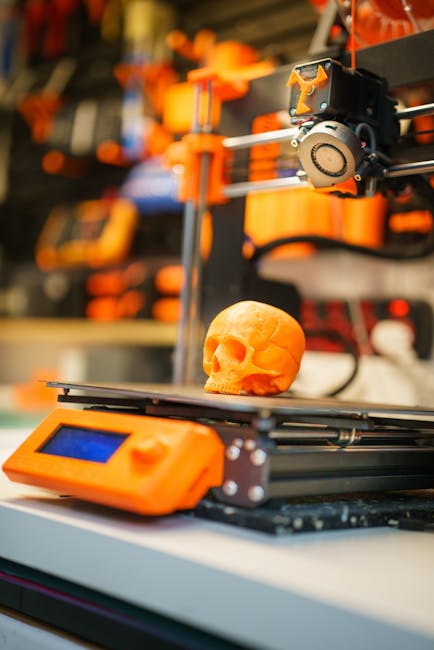
Table of Contents
- The Core of 3D Printing: Technologies and Processes
- Accelerating Prototyping and Product Development
- Enabling Customization and Personalization
- Revolutionizing Manufacturing and Supply Chains
- 3D Printing’s Role in Design and Artistic Expression
- Emerging Trends and Future Innovations
The Core of 3D Printing: Technologies and Processes
At its heart, 3D printing, or additive manufacturing, is a revolutionary approach to creation that builds objects layer by painstaking layer, fundamentally altering how we conceptualize and produce everything from intricate prototypes to end-use parts. This stands in stark contrast to traditional subtractive manufacturing, which carves away material from a larger block. This ability to build complex geometries with relative ease has been a significant driver of what is disruptive innovation? Examples & types.
The diversity of 3D printing technologies means there’s a perfect fit for nearly any application. Here’s a look at some of the most prominent:
- Fused Deposition Modeling (FDM): This is perhaps the most recognizable and accessible technology. FDM printers work by extruding thermoplastic filament, heated to its melting point, through a nozzle. The molten plastic is then precisely deposited onto a build platform, layer by layer, to form the object. Its ease of use and wide range of affordable materials make it ideal for rapid prototyping, educational purposes, and even some functional parts.
- Stereolithography (SLA): SLA utilizes a vat of liquid photopolymer resin and a UV laser to cure and solidify the resin precisely where it’s needed. The laser traces the cross-section of the object, solidifying the resin layer by layer. SLA is renowned for its incredibly high resolution and smooth surface finish, making it a top choice for detailed models, intricate jewelry, and medical applications where precision is paramount.
- Selective Laser Sintering (SLS): SLS employs a high-powered laser to fuse powdered materials, typically polymers like nylon, together. A roller spreads a thin layer of powder, and the laser selectively sinters (melts and fuses) the powder particles according to the digital design. Unfused powder acts as support for the object, allowing for complex geometries without dedicated support structures. SLS produces strong, functional parts suitable for demanding applications.
- Material Jetting (PolyJet/MultiJet): Similar in principle to an inkjet printer, Material Jetting builds objects by jetting droplets of photopolymer onto a build platform, which are then cured by UV light. This technology excels at producing multi-material and full-color parts in a single print, offering unparalleled design freedom and realism for prototypes and visual models.
- Metal 3D Printing (e.g., DMLS, SLM, Binder Jetting): These advanced technologies allow for the direct printing of metal parts. Technologies like Direct Metal Laser Sintering (DMLS) and Selective Laser Melting (SLM) use lasers to fuse metal powder, while Binder Jetting uses a liquid binder to selectively bond powder particles. These methods are transforming industries like aerospace and automotive by enabling the creation of lightweight, complex, and high-performance metal components that were previously impossible to manufacture. For an in-depth look at the materials and processes involved, resources like the America Makes Additive Manufacturing Standards Development Program offer valuable insights.
The choice of material is as crucial as the technology itself. The diversity of available materials fuels innovation:
- Plastics: A vast array, including ABS, PLA, PETG, Nylon, and flexible TPU. These offer a range of properties from rigidity and impact resistance to flexibility and heat tolerance.
- Resins: Photopolymer resins used in SLA and Material Jetting come in various formulations, including standard, tough, flexible, castable, and biocompatible options, catering to specific aesthetic and functional needs.
- Metals: Powders of stainless steel, aluminum, titanium, and various alloys are used in metal 3D printing, enabling the creation of robust and high-performance parts.
- Ceramics: Advanced ceramic powders can be printed for applications requiring high temperature resistance, electrical insulation, or biocompatibility, opening doors in fields like dentistry and advanced manufacturing.
This technological and material breadth is enabled by a sophisticated digital workflow, a prime example of visual thinking for innovation: see your ideas come to life. The process typically begins with a Computer-Aided Design (CAD) model, often created using specialized software. This digital blueprint is then processed by "slicer" software, which divides the 3D model into thin horizontal layers and generates machine-readable instructions (G-code) for the 3D printer. This preparation step is critical for ensuring print success and optimizing for material usage and print time, much like meticulously planning a service journey with service blueprinting: map your service for innovation. The slicer also allows for the generation of support structures where needed, ensuring overhangs and delicate features are printed successfully. This entire digital pipeline, from concept to physical object, is a testament to the iterative and precise nature of modern innovation, echoing the foundational impact of early innovations like the printing press: Gutenberg’s innovation in information dissemination.
To further illustrate the differences in capability, consider this simplified comparison:
| Technology | Primary Principle | Key Strengths | Typical Applications |
|---|---|---|---|
| FDM | Extrusion of thermoplastic filament | Cost-effective, wide material range, ease of use | Prototyping, hobbyist projects, functional parts |
| SLA | UV laser curing of photopolymer resin | High resolution, smooth surface finish, intricate detail | Jewelry, dental models, detailed miniatures |
| SLS | Laser sintering of powdered materials | Strong, functional parts, complex geometries, no dedicated supports | Aerospace components, custom tooling, durable prototypes |
| Material Jetting | Droplet deposition and UV curing of photopolymers | Multi-material and full-color printing, high accuracy | Realistic prototypes, marketing models, visual aids |
| Metal 3D Printing | Laser sintering/melting or binder jetting of metal powder | Complex metal parts, lightweight structures, on-demand manufacturing | Aerospace, automotive, medical implants |
Accelerating Prototyping and Product Development
In the relentless pursuit of innovation, the ability to rapidly translate ideas into tangible forms is paramount. 3D printing, also known as additive manufacturing, has emerged as a transformative force in this regard, fundamentally altering the landscape of prototyping and product development. Gone are the days of lengthy lead times and prohibitive costs associated with traditional manufacturing methods when it came to creating initial models.
The most profound impact of 3D printing lies in its ability to facilitate rapid iteration cycles. This means product development teams can now move from concept to physical prototype in a matter of hours or days, rather than weeks or months. This accelerated feedback loop is crucial for refining designs, testing functionality, and identifying potential flaws early in the development process. Imagine an engineer sketching an idea, sending it to the printer, and holding a functional prototype by lunchtime. This immediacy allows for a much more agile approach, akin to the iterative improvements that defined early aviation pioneers, as detailed in The Wright Brothers’ Secret: Iterative Design & Engineering Innovation That Took Flight. This speed directly translates to a significantly reduced time-to-market for new products, giving companies a crucial competitive edge. This is particularly relevant in fast-moving sectors where being first to market can be the difference between success and obscurity.
Furthermore, 3D printing unlocks the potential for creating complex geometries and functional prototypes that were previously impossible. Traditional subtractive manufacturing methods (like milling or turning) are limited by the tool’s ability to access the material. Additive manufacturing, however, builds objects layer by layer, allowing for intricate internal structures, organic shapes, and integrated functionalities that were once confined to the realm of imagination. This opens doors to entirely new product designs and performance enhancements. For instance, complex cooling channels within an engine part or lightweight yet incredibly strong structural components for aerospace can now be realized with ease. This capability is a powerful enabler of disruptive innovation, allowing for novel solutions that fundamentally change how products are made and function. As noted in articles discussing What is Disruptive Innovation? Examples & Types, this ability to create the "impossible" is a hallmark of truly groundbreaking advancements.
Finally, the cost-effectiveness of 3D printing for low-volume production and custom parts is a significant advantage. While the initial investment in a 3D printer can vary, the per-unit cost for creating one-off or small batches of parts is often dramatically lower than setting up traditional tooling. This makes it an ideal solution for highly specialized components, personalized medical devices, or niche consumer products. For businesses looking to explore new markets or offer bespoke solutions, 3D printing removes a significant financial barrier. The ability to produce custom parts on demand also plays a vital role in fields like healthcare, where patient-specific implants and prosthetics are becoming increasingly common. This aligns with principles of Universal Design: The Unseen Innovation Spark in Architecture, which emphasizes adaptability and personalization.
| 3D Printing Advantage | Impact on Innovation |
|---|---|
| Rapid Iteration Cycles | Faster feedback loops, reduced time-to-market, more refined products. |
| Complex Geometries | Enables novel designs, enhanced functionality, and previously impossible product features. |
| Cost-Effectiveness for Low-Volume/Custom Parts | Democratizes access to specialized production, supports niche markets and personalization. |
This shift in prototyping and production capabilities mirrors the revolutionary impact of earlier technologies that democratized access to information and creation, much like The Printing Press: Gutenberg’s Innovation in Information Dissemination. By lowering the barriers to experimentation and production, 3D printing empowers creators and innovators to explore, develop, and launch groundbreaking products with unprecedented speed and flexibility.
Enabling Customization and Personalization
In an era where individuality reigns supreme, 3D printing emerges as a transformative force, democratizing customization and ushering in an era of unparalleled personalization. Gone are the days of one-size-fits-all solutions; additive manufacturing allows us to tailor products precisely to individual needs and preferences, a concept we can call mass customization. This is more than just a trend; it’s a fundamental shift in how we design, produce, and consume.
The impact of this shift is profoundly felt in healthcare. Imagine prosthetic limbs that perfectly fit an individual’s residual limb, offering superior comfort and functionality, or custom-designed implants that integrate seamlessly with a patient’s anatomy. 3D printing is making these realities commonplace. Surgical guides, for instance, can be printed based on patient-specific scans, enabling surgeons to plan and execute complex procedures with pinpoint accuracy. This level of bespoke creation was once the domain of highly specialized, manual craftsmanship, but 3D printing scales it, making it accessible and efficient. This aligns with the core principles of Universal Design: The Unseen Innovation Spark in Architecture, which emphasizes designing for a wide range of users from the outset.
Beyond critical medical applications, the wave of personalization is transforming the consumer goods market. Footwear companies are now offering custom-molded insoles and shoes designed for unique foot structures, dramatically improving comfort and performance. Eyewear can be printed to perfectly match a person’s facial features and prescription, resulting in both aesthetic appeal and optimal vision. The fashion industry is also embracing this, with designers creating bespoke jewelry, accessories, and even garments that reflect individual style. This radical ability to personalize mirrors the revolutionary impact of earlier technological leaps, much like The Printing Press: Gutenberg’s Innovation in Information Dissemination democratized knowledge.
This ability to create unique items on demand is a prime example of how 3D printing acts as a catalyst for What is Disruptive Innovation? Examples & Types. By offering highly personalized products at competitive price points, it challenges traditional mass-production models and opens up new markets for niche offerings. The flexibility of 3D printing allows for rapid iteration and adaptation, a crucial element in the innovation process. Furthermore, this personalization can be deeply integrated with Visual Thinking for Innovation: See Your Ideas Come to Life, allowing customers to visualize and co-create their personalized products.
For instance, the medical field is seeing rapid advancements due to this technology. A study published in Nature Reviews Materials highlights the significant impact of additive manufacturing in creating patient-specific medical devices and implants, emphasizing its role in personalized medicine. Similarly, companies in the footwear industry are increasingly integrating 3D scanning and printing to offer unparalleled levels of comfort and fit, as detailed in reports from industry analysis firms like Statista. This shift towards individualized products, enabled by the precision and flexibility of 3D printing, is fundamentally reshaping consumer expectations and driving a new wave of creative product development.
Revolutionizing Manufacturing and Supply Chains
3D printing, or additive manufacturing, is fundamentally reshaping the landscape of production and logistics, ushering in an era of unprecedented agility and efficiency. One of its most impactful contributions is the enablement of decentralized manufacturing. Imagine producing complex components or even entire products directly at the point of need, whether that’s a remote construction site, a hospital ward, or a consumer’s doorstep. This dramatically slashes transportation costs, lead times, and carbon footprints.
This paradigm shift directly feeds into the concept of on-demand printing. Instead of large-scale, speculative production runs that lead to bloated warehouses and eventual obsolescence, 3D printing allows for goods to be manufactured only when they are ordered. This drastically reduces the need for extensive inventory, minimizing waste and freeing up capital. It’s a powerful application of Unlocking Innovation with First Principles, focusing on delivering exactly what’s needed, when it’s needed.
The implications for business models are profound. We’re seeing the rise of direct-to-consumer manufacturing, where individuals can design or customize their own products and have them printed locally. Furthermore, distributed manufacturing networks are emerging, where specialized 3D printing hubs can cater to a wide range of industries, creating a flexible and responsive global production capability. This is a prime example of disruptive innovation, altering established market structures and consumer expectations. The ability to rapidly iterate on designs, a cornerstone of innovation, is also amplified. This mirrors the iterative process seen in early innovations, much like how early aviation pioneers experimented tirelessly. While the printing press revolutionized information dissemination by making knowledge more accessible, 3D printing is doing something similar for physical goods, democratizing production.
- Decentralized production closer to end-users.
- Reduced inventory and waste through on-demand manufacturing.
- Emergence of new direct-to-consumer and distributed network business models.
- Enhanced product customization and rapid prototyping capabilities.
- Potential for localized spare parts production, reducing reliance on global supply chains.
For instance, companies like Protolabs exemplify this by offering rapid prototyping and on-demand manufacturing services, demonstrating the practical application of these principles. The impact on supply chain resilience is also significant. In a world increasingly aware of the fragility of global networks, as highlighted by recent events, localized 3D printing offers a powerful buffer against disruption, a topic explored in discussions on innovation ecosystems. This capability can be a critical component in building more robust and adaptable systems, similar to how advancements in renewable energy storage innovations are vital for grid stability.
3D Printing’s Role in Design and Artistic Expression
3D printing has fundamentally reshaped the landscape of design and artistic expression, offering unprecedented freedom and enabling the realization of concepts that were once confined to the imagination. This technology allows creators to move beyond the limitations of traditional manufacturing, opening doors to intricate geometries, complex internal structures, and highly customized forms. Imagine crafting sculptures with impossible overhangs, designing artworks with flowing, organic lines, or developing architectural models that showcase nuanced details with remarkable precision.
For designers, 3D printing acts as a powerful tool in the ideation and prototyping phases. It facilitates rapid iteration, allowing for quick adjustments and refinements to a design before committing to expensive tooling. This agility is crucial in today’s fast-paced innovation cycles, mirroring the iterative approach seen in fields like engineering and product development. It empowers designers to explore a wider design space, leading to more innovative and aesthetically compelling outcomes. This mirrors the fundamental shift in information dissemination brought about by The Printing Press: Gutenberg’s Innovation in Information Dissemination, democratizing creation and distribution.
Artists, in particular, have embraced 3D printing as a medium for pushing creative boundaries. The ability to translate digital models directly into physical objects allows for the creation of elaborate sculptures, immersive art installations, and highly detailed architectural visualizations. Whether it’s a delicate lattice-work sculpture or a complex, multi-part artistic piece, 3D printing provides the means to bring these imaginative concepts to life with a level of detail and fidelity previously unattainable. This process often involves a strong reliance on Visual Thinking for Innovation: See Your Ideas Come to Life, translating abstract ideas into tangible forms.
Furthermore, 3D printing fosters innovation in areas like sustainable product design, enabling the creation of products with optimized material usage and unique functional properties. The iterative nature of the design process, supported by 3D printing, aligns perfectly with the goals of Sustainable Product Design Innovation. The technology also democratizes creation, allowing individual artists and small studios to produce intricate pieces that might have been prohibitively expensive or impossible with traditional methods, echoing the impact of earlier technological revolutions on access to creative tools. For those looking to refine their creative process, exploring resources like Unlock Innovation: Your Ultimate Guide to the Design Thinking Process can further amplify the impact of 3D printing.
Emerging Trends and Future Innovations
The horizon of 3D printing is not just expanding; it’s exploding with possibilities, pushing the boundaries of what we consider manufacturable and, consequently, imaginable. We’re witnessing a rapid evolution from single-material, single-color fabrication to increasingly sophisticated processes. Advancements in multi-material and multi-color printing are opening doors to products with integrated functionalities and aesthetic complexity that were previously impossible. Imagine a single print job yielding a device with both rigid and flexible components, or a product with intricate, multi-hued patterns seamlessly incorporated – this is no longer science fiction.
This leap in capability is being supercharged by the integration with AI and generative design. These powerful tools can now explore vast design spaces, optimizing for performance, material usage, and even aesthetic appeal, often uncovering solutions human designers might overlook. This partnership allows for automated creation of highly complex geometries, tailored to specific needs, truly democratizing advanced design and accelerating the pace of innovation. It’s akin to how The Printing Press: Gutenberg’s Innovation in Information Dissemination revolutionized the spread of knowledge, AI-driven design is set to revolutionize the creation of physical objects.
Perhaps the most profound implications lie in the potential of bioprinting and advanced material science. The ability to print living tissues and organs holds the promise of transforming healthcare, offering personalized implants and revolutionizing drug testing. Simultaneously, researchers are developing novel materials with unique properties, from self-healing composites to ultra-lightweight, high-strength alloys, all made possible by the precise control offered by additive manufacturing. This convergence is a prime example of Unlocking Innovation with First Principles, breaking down complex challenges into fundamental building blocks.
Beyond the immediate functional and aesthetic benefits, the sustainability aspects of 3D printing are increasingly vital. The additive nature of the process inherently reduces waste compared to traditional subtractive manufacturing. Furthermore, there’s a growing focus on utilizing recycled materials, from plastics to metals, as feedstock for 3D printers. This not only diverts waste from landfills but also reduces the carbon footprint associated with virgin material production. Exploring how additive manufacturing can contribute to circular economy models is a critical area of innovation, potentially mirroring the impact of breakthroughs in Unlocking the Grid: Breakthrough Renewable Energy Storage Innovations on our energy systems. The drive towards sustainable product design innovation is a powerful motivator for exploring these new frontiers.
Featured image by Jakub Zerdzicki on Pexels