The Future of AI in Creative Industries
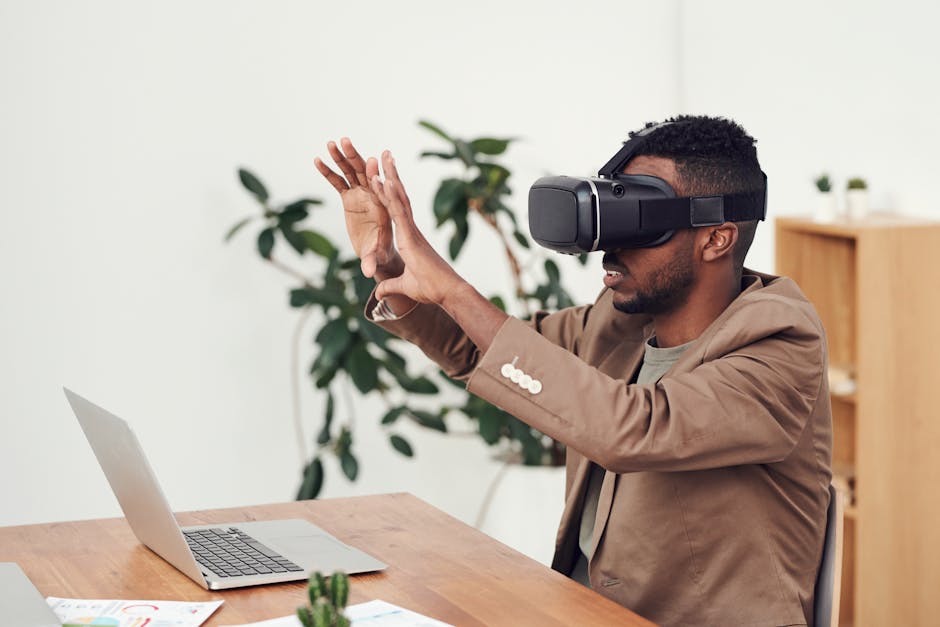
Table of Contents
- AI as a Creative Partner: Augmenting Human Ingenuity
- Generative AI’s Impact on Content Creation
- AI in Design and Visual Arts
- AI’s Transformation of the Music and Audio Industry
- AI in Writing and Storytelling
- The Evolving Role of the Human Creator
- Challenges and Ethical Considerations
- Future Trends and Predictions
AI as a Creative Partner: Augmenting Human Ingenuity
The narrative surrounding AI in creative industries has often been framed as a battle for supremacy, a fear of obsolescence for human creators. However, the reality is far more nuanced and, frankly, exciting. AI is rapidly evolving from a mere tool into a genuine creative partner, augmenting human ingenuity in ways we’re only just beginning to fully grasp. This partnership is not about replacement; it’s about amplification.
For those wrestling with the initial spark of an idea, AI tools are becoming indispensable allies in idea generation and brainstorming. Imagine a writer struggling with a plot point; an AI can present a dozen alternative narrative directions, each with compelling characters and thematic threads, simply by analyzing a few keywords or a partial outline. Similarly, designers can leverage AI to rapidly iterate on concepts, exploring countless visual styles and layouts that would be time-prohibitive for manual exploration. This is where the principles of Master Creative Brainstorming: Techniques & Tips can be powerfully combined with AI’s generative capabilities.
The acceleration of content creation workflows is another profound impact. In writing, generative AI can draft articles, scripts, and marketing copy, freeing up human authors to focus on higher-level concept development, refinement, and emotional depth. Platforms like Jasper and Copy.ai are already demonstrating the power of Generative AI for Text Generation: The Future of Content Creation is Here. In design, tools like Midjourney and DALL-E 2 can produce stunning visuals from simple text prompts, transforming the speed at which mood boards and concept art are generated. Music composition is also being revolutionized, with AI capable of generating entire musical pieces in various genres, offering composers new sonic palettes and collaborative possibilities, as explored in Generative AI for Music: Composing the Future of Sound. These advancements highlight the broader trend of AI-Powered Creative Tools for Future Work.
Perhaps one of AI’s most significant contributions is its ability to help overcome creative blocks and expand artistic possibilities. The dreaded blank page or the artist’s slump can be significantly alleviated when an AI partner offers unexpected suggestions, breaks down complex ideas into digestible components, or even presents entirely novel stylistic combinations. This iterative process, where human intuition guides AI generation, can unlock avenues of creativity previously unimagined. It’s akin to applying structured thinking methods like TRIZ principles for creative problem-solving with a supercharged assistant.
We’re already seeing compelling case studies emerge. Musicians are collaborating with AI to generate unique melodies and explore new sonic textures, then weaving those AI-generated elements into their own compositions. Writers are using AI as a co-pilot, not just for drafting, but for exploring character backstories, world-building details, and even generating alternative dialogue options, as detailed in Generative AI for Creative Writing: Your New Co-Pilot for Innovation. Visual artists are experimenting with AI to generate foundational elements, then meticulously refining and imbuing these AI outputs with their distinct artistic vision and emotional resonance. These collaborations are not diminishing the artist’s role but redefining it, shifting the focus from manual execution to high-level direction and conceptual artistry. This collaborative dynamic also aligns with the evolving needs in fields like HR, where understanding individual creative strengths and how to leverage them through technology becomes paramount, a topic relevant to What the Future of HR Looks Like. The development of User Persona Development for Creative Solutions will be crucial in understanding how different creative professionals interact with and benefit from these AI partners. Furthermore, embracing this new paradigm requires a certain willingness to experiment and learn, echoing the need for Transforming Resistance: Creative Strategies for Change Adoption.
Generative AI’s Impact on Content Creation
The creative industries are undergoing a seismic shift, powered by the exponential rise of generative AI. We’re no longer just talking about theoretical possibilities; we’re witnessing the tangible evolution of content creation as tools become more sophisticated and accessible. At the forefront of this revolution are text-to-image, text-to-video, and text-to-music generation models. These powerful AI systems can transform simple textual prompts into stunning visual art, dynamic video sequences, and compelling musical compositions. Imagine describing a surreal landscape and having an AI render it in photorealistic detail, or outlining a narrative scene and seeing it brought to life in animated form. The implications for artists, designers, filmmakers, and musicians are profound, opening up new avenues for rapid prototyping, iterative design, and even entirely novel forms of artistic expression.
This technological leap is fundamentally democratizing content creation. Gone are the days when producing high-quality visuals or audio required extensive technical skills, expensive software, and specialized hardware. Now, individuals and small teams can leverage these AI tools, often available through user-friendly interfaces, to bring their creative visions to life. This accessibility lowers the barrier to entry significantly, empowering a wider range of voices and perspectives to contribute to the global creative landscape. We’re seeing this firsthand in the explosion of personalized marketing campaigns, independent film projects, and unique musical ventures that might have been cost-prohibitive in the past. This aligns perfectly with the ongoing exploration of AI-Powered Creative Tools for Future Work that are reshaping how we ideate and execute.
However, this surge in AI-generated content brings with it a crucial set of ethical considerations and challenges. The very concept of originality is being re-examined. When an AI generates an image based on millions of existing artworks, where does the "originality" truly lie? This directly impacts questions of copyright and ownership. Who owns the output of an AI? The user who provided the prompt? The developers of the AI model? Or is it something else entirely? These are complex legal and philosophical debates that are only just beginning to be addressed. Furthermore, the potential for misuse, such as generating deepfakes or spreading misinformation, necessitates careful development and responsible deployment of these technologies. Understanding the nuances of this evolving landscape is critical, particularly as we explore advancements like What the Future of Retrieval Augmented Generation Looks Like, which aims to ground AI outputs in verifiable information.
The landscape of AI-powered marketing and advertising content is also undergoing a dramatic transformation. From crafting compelling ad copy and generating eye-catching visual assets for social media campaigns to personalizing customer journeys with AI-driven content recommendations, businesses are increasingly relying on generative AI to enhance their marketing efforts. This allows for more agile and data-informed content creation, enabling marketers to test different messaging and visuals at scale, optimizing campaigns for maximum impact. We’re seeing AI tools being integrated into the entire marketing workflow, from initial ideation, perhaps inspired by Master Creative Brainstorming: Techniques & Tips, to the final deployment of creative assets.
FAQ: How does text-to-image AI work?
Text-to-image AI models, like DALL-E or Midjourney, are trained on vast datasets of images paired with descriptive text captions. Through complex neural networks, they learn the relationships between words and visual concepts. When you provide a text prompt, the AI uses this learned knowledge to generate a novel image that matches your description, often through a process of diffusion where an initial noisy image is gradually refined into a coherent picture.
FAQ: What are the key ethical concerns surrounding AI-generated art?
The primary ethical concerns revolve around issues of copyright and ownership, the potential for AI models to perpetuate biases present in their training data, the displacement of human artists and creators, and the challenges of distinguishing between human-made and AI-generated content. There’s also the risk of generating harmful or misleading content without proper safeguards.
AI in Design and Visual Arts
The landscape of design and visual arts is undergoing a seismic shift, powered by the relentless advancement of Artificial Intelligence. We’re witnessing the emergence of incredibly sophisticated AI-driven tools that are not just augmenting, but fundamentally transforming, how graphic designers, UI/UX professionals, and architectural visualizers approach their craft. Imagine generating mood boards and initial design concepts in mere minutes, or exploring countless architectural iterations with an AI partner that can instantly render photorealistic visualizations. This isn’t science fiction; it’s the present and rapidly evolving future. These tools democratize access to powerful creative capabilities, enabling individuals and small teams to achieve results previously only accessible to large, well-resourced studios. For a deeper dive into the practical applications of these technologies, explore our article on AI-Powered Creative Tools for Future Work.
The most visible manifestation of this revolution is arguably the meteoric rise of AI-generated art. Platforms capable of conjuring breathtaking images from simple text prompts have captured the public imagination. This has profound implications for traditional art forms. While some view it as a threat to human artists, many are embracing it as a new medium, a powerful collaborator that can unlock novel aesthetic possibilities. The debate around authorship, originality, and the very definition of art in the age of AI is complex and ongoing. It forces us to re-evaluate what we value in creative expression – is it the technical skill, the conceptual depth, or the emotional resonance? As AI becomes more adept at understanding nuanced prompts and stylistic preferences, the line between human and machine creation blurs, pushing the boundaries of artistic discourse. Our exploration of Generative AI in Creative Arts: Revolutionizing Imagination delves into this fascinating intersection.
Beyond art generation, AI is a potent force for personalization and customization in visual experiences. Think of dynamic websites that adapt their interface and imagery based on individual user preferences, or product visualizations that can be tailored to specific client needs in real-time. This level of bespoke interaction allows brands to connect with audiences on a more profound level, fostering deeper engagement and loyalty. The principles behind this often involve sophisticated User Persona Development for Creative Solutions, where AI helps to interpret vast datasets to create highly targeted visual narratives.
Furthermore, AI is instrumental in creating the next generation of immersive and interactive visual content, particularly within Virtual and Augmented Reality. AI algorithms can now generate complex 3D environments, intelligent non-player characters, and dynamic visual effects that respond to user actions, making VR/AR experiences more believable and engaging. This opens up unprecedented opportunities for storytelling, education, and entertainment. The ability of AI to process and generate data in real-time is key to building these responsive digital worlds. To understand how AI is helping to refine this process, consider our insights on What the Future of Retrieval Augmented Generation Looks Like.
FAQ: Will AI replace human designers and artists?
It’s more likely that AI will become a powerful co-pilot rather than a complete replacement. AI excels at repetitive tasks, generating variations, and processing vast amounts of data, freeing up human creatives to focus on higher-level conceptualization, strategy, and emotional nuance. Think of AI as an incredibly talented intern or assistant that can execute complex tasks rapidly, allowing human artists to push their creative boundaries further. The emphasis will shift towards human-AI collaboration, where the unique strengths of both are leveraged.
FAQ: How can artists ensure their work remains relevant in an AI-driven art world?
Focus on developing unique artistic voices, deep conceptual frameworks, and distinct emotional connections that AI currently struggles to replicate. Experiment with AI as a new medium, exploring its capabilities while infusing your personal style and intent. Understanding the philosophical underpinnings of art and its role in society, as well as embracing innovative thinking methodologies like those explored in Unlock Your Genius: Master Edward De Bono’s Creative Thinking Methods, will be crucial. Ultimately, the human element – intent, lived experience, and subjective interpretation – will continue to hold immense value.
AI’s Transformation of the Music and Audio Industry
The rhythmic hum of innovation is resonating louder than ever within the music and audio industry, driven by the relentless advance of Artificial Intelligence. What was once the exclusive domain of human artistry is now being augmented, amplified, and in some cases, entirely reimagined by intelligent algorithms. This is not about replacing creativity, but about forging unprecedented partnerships between humans and machines to unlock new sonic frontiers.
AI’s impact is profound across the entire musical lifecycle. In music composition, arrangement, and production, AI tools are moving beyond mere pattern recognition. They can now generate novel melodic ideas, suggest harmonic progressions, and even craft intricate orchestral arrangements. Platforms powered by Generative AI for Music: Composing the Future of Sound are providing composers with an almost inexhaustible wellspring of inspiration, acting as intelligent collaborators rather than just sequencers. This democratizes the creative process, offering advanced production capabilities to a wider range of artists, a trend also seen in the broader landscape of AI-Powered Creative Tools for Future Work.
Beyond static compositions, the advent of personalized music generation is set to revolutionize how we experience sound. Imagine soundtracks that adapt in real-time to your mood, your activity, or even the environment around you. This is the promise of adaptive audio, creating deeply immersive and responsive listening experiences. This granular level of personalization, often informed by sophisticated User Persona Development for Creative Solutions, will reshape everything from gaming and film scoring to ambient music for focus and relaxation.
The transformative power of AI extends to the nitty-gritty of audio engineering. Sound design is being accelerated with AI capable of generating complex soundscapes from textual descriptions, while audio restoration tools can now meticulously repair damaged recordings, breathing new life into archival material. Furthermore, voice synthesis has reached uncanny levels of fidelity, enabling the creation of hyper-realistic vocal performances for everything from virtual assistants to audiobook narration. These advancements are built upon sophisticated models, similar in principle to those explored in What the Future of Retrieval Augmented Generation Looks Like.
The concept of the DJ is also undergoing a radical reimagining. AI-powered DJs are emerging, capable of curating playlists, mixing tracks seamlessly, and even improvising sets based on crowd energy. This raises fascinating questions about the future of live performance. Will AI DJs eventually command stages, or will they become sophisticated tools for human DJs, allowing them to focus more on curation and audience interaction? The potential for AI to analyze and respond to the dynamic energy of a live audience suggests a future where human and AI performers collaborate on stage, pushing the boundaries of what a live music experience can be. This evolution in performance and curation echoes the broader shifts in The Gig Economy’s Creative Core: Unleashing Innovation in a Fluid Workforce.
FAQ: Will AI replace human musicians and audio engineers?
It’s highly unlikely that AI will entirely replace human creativity in music. Instead, AI is emerging as a powerful co-creator and enhancer. For human musicians and audio engineers, this means a shift in focus towards higher-level conceptualization, artistic direction, and the unique emotional nuance that only a human can bring. Think of AI as a highly skilled assistant that can handle complex tasks, freeing up humans to explore more innovative ideas. This collaborative model is essential for navigating the future of work in creative fields, as discussed in articles on Transforming Resistance: Creative Strategies for Change Adoption.
FAQ: How can independent artists leverage AI in their music production?
Independent artists have a wealth of opportunities with AI. Tools are becoming increasingly accessible and affordable, allowing for sophisticated composition, arrangement, mixing, and mastering without extensive technical expertise or expensive studio time. AI can help overcome creative blocks, as explored through various techniques like Unlock Your Genius: Master Edward De Bono’s Creative Thinking Methods. Artists can experiment with AI-generated melodies, use AI to create unique sound effects, and even employ AI for marketing and audience analysis. This democratizes access to high-quality production and opens up new avenues for artistic expression and business development, potentially even impacting how they approach Seed Funding for Creative Startups.
AI in Writing and Storytelling
The written word, once the exclusive domain of human consciousness, is now being profoundly reshaped by artificial intelligence. We are witnessing the dawn of AI-assisted scriptwriting, novel generation, and even poetry creation. These tools aren’t replacing human creativity, but rather augmenting it, acting as powerful co-pilots. Imagine a screenwriter leveraging AI to brainstorm plot twists, flesh out character dialogues, or even generate descriptive passages, freeing them to focus on the emotional arc and thematic depth of their story. This is the promise of Generative AI for Creative Writing, transforming the very process of storytelling.
Beyond static narratives, AI is unlocking entirely new realms of personalized narrative experiences and interactive storytelling. Think of video games where the plot dynamically adapts to your choices, or educational platforms that tailor stories to individual learning styles. This level of engagement was once confined to theoretical discussions, but AI is making it a tangible reality. This also extends to content editing, where AI is becoming an indispensable ally for writers and publishers. Beyond basic grammar and spell-checking, AI can now assist with fact-checking, ensuring accuracy and credibility, and even detect subtle forms of plagiarism, safeguarding intellectual property. This is a critical step in maintaining the integrity of information in an increasingly content-saturated world.
The future of journalism and content summarization is also being dramatically influenced. AI can sift through vast amounts of data to identify key trends, generate initial drafts of news reports, and create concise summaries, allowing journalists to dedicate more time to investigative work and nuanced analysis. As noted by a report from the Reuters Institute for the Study of Journalism, AI is already being explored by newsrooms globally to enhance efficiency and explore new storytelling formats.
FAQ: Will AI replace human writers and storytellers?
It’s highly unlikely that AI will completely replace human writers and storytellers. Instead, AI is poised to become a powerful collaborative tool. Think of it as an advanced assistant that can handle repetitive tasks, generate initial ideas, and offer novel perspectives. The unique human capacity for emotional intelligence, lived experience, and the nuanced understanding of cultural context will remain paramount in crafting truly resonant and meaningful narratives. The future lies in a symbiotic relationship where AI amplifies human creative potential, rather than supplanting it.
FAQ: How can I start integrating AI into my writing process?
Begin by exploring the readily available AI-Powered Creative Tools for Future Work. Experiment with AI writing assistants for brainstorming, drafting, and editing. Treat these tools as partners, not replacements. Analyze their outputs critically and refine them with your own unique voice and vision. Familiarize yourself with the principles of Generative AI for Text Generation: The Future of Content Creation is Here to understand their capabilities and limitations. The key is to approach AI with a curious and experimental mindset, understanding that it’s a continually evolving technology.
The integration of AI into these creative processes raises fascinating questions about authorship, originality, and the very definition of art. As we move forward, understanding and adapting to these advancements will be crucial for anyone involved in the creation and dissemination of written content. The potential for innovation is immense, promising to democratize storytelling and unlock new forms of creative expression.
The Evolving Role of the Human Creator
The advent of sophisticated AI tools is not a harbinger of the obsolescence of human creators, but rather a catalyst for their evolution. We are witnessing a significant shift in the skill sets demanded by the creative industries. The emphasis is moving away from rote execution and towards higher-order cognitive functions. Creators are becoming orchestrators, curators, and critical evaluators of AI-generated output. This necessitates a refined ability in curation, where the human touch discerns the exceptional from the mundane, and critical thinking, to assess the originality, intent, and potential impact of AI-assisted creations. Furthermore, an understanding of ethical AI deployment is paramount, ensuring that these powerful tools are used responsibly and without perpetuating bias or misinformation.
This evolution is also giving rise to entirely new creative roles. Think of the "AI Prompt Engineer," a specialist adept at communicating with AI models to achieve specific creative outcomes, or the "AI Art Director," who guides AI systems to generate visuals that align with a particular brand vision or artistic concept. These roles highlight the intersection of human and AI capabilities, where the synergy between human intuition and AI’s computational power unlocks unprecedented creative possibilities. As we explore AI-Powered Creative Tools for Future Work, it’s clear these new positions will become increasingly sought after.
The philosophical debate around whether AI can truly be "creative" is as old as AI itself. While AI can generate novel combinations of existing data and mimic stylistic elements with astonishing accuracy, the essence of human creativity often stems from lived experience, emotional depth, and a unique consciousness. AI excels at pattern recognition and extrapolation, a concept closely related to advancements in What the Future of Retrieval Augmented Generation Looks Like. However, the subjective interpretation, the spark of original insight born from personal struggle, or the profound emotional resonance that characterizes truly groundbreaking art, remains a distinctly human domain. This is not to diminish the AI’s capacity for innovation; it can be an incredible engine for generating ideas and exploring possibilities at a scale and speed previously unimaginable, as evidenced in fields like Generative AI in Creative Arts: Revolutionizing Imagination.
The emerging landscape demands a creator who can leverage AI as a powerful co-pilot, not a replacement. This involves a mastery of prompt engineering, an understanding of the underlying algorithms, and the ability to discern when to let AI lead and when to assert human directorial control. It’s about augmenting, not automating, the creative soul.
To navigate this dynamic environment, creators will need to cultivate a suite of meta-skills. The ability to perform rapid prototyping, coupled with a willingness to embrace The Psychology of Failure in Creative Processes and The Psychology of Creative Mistakes, will be crucial. This is where principles like those outlined in TRIZ principles for creative problem-solving become invaluable for systematically approaching challenges.
Consider the following shifts in the creator’s toolkit:
| Traditional Creator Focus | AI-Augmented Creator Focus |
|---|---|
| Manual execution of tasks (e.g., drawing, writing first draft) | Curating, refining, and directing AI-generated outputs |
| Deep domain expertise in a single discipline | Cross-disciplinary understanding and ability to integrate AI outputs |
| Focus on individual output quality | Emphasis on iterative refinement, user experience, and ethical implications |
| Problem-solving through individual brainstorming | Leveraging AI for ideation and exploring a wider solution space, guided by critical thinking |
The future of human creators lies in their ability to adapt, to embrace these new tools with critical discernment, and to focus on the uniquely human elements that AI cannot replicate: emotional intelligence, subjective experience, and authentic self-expression. This also has implications for how we structure creative teams and even how HR operates, as discussed in What the Future of HR Looks Like. The creator’s role is not diminishing, but rather being elevated to a more strategic and visionary level, where their understanding of human needs and desires remains the ultimate guiding force. Understanding User Persona Development for Creative Solutions will be more critical than ever in ensuring AI-assisted creations resonate with their intended audience.
Challenges and Ethical Considerations
The dazzling potential of AI in creative industries is undeniable, promising to unlock new frontiers of imagination and efficiency. However, as we accelerate towards this future, it’s crucial to acknowledge and proactively address the significant challenges and ethical considerations that accompany this technological revolution. Ignoring these roadblocks risks undermining the very innovation we seek to foster.
One of the most immediate and complex hurdles revolves around copyright, intellectual property, and ownership of AI-generated works. When an AI system creates a piece of art, music, or writing, who holds the rights? Is it the developer of the AI, the user who prompted it, or perhaps the AI itself? Current legal frameworks are ill-equipped to handle these novel scenarios, leading to a murky landscape for creators and businesses alike. This ambiguity can stifle investment and innovation, as creators become hesitant to embrace AI tools without clear understanding of their rights and responsibilities. The development of new legal precedents and industry standards is essential to navigate this uncharted territory.
Furthermore, the specter of bias and lack of originality in AI outputs looms large. AI models are trained on vast datasets, and if these datasets contain inherent biases – whether societal, cultural, or historical – these biases will inevitably be reflected in the AI’s creations. This can lead to the perpetuation of stereotypes, the exclusion of marginalized voices, and a homogenization of creative expression. While retrieval augmented generation is pushing the boundaries of how AI can access and synthesize information, ensuring diverse and representative training data is paramount to fostering truly inclusive and groundbreaking creative work. The risk of AI churning out derivative content, merely remixing existing ideas without genuine novelty, also demands our attention. We must actively encourage AI systems that can move beyond mere pattern recognition to genuine creative synthesis.
The potential for job displacement and the economic impact on creative professionals is another pressing concern. As AI becomes more adept at tasks previously performed by human artists, writers, designers, and musicians, there’s a legitimate fear of widespread unemployment or the devaluation of human creative skills. While AI can serve as a powerful assistive tool, as explored in AI-Powered Creative Tools for Future Work, we must consider the economic restructuring this may necessitate. This is a conversation that extends beyond creative fields and touches on the broader What the Future of HR Looks Like and the evolving nature of work itself, impacting The Gig Economy’s Creative Core: Unleashing Innovation in a Fluid Workforce. Adapting skillsets and fostering new collaborative models between humans and AI will be key to mitigating negative economic consequences.
Ultimately, ensuring responsible and ethical development and deployment of AI in creativity is not an optional add-on, but a foundational requirement. This involves a multi-faceted approach:
This commitment to ethical AI necessitates ongoing dialogue between technologists, creatives, policymakers, and the public. It requires proactive efforts to audit AI systems for bias, to develop frameworks for attribution and compensation of AI-assisted creations, and to invest in reskilling and upskilling programs for creative professionals. Embracing the spirit of TRIZ principles for creative problem-solving and understanding that innovation often involves navigating complex challenges with a thoughtful, systematic approach will be crucial. The pursuit of innovation should not come at the expense of human dignity, fairness, or the richness of diverse creative expression.
Future Trends and Predictions
The trajectory of AI in creative industries is not a linear progression, but an exponential leap into uncharted territories. We’re moving beyond AI as mere tools and into realms where it acts as a collaborator, muse, and even an independent creator.
One of the most exciting frontiers is AI’s deepening understanding of emotion and nuance. Early generative models were often criticized for their sterile, literal outputs. However, advancements in sentiment analysis and affective computing are enabling AI to grasp the subtle emotional currents that underpin compelling creative expression. This means AI can soon move beyond generating technically proficient content to crafting pieces that resonate on a profound, emotional level. Imagine AI capable of composing a symphony that captures the bittersweet ache of nostalgia, or writing a screenplay that masterfully navigates the complexities of human relationships. This evolution is critical for applications that aim to forge deeper connections, moving beyond basic User Persona Development for Creative Solutions towards truly empathic creations.
Furthermore, the siloed application of AI is dissolving. We are witnessing the burgeoning integration of AI across multiple creative disciplines, leading to synergistic outcomes that were previously unimaginable. Think of a film project where AI not only writes the script but also generates the visual effects, composes the score, and even designs the marketing campaign, all while maintaining a consistent artistic vision. This cross-disciplinary synergy will accelerate innovation, enabling artists to explore hybrid forms and push the boundaries of their craft. This mirrors the interdisciplinary approach advocated in fields like industrial innovation, where insights from different domains fuel radical breakthroughs, much like the principles explored in TRIZ principles for creative problem-solving.
AI’s capacity for personalization is set to revolutionize entertainment. We are moving towards adaptive experiences where content dynamically adjusts to individual user preferences, moods, and even physiological responses. This could manifest as video games that alter their narrative based on player choices in real-time, or streaming services that curate personalized seasons of content that evolve with the viewer. This level of bespoke engagement promises to redefine how we consume and interact with creative works, offering a deeply immersive and continuously novel experience. This ties into the broader trends shaping Remote Work Trends: The Future of Work is Here (And How to Adapt) and the demand for tailored digital experiences.
Perhaps the most profound shift will be the emergence of entirely new forms of AI-native creative expression. These won’t be mere imitations of human art but novel aesthetics and modalities born from AI’s unique computational capabilities. We might see art forms that exist only in the digital realm, constantly evolving and interacting with their audience, or entirely new genres of storytelling that leverage AI’s ability to process vast datasets and identify patterns invisible to the human eye. The concept of "prompt engineering" is just the tip of the iceberg; the future holds AI systems capable of generating creative outputs with a level of autonomy and originality that will challenge our very definitions of art and authorship. As AI systems become more sophisticated in their learning and generation, the underlying mechanisms, such as What the Future of Retrieval Augmented Generation Looks Like, will be key to unlocking these new creative frontiers.
- AI’s capacity to understand and generate emotionally resonant content will mature significantly.
- Cross-disciplinary AI integration will unlock novel creative workflows and hybrid art forms.
- Personalized and adaptive entertainment experiences will become the norm, not the exception.
- Expect the birth of entirely new, AI-generated creative expressions and artistic movements.
- The role of the human creator will evolve into one of curation, collaboration, and conceptualization.
This ongoing evolution demands a forward-thinking approach to embracing these technologies, akin to the strategic thinking required for innovation. While the exact manifestation of these future trends is still taking shape, it’s clear that AI is poised to be a transformative force, reshaping not just how creative work is done, but what creative work can even be. As we navigate this landscape, understanding the underlying principles of innovation and creative problem-solving, such as those found in Unlock Your Genius: Master Edward De Bono’s Creative Thinking Methods, will be crucial for artists and businesses alike to thrive in this dynamic future.
Featured image by fauxels on Pexels