The Psychology of Creative Mistakes
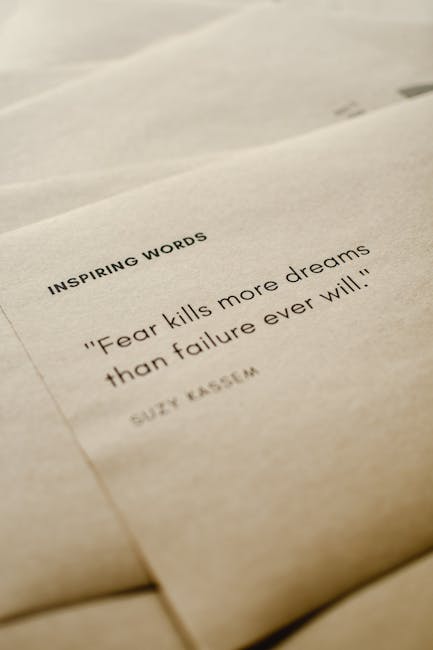
Table of Contents
- Understanding the Creative Process and the Role of Error
- Cognitive Biases That Hinder Learning from Mistakes
- The Psychological Benefits of Embracing Mistakes
- Cultivating a ‘Mistake-Friendly’ Environment for Creativity
- Strategies for Turning Creative Mistakes into Opportunities
- Case Studies: Innovations Born from Unexpected Errors
Understanding the Creative Process and the Role of Error
The very essence of creativity and innovation is deeply intertwined with the act of problem-solving and the generation of novel ideas. It’s about looking beyond the obvious, challenging assumptions, and forging new paths. This journey, however, is rarely a straight line. More often than not, the creative process is a winding road, punctuated by what we might initially perceive as missteps or failures. These are not just inevitable; they are often critical stepping stones, providing invaluable learning opportunities that propel us forward. To truly foster an innovative environment, we must reframe our understanding of these "mistakes" as integral components of exploration and discovery.
It’s crucial to distinguish between purely accidental errors, which can sometimes lead to serendipitous breakthroughs, and intentional experimentation. The latter is where the true magic of creative progress often lies. When we deliberately push boundaries, test hypotheses, and explore uncharted territories, we are inherently embracing the possibility of not achieving the desired outcome on the first try. This spirit of exploration is what drives genuine innovation. It’s about asking "what if?" and being willing to see where the answer leads, even if it’s not the destination we initially envisioned. This mindset is essential for anyone looking to Start Thinking Of Yourself As A Creative Person.
History is replete with examples of innovators whose most celebrated achievements were preceded by a series of what were then considered failures. Think of Thomas Edison and his thousands of attempts before perfecting the incandescent light bulb, or Alexander Graham Bell’s early struggles with the telephone. These figures didn’t see their setbacks as dead ends but as data points, refining their approach with each iteration. Their persistence underscores a fundamental truth: that the path to groundbreaking solutions is paved with lessons learned from what didn’t work. Understanding The Psychology of Failure in Creative Processes is key to embracing this iterative nature of innovation.
This historical perspective highlights the importance of resilience and a growth mindset. Rather than fearing errors, we should embrace them as data. Techniques like TRIZ principles for creative problem-solving often involve systematically analyzing contradictions and undesirable effects to uncover innovative solutions, demonstrating a structured approach to leveraging "problems" for progress. Similarly, exploring frameworks like Edward de Bono’s methods, such as Unlock Your Genius: Master Edward De Bono’s Creative Thinking Methods, provides tools to deliberately approach challenges from new angles, making perceived missteps more likely to lead to valuable insights. The willingness to embrace uncertainty and the potential for error is also fundamental to understanding The Psychology of Risk in Innovation: Taming Your Inner Skeptic. The ultimate goal is not to avoid mistakes, but to learn from them rapidly, fostering continuous improvement and the development of truly novel solutions, perhaps even informed by User Persona Development for Creative Solutions to ensure the generated ideas resonate with the intended audience.
Cognitive Biases That Hinder Learning from Mistakes
The journey of innovation is rarely a straight line; it’s a meandering path filled with exploration, dead ends, and unexpected discoveries. While we often celebrate the breakthroughs, the lessons learned from missteps are arguably more potent. However, our own minds can sometimes act as the biggest roadblocks to extracting that valuable wisdom. Several pervasive cognitive biases can actively hinder our ability to learn from creative mistakes, turning potentially powerful insights into frustrating failures.
Perhaps the most insidious is confirmation bias. This is our natural tendency to seek out, interpret, and remember information that aligns with our pre-existing beliefs or hypotheses, while downplaying or outright ignoring contradictory evidence. In a creative context, this means we might enthusiastically pursue an idea, subconsciously filtering out any data points that suggest it’s not working. If early results are even vaguely positive, confirmation bias can convince us we’re on the right track, preventing us from pivoting or abandoning a failing endeavor. This can be particularly dangerous when starting a new project, especially if you’re leaning heavily on User Persona Development for Creative Solutions without rigorously testing those assumptions against real-world feedback.
Closely related is the IKEA effect. Named after the popular furniture retailer, this bias describes our tendency to place disproportionately high value on products that we have, at least in part, created ourselves. Even if our creation is objectively flawed or suboptimal, the effort and personal investment we’ve poured into it can lead us to overvalue its worth. This makes it incredibly difficult to objectively assess the shortcomings of our own ideas or prototypes. We become emotionally attached, seeing the flaws as minor quirks rather than fundamental issues that need addressing. This emotional entanglement can make it challenging to learn from mistakes, as we’re more inclined to defend our creation than to critically analyze its weaknesses.
Then there’s the sunk cost fallacy. This is the often-irrational decision to continue an endeavor because of the resources (time, money, effort) already invested, rather than based on the potential future benefits. In the realm of innovation, this can manifest as clinging to a failing project simply because a significant amount of seed funding was secured, or because a lot of preliminary research has been conducted. The logical question of "Is this still the best path forward?" gets overshadowed by the emotional plea of "I can’t let all that investment go to waste." This can prevent teams from recognizing a mistake and redirecting their resources to more promising avenues, a concept also explored in Startup Failure Analysis: Learn from Mistakes & Avoid Common Pitfalls.
| Cognitive Bias | Description | Impact on Learning from Mistakes |
|---|---|---|
| Confirmation Bias | Seeking and interpreting information that confirms existing beliefs. | Leads to ignoring evidence of failure, reinforcing flawed assumptions, and hindering course correction. |
| IKEA Effect | Overvaluing creations due to personal investment and effort. | Makes objective self-assessment difficult, leading to defensiveness about flaws and resistance to constructive criticism. |
| Sunk Cost Fallacy | Continuing an endeavor due to prior investment, regardless of future potential. | Prevents acknowledging a mistake and redirecting resources, prolonging unproductive efforts. |
| Fear of Failure | The anxiety and avoidance associated with the possibility of not succeeding. | Inhibits risk-taking and experimentation, which are essential for identifying and learning from mistakes. |
Underlying many of these is the pervasive fear of failure. For many, the sting of not succeeding can be deeply personal, leading to a reluctance to take risks or engage in genuine experimentation. This fear can manifest as a desire for certainty, a push for incremental progress over bold leaps, and an avoidance of challenging problems. When failure is perceived as a personal indictment rather than a natural part of the creative process, individuals and teams will naturally shy away from activities that might lead to it. This directly curtails the very exploration needed to discover what works and what doesn’t. Without the psychological safety to stumble, we miss out on the rich learning opportunities that lie in The Psychology of Failure in Creative Processes. This also ties into understanding The Psychology of Risk in Innovation: Taming Your Inner Skeptic, as overcoming this fear is paramount to truly innovative endeavors.
The Psychological Benefits of Embracing Mistakes
The discomfort of a misstep is often amplified in creative fields, where the pursuit of novelty can feel like navigating uncharted territory. Yet, it’s precisely within these "failures" that some of the most profound psychological benefits for innovators and creators are unlocked. Far from being endpoints, creative mistakes are the raw material for significant growth.
Learning and Adaptation: The Invaluable Feedback Loop
Every errant brushstroke, every unworkable prototype, every poorly received pitch is a data point. These aren’t signs of inadequacy, but rather invaluable feedback mechanisms. When an idea doesn’t land, or a process breaks down, it compels us to ask "why?" This critical inquiry is the engine of adaptation. Instead of a dead end, view it as a signpost redirecting your efforts. Understanding what went wrong, and why, allows for precise adjustments, leading to more robust and effective solutions. This iterative process of trial, error, and refinement is fundamental to any successful innovation, much like the principles outlined in methodologies like TRIZ principles for creative problem-solving.
Building Resilience: Forging Mental Fortitude
The path of innovation is rarely linear. Setbacks are inevitable, and how we respond to them is a defining characteristic of resilient individuals and teams. Each time you encounter a challenge, analyze it, and find a way forward, you are actively building mental fortitude. Overcoming these obstacles, however small, strengthens your capacity to handle future difficulties. It fosters a belief in your ability to persevere, a crucial trait for anyone daring to push boundaries. As explored in Creative Setbacks Happen: How to Build Unshakeable Resilience, this process isn’t about avoiding failure, but about learning to navigate it effectively.
Fostering a Growth Mindset: Viewing Challenges as Opportunities
A cornerstone of psychological well-being and creative productivity is the adoption of a growth mindset. This perspective, popularized by Carol Dweck, posits that abilities and intelligence can be developed through dedication and hard work. When mistakes are seen not as indictments of innate talent but as opportunities for learning and development, the entire creative landscape shifts. A flawed experiment becomes a chance to deepen understanding, and a creative dead end transforms into a catalyst for exploring alternative approaches. This philosophy underpins the idea that even with tools like Generative AI for Creative Writing, human ingenuity and the willingness to learn from errors remain paramount. Developing this outlook is key to Developing Creative Problem-Solving Through Growth Mindset.
Enhancing Divergent Thinking: Unexpected Avenues of Thought
Sometimes, the most exciting breakthroughs emerge from unexpected places – often from what initially appears to be a mistake. When a planned route proves impassable, we are forced to explore detours. These deviations can spark new lines of inquiry, leading to novel connections and original ideas. A miscalculation in a design might reveal an unforeseen aesthetic possibility, or an accidental parameter change in an algorithm could unlock a more efficient solution. This serendipitous exploration is vital for fostering divergent thinking, a key component of creativity. It’s about embracing the unknown and allowing curiosity to lead you down uncharted paths, perhaps even tapping into The Psychology of Wonder to uncover possibilities you never would have considered. This openness to the unexpected is crucial for embracing The Psychology of Disruptive Innovation: Master Your Mindset for Breakthroughs.
Cultivating a ‘Mistake-Friendly’ Environment for Creativity
The crucible of innovation is not forged in an environment of fear, but in one of courageous exploration. To truly foster groundbreaking ideas, we must intentionally cultivate a ‘mistake-friendly’ atmosphere. This isn’t about condoning sloppiness; it’s about recognizing that the path to breakthrough often involves detours, missteps, and even spectacular flameouts.
At the heart of this is psychological safety. This is the bedrock upon which creativity thrives. When individuals feel genuinely safe to express ideas, ask "silly" questions, and – crucially – admit when something hasn’t worked, a powerful shift occurs. They are more likely to take calculated risks, to challenge the status quo, and to push boundaries. Without this safety net, fear of judgment or reprisal will invariably stifle nascent creativity, pushing people towards the well-trodden, less innovative path. Think of it as the fuel for your boldest creative risks; without it, the engine sputters and dies. This directly relates to Psychological Safety: The Rocket Fuel for Your Boldest Creative Risks and Ignite Innovation: Cultivating Psychological Safety for Bold Creative Risk-Taking.
Once a mistake occurs, the process doesn’t end with an embarrassed shrug. Debriefing and reflection become vital learning opportunities. Structured processes, like a post-mortem analysis or a "lessons learned" session, allow teams to dissect what went wrong and, more importantly, why. This isn’t about assigning blame, but about understanding the causal factors. Was it a flawed assumption? An oversight in User Persona Development for Creative Solutions? A misunderstanding of TRIZ principles for creative problem-solving? Open and honest discussion, facilitated by neutral parties, can uncover hidden insights that would otherwise remain buried. This kind of rigorous examination is fundamental to Startup Failure Analysis: Learn from Mistakes & Avoid Common Pitfalls.
This leads us to the concept of "intelligent failures." Not all mistakes are created equal. An intelligent failure is one that arises from a well-intentioned, well-researched attempt to achieve a significant goal. It’s a risk taken with a clear hypothesis and a commitment to learning, even if the immediate outcome is not success. These are the experiments that push the needle, the ventures that explore uncharted territory. Embracing these intelligent failures means understanding The Psychology of Failure in Creative Processes as an inevitable, and often productive, byproduct of ambitious innovation. It’s about taming The Psychology of Risk in Innovation: Taming Your Inner Skeptic.
Finally, the tone is set from the top. The role of leadership in modeling vulnerability and learning from mistakes is paramount. When leaders openly share their own missteps, discuss what they learned, and demonstrate a commitment to growth, it signals to the entire organization that making errors is not a career-ending event, but a part of the human and creative process. This can involve admitting when they don’t have all the answers, seeking feedback, and actively participating in debriefing sessions. This authenticity fosters trust and encourages others to be more open. This modeling can be incredibly powerful in Transforming Resistance: Creative Strategies for Change Adoption, as it demonstrates that challenges are opportunities for evolution, not reasons to shut down. Ultimately, embracing the learning potential within mistakes is a fundamental aspect of developing a growth mindset, which is essential for anyone looking to Start Thinking Of Yourself As A Creative Person and to unlock their full innovative capacity.
Strategies for Turning Creative Mistakes into Opportunities
In the exhilarating pursuit of innovation, mistakes are not roadblocks but rather signposts guiding us towards more robust solutions. The key lies in how we interpret and respond to these inevitable stumbles. Instead of viewing them as personal failures, we must cultivate a mindset that reframes ‘failure’ as ‘data’ or ‘feedback.’ This shift in perspective is fundamental; it transforms a potentially demoralizing event into a valuable learning opportunity, echoing the principles found in The Psychology of Failure in Creative Processes.
To harness this feedback effectively, developing systematic error analysis techniques is paramount. This involves moving beyond a superficial glance at what went wrong and delving into the root causes. Tools and methodologies, whether borrowed from engineering principles like TRIZ principles for creative problem-solving or adapted from Lean methodologies, can provide a structured framework. The goal is to understand the ‘why’ behind the error, not just the ‘what.’ This analytical approach is crucial for avoiding repeated missteps and accelerating the learning curve.
Embracing iterative design and prototyping is another powerful strategy. This approach inherently builds in opportunities to learn and adjust. By releasing early versions of a product or concept, even in a limited capacity, you gather real-world data. This agile methodology, common in software development and product design, allows for course correction before significant resources are committed, minimizing the impact of any single mistake. It’s about building, testing, learning, and refining in rapid cycles. For a deeper understanding of how this applies to user-centric development, exploring User Persona Development for Creative Solutions can be highly beneficial.
The emotional toll of making mistakes can be significant, impacting confidence and willingness to take risks. Therefore, cultivating mindfulness and emotional regulation is vital for navigating the disappointment that often accompanies creative setbacks. Practices that promote present-moment awareness and help detach from negative emotions can create the mental space needed to objectively analyze errors. This emotional resilience, often termed "grit" or perseverance, is a cornerstone of long-term creative success. As explored in articles like Creative Setbacks Happen: How to Build Unshakeable Resilience, developing these inner strengths is as crucial as any external strategy.
Finally, actively seeking diverse perspectives is indispensable for gaining objective insights on errors. Our own biases can often blind us to the true nature of a mistake. Engaging with colleagues from different disciplines, potential users, or even external mentors can provide fresh eyes and uncover blind spots. This collaborative approach not only helps in dissecting errors but also fosters an environment of shared learning, reinforcing the idea that mistakes are collective opportunities for growth. This principle is deeply intertwined with fostering Psychological Safety: The Rocket Fuel for Your Boldest Creative Risks.
Case Study: The Unforeseen User Need
A team developing a new project management tool initially focused on advanced features for experienced project managers, drawing heavily on the principles of Unlock Your Genius: Master Edward De Bono’s Creative Thinking Methods. However, early user testing revealed that their target audience, composed primarily of small business owners with limited project management experience, found the interface overwhelming and difficult to navigate. The “failure” wasn’t in the functionality but in a misunderstanding of the user’s actual needs and technical proficiency. By reframing this feedback as crucial data, the team analyzed user behavior, identified pain points, and iteratively redesigned the interface with a simpler, more intuitive user experience. This shift transformed a potential product failure into a market-relevant success by addressing an unforeseen user need and demonstrating the power of iterative feedback.
Case Studies: Innovations Born from Unexpected Errors
The path to breakthrough innovation is rarely a straight line. More often than not, it’s a winding journey marked by detours, dead ends, and, crucially, unexpected errors. These aren’t the catastrophic failures that derail projects, but rather those happy accidents, overlooked observations, or seemingly flawed initial attempts that, when viewed through a lens of creative curiosity, blossom into revolutionary products and concepts. Embracing the psychology of creative mistakes isn’t about actively seeking to fail, but about fostering an environment where errors are seen not as indictments, but as potential springboards for discovery. This is where The Psychology of Failure in Creative Processes truly comes into play.
Perhaps the most iconic example of serendipity leading to innovation is the accidental discovery of penicillin by Alexander Fleming in 1928. Returning from a holiday, Fleming noticed that a petri dish of Staphylococcus bacteria he had left uncovered had become contaminated with a mold. Instead of discarding the dish as a ruined experiment, he observed the clear zone around the mold where the bacteria had been killed. This seemingly insignificant error – a forgotten lid and accidental mold spore – led to the development of the first antibiotic, a discovery that has since saved countless lives. It’s a testament to the power of keen observation and the Unlock Your Potential: The Astonishing Psychology of Wonder that allows us to see possibilities where others see only problems.
Another compelling tale comes from the 3M labs with the development of Post-it Notes. Dr. Spencer Silver, a scientist at 3M, was attempting to create a super-strong adhesive in 1968. Instead, he developed a low-tack, pressure-sensitive adhesive that was strong enough to stick to surfaces but could also be easily removed without leaving residue. This "failed" adhesive was largely overlooked until Art Fry, a colleague of Silver’s, realized its potential for creating reusable bookmarks for his church hymnal. The initial "flaw" in the adhesive – its weakness – became its greatest strength, transforming a perceived failure into a ubiquitous office supply. This story highlights the importance of understanding the user’s needs, a process enhanced by robust User Persona Development for Creative Solutions.
The evolution of the Postmodern art movement offers a fascinating perspective on how deliberate "errors" or deviations from established norms can drive creative evolution. Postmodern artists actively challenged the principles of Modernism, questioning originality, embracing pastiche, and even incorporating what might have been considered "mistakes" or kitsch into their work. Artists like Andy Warhol, with his silkscreen prints of Campbell’s soup cans, deliberately blurred the lines between high art and popular culture, subverting traditional artistic conventions and paving the way for new forms of expression. This embrace of the unconventional echoes the spirit of Creative Thinking Techniques: Busting Myths & Unlocking Real Innovation.
In modern technology and design, we see countless instances where initial flaws have led to significant breakthroughs. The development of the touchscreen interface, for example, was not a direct path. Early iterations had issues with responsiveness and accuracy, but the persistent effort to refine these "errors" ultimately led to the intuitive touchscreens we rely on today. Similarly, the iterative nature of software development often involves discovering and fixing bugs that, in retrospect, highlight areas for improvement in user experience or functionality. Many of these approaches are underpinned by systematic methods like those explored in TRIZ principles for creative problem-solving and the foundational First Principles: Your Blueprint for Radical Creative Problem-Solving.
FAQ: How can a “failed” experiment lead to innovation?
A “failed” experiment can lead to innovation when the observer possesses the curiosity and open-mindedness to question why the failure occurred. Instead of dismissing the outcome, they investigate the unexpected results. This often involves a combination of serendipity (being in the right place at the right time with the right mindset) and a systematic approach to analysis. Think of Fleming and penicillin; the mold itself wasn’t the goal, but its effect on the bacteria was the unexpected observation that sparked further investigation. It’s about understanding the underlying cause and potential of the deviation from the expected outcome. This mindset aligns with the principles of The Psychology of Disruptive Innovation: Master Your Mindset for Breakthroughs.
FAQ: What role does psychological safety play in embracing creative mistakes?
Psychological safety is absolutely critical. When individuals feel safe to experiment, to admit they’ve made a mistake, or to present an idea that might be unconventional or even appear flawed, they are more likely to take the bold creative risks that lead to breakthroughs. In an environment lacking psychological safety, people will avoid anything that might lead to criticism or negative repercussions, stifling innovation. They will stick to the tried and true, fearing the unknown. Conversely, cultures that encourage open dialogue, learning from setbacks, and celebrating experimentation foster innovation. This is the core message of articles like Psychological Safety: The Rocket Fuel for Your Boldest Creative Risks and Ignite Innovation: Cultivating Psychological Safety for Bold Creative Risk-Taking.
These case studies underscore a vital principle: the perceived "error" is often just a deviation from an expected outcome. The true innovation lies in recognizing the potential within that deviation and possessing the mindset, the tools, and the courage to explore it. This is the essence of Start Thinking Of Yourself As A Creative Person and embracing the inherent risks involved, as discussed in The Psychology of Risk in Innovation: Taming Your Inner Skeptic.
Featured image by Eva Bronzini on Pexels