Unlock Your Genius: The Ultimate Guide to Brainstorming Techniques
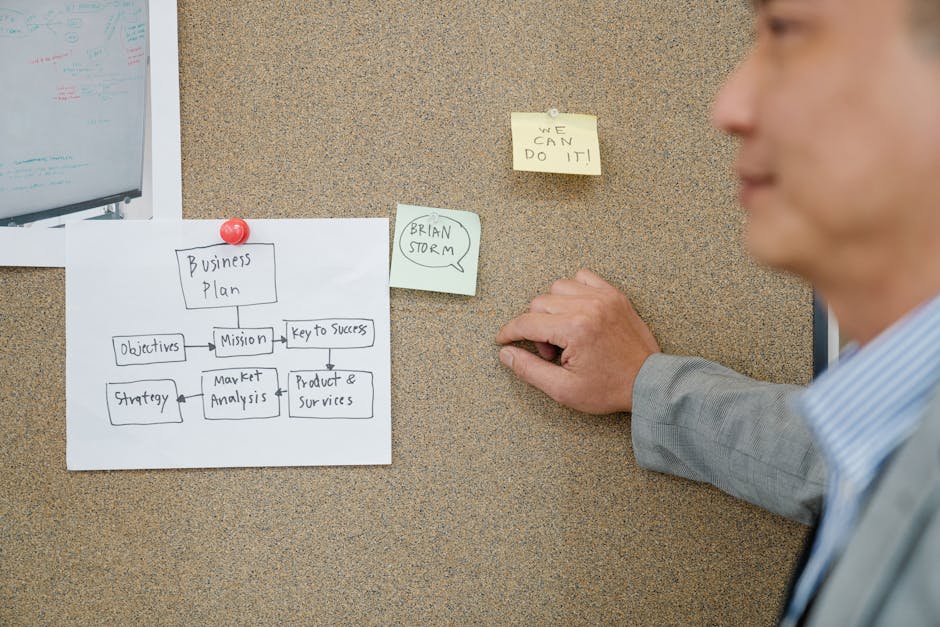
Ever feel stuck, staring at a blank page or a complex problem with no clear solution? You’re not alone. Generating fresh ideas is a skill, and like any skill, it can be honed with the right tools. Brainstorming techniques are your secret weapon to unlocking that latent creativity and finding innovative solutions. Think of it like preparing for a marathon; you wouldn’t just start running without a training plan, right? Brainstorming is your training plan for the mind.
This guide will walk you through a variety of proven methods designed to help you and your team generate a high volume of diverse ideas quickly and effectively. We’ll explore different approaches, from classic methods to more modern, dynamic strategies, ensuring you have a toolkit robust enough for any challenge.
Table of Contents
- Why Brainstorming Matters
- Getting Started: The Foundation of Great Ideas
- Classic Brainstorming Techniques
- Structured Brainstorming for Focused Results
- Visual and Creative Brainstorming
- Advanced and Collaborative Techniques
- Overcoming Brainstorming Hurdles
- Putting it All Together: Your Action Plan
- References
Why Brainstorming Matters
At its core, brainstorming is about generating a large quantity of ideas without immediate judgment. It’s the fertile ground where innovation sprouts. Without effective idea generation, innovation falters. You might be wondering, "Is all this effort really necessary? Can’t I just think of ideas on my own?" While individual creativity is valuable, collaborative brainstorming can amplify your output exponentially. It taps into diverse perspectives and experiences, leading to more robust and original concepts. This process is fundamental to everything from developing new products to solving complex challenges, much like understanding the fundamental principles behind advancements such as the World Wide Web / Internet (1989).
Getting Started: The Foundation of Great Ideas
Before you dive into specific techniques, setting the right environment and expectations is crucial. A successful brainstorming session isn’t just about throwing ideas around; it’s about cultivating a safe and productive space for creativity.
Define Your Goal
What problem are you trying to solve? What opportunity are you exploring? Be specific. A clear objective focuses your energy. Instead of "How can we improve our website?" try "How can we increase user engagement on our product pages by 15% in the next quarter?"
Establish Ground Rules
These are non-negotiable for a productive session:
- Defer Judgment: No idea is too wild or too silly during the generation phase. Criticism kills creativity.
- Encourage Wild Ideas: The most outlandish suggestions can often spark practical, innovative solutions.
- Build on Others’ Ideas: Use "Yes, and…" thinking rather than "No, but…" This collaborative spirit fosters growth. Think of it like a constructive conversation, not a debate.
- Stay Focused on the Topic: Keep the discussion relevant to the defined goal.
- One Conversation at a Time: Avoid interrupting or talking over each other.
- Go for Quantity: Aim for as many ideas as possible. The more ideas, the higher the chance of finding a gem.
- Be Visual: Use whiteboards, sticky notes, or digital tools to capture ideas. This makes them tangible.
Assemble Your Team (If Applicable)
Diversity is key. Include people from different departments, backgrounds, and levels of experience. A mix of perspectives fuels creativity. Consider who might have unique insights, perhaps someone who uses a specific tool extensively, like someone who understands Work Gloves With Transparent Cuffs and their application. Exploring these diverse viewpoints effectively often requires employing various Brainstorming Methods.
Classic Brainstorming Techniques
These are the foundational methods that have stood the test of time. They are excellent starting points for most brainstorming needs.
Freewriting
This is a solitary or group technique where you write continuously for a set period (e.g., 10-15 minutes) about a specific topic without stopping, censoring, or editing. The goal is to bypass your internal critic and let ideas flow. Don’t worry about grammar, spelling, or coherence; just keep the pen moving or fingers typing.
How to use Freewriting:
- Define your topic or question.
- Set a timer.
- Write continuously, exploring any thoughts that come to mind.
- If you get stuck, write "I’m stuck" until a new thought emerges.
- Review your output later for potential ideas.
Mind Mapping
Mind mapping is a visual way to capture and organize ideas. You start with a central concept and branch out with related thoughts, sub-ideas, and keywords. It’s excellent for exploring the various facets of a problem or subject.
How to use Mind Mapping:
- Write your central topic in the middle of a page (or digital canvas).
- Draw branches radiating from the center for main themes.
- Add sub-branches for related ideas and details.
- Use keywords, images, and colors to make it dynamic and memorable.
- Connect related ideas across different branches.
This technique is superb for understanding the scope of an issue, much like mapping out the features of a complex invention like Transformer of Torque (TT).
The Reverse Brainstorm
Instead of asking "How can we solve this problem?" you ask, "How can we cause this problem?" By thinking about ways to make things worse, you often uncover the underlying issues and their potential solutions. For example, if your goal is to improve customer service, you might brainstorm "How can we create the worst possible customer service experience?" This helps identify specific pain points to avoid.
How to use the Reverse Brainstorm:
- Clearly state the problem you want to solve.
- Reframe it as, "How can we make this problem worse?" or "How can we ensure failure?"
- Brainstorm all the ways you could achieve this negative outcome.
- Review the list of "bad" ideas.
- Reverse each negative idea to find a corresponding positive solution.
Structured Brainstorming for Focused Results
When you need more organized idea generation, structured techniques can be highly effective. They often involve specific steps and roles to ensure participation and efficiency.
Round Robin Brainstorming
In this method, participants take turns sharing one idea at a time. This ensures everyone contributes and prevents dominant voices from overshadowing quieter ones. It can be done verbally or by passing around a piece of paper or a shared document.
How to use Round Robin:
- Pose the problem or question to the group.
- Go around the room (or virtual space) in a set order.
- Each person shares one idea per turn.
- If a person has no new ideas, they can pass.
- Continue until ideas run dry or a time limit is reached.
Brainwriting (6-3-5 Method)
This technique involves a small group (typically 6 participants) generating ideas over several rounds (typically 5 minutes per round). Each person writes down 3 ideas on a worksheet, then passes their sheet to the person next to them, who then adds 3 more ideas based on what’s already there. This continues until everyone has contributed to every sheet.
How to use Brainwriting (6-3-5):
- Assemble 6 participants.
- Each participant gets a worksheet and a pen.
- The worksheet has space for 3 ideas per round, across 5 rounds (or more).
- Round 1: Each person writes 3 ideas related to the topic in the first column.
- Round 2: Pass the worksheets clockwise. Each person reads the existing ideas and adds 3 new ideas in the second column.
- Continue passing and adding ideas for 5 rounds.
- After 5 rounds, you’ll have 90 ideas (6 participants x 3 ideas x 5 rounds).
This method is a fantastic way to encourage silent idea generation and build upon others’ thoughts, similar to how collaborative research in fields like AI can lead to breakthroughs, as seen in discussions about What the Future of Retrieval Augmented Generation Looks Like.
SCAMPER Technique
SCAMPER is an acronym for a checklist of action verbs that can be used to spark new ideas or modify existing ones. It’s particularly useful for improving products, services, or processes.
- Substitute: What can be replaced?
- Combine: What can be merged or put together?
- Adapt: What can be adjusted or altered?
- Modify (Magnify/Minify): What can be changed in scale or form?
- Put to another use: How can it be used differently?
- Eliminate: What can be removed or simplified?
- Reverse (Rearrange): What can be inverted or reordered?
How to use SCAMPER:
- Choose a product, service, or problem.
- Go through each letter of SCAMPER.
- For each verb, ask specific questions related to your chosen subject.
- Brainstorm answers and potential ideas.
For example, if you were improving a simple tool like a ruler, you might ask: "Can we substitute the material?" (e.g., make it from recycled plastic). "Can we combine it with something else?" (e.g., a protractor). "Can we modify it?" (e.g., make it foldable). This systematic approach helps you explore every angle, much like considering variations for Waterproof Paper Boots.
Visual and Creative Brainstorming
Sometimes, words alone aren’t enough. Visual and more abstract techniques can unlock different parts of your brain.
Storyboarding
Storyboarding is a technique that uses a sequence of images or drawings to outline a process, a user journey, or a narrative. It’s commonly used in film and animation but is incredibly effective for visualizing user experiences, marketing campaigns, or even internal processes.
How to use Storyboarding:
- Break down your topic or process into key sequential steps or moments.
- For each step, sketch a simple visual representation.
- Add brief notes explaining the action, dialogue, or emotional state.
- Arrange the panels in chronological order.
This method can be invaluable for understanding how users interact with a product or service, making complex ideas more relatable. It’s about seeing the story unfold, from the initial concept to the final outcome.
Image Brainstorming
This technique involves using random images as prompts to generate ideas. Participants are shown a collection of images, and they brainstorm associations, connections, or ideas inspired by what they see. This method taps into subconscious thinking and can lead to unexpected insights.
How to use Image Brainstorming:
- Gather a diverse set of images (e.g., from magazines, online stock photo sites).
- Present the images one by one or as a collage.
- Ask participants to free-associate or connect the images to the problem.
- Encourage them to explain their reasoning.
This is particularly useful when you feel creatively drained or stuck in a rut, pushing you to look at problems from entirely new angles. It’s like finding inspiration in a random object, whether it’s a Vegemite jar or a quirky invention.
Advanced and Collaborative Techniques
These methods are often used for more complex problems or when consensus-building is important.
Nominal Group Technique (NGT)
NGT is a structured group process that combines individual idea generation with group discussion and voting. It aims to ensure equal participation and a clear prioritization of ideas.
How to use NGT:
- Silent Generation: Each member individually writes down ideas.
- Round Robin Sharing: Ideas are presented one by one and recorded on a central list without discussion.
- Group Discussion: Each recorded idea is discussed for clarity and understanding.
- Individual Voting: Each member ranks or votes on their top ideas.
- Final Tally: The votes are tallied to determine the group’s priority ideas.
This structured approach is excellent for decision-making after idea generation, ensuring that the most popular or promising ideas rise to the top.
Delphi Method
The Delphi method is an iterative process used for forecasting and consensus-building among experts. It involves a facilitator sending out a series of questionnaires to a panel of experts, with feedback from earlier responses being anonymously circulated to all members in subsequent rounds. The goal is to reach a stable consensus.
How to use the Delphi Method:
- Identify and recruit a panel of experts.
- Develop the first questionnaire related to the problem or forecast.
- Collect responses and analyze them.
- Summarize the findings and provide feedback to the experts.
- Develop a second questionnaire, asking experts to reconsider their opinions in light of the group feedback.
- Repeat the process until a satisfactory level of consensus is reached.
This method is ideal for complex, far-reaching issues where expert opinion is critical and direct group interaction might be impractical or biased, such as forecasting the What the Future Of HR Looks Like.
Overcoming Brainstorming Hurdles
Even with the best techniques, brainstorming sessions can sometimes hit roadblocks. Anticipating these common issues can help you navigate them effectively.
Anticipating Objections: What if we don’t get good ideas?
This is a common fear. Remember the ground rules: defer judgment and encourage wild ideas. Not every idea needs to be a Nobel Prize winner. The goal is quantity and variety. Sometimes, a seemingly nonsensical idea can trigger a brilliant one in someone else. If you’re struggling, try a different technique, use visual prompts, or simply take a short break. Sometimes, stepping away and coming back with fresh eyes is all that’s needed. Consider what might annoy you, as those pain points can be fertile ground for invention; check out What Annoys You for inspiration on identifying problems.
Anticipating Objections: What if the group dynamic is off?
If a few voices dominate, or if participants are hesitant to speak up, revisit your ground rules. A facilitator can actively manage the discussion, ensuring everyone gets a chance to speak. Techniques like Round Robin or Brainwriting are excellent for mitigating dominant personalities. Sometimes, icebreaker activities or simply stating the importance of psychological safety can help. If conflict arises, address it directly but constructively, perhaps by focusing on the ideas themselves rather than the people. Remember, the aim is collaborative creation, not personal validation.
Putting it All Together: Your Action Plan
Brainstorming is a tool, and like any tool, its effectiveness depends on how you use it. To maximize your brainstorming efforts:
- Choose the Right Technique: Select a method that best suits your problem, group size, and time constraints.
- Prepare Your Participants: Clearly communicate the goal, ground rules, and the chosen technique beforehand.
- Facilitate Effectively: Guide the session, encourage participation, and keep the energy positive.
- Document Everything: Capture all ideas, no matter how small.
- Organize and Evaluate: After generation, group similar ideas, refine them, and then prioritize the most promising ones.
- Follow Through: Don’t let great ideas get lost. Create an action plan for developing and implementing the chosen ideas. This might involve further research, prototyping, or strategic planning.
By mastering these brainstorming techniques, you’re not just generating ideas; you’re building a sustainable engine for innovation and problem-solving. Whether you’re inventing a new gadget, refining a business strategy, or tackling a personal challenge, a well-executed brainstorming session can be the catalyst for significant breakthroughs.
References
- Osborn, A. F. (1957). Applied Imagination: Principles and Practices for Creative Problem Solving. Charles Scribner’s Sons.
- Google Scholar. (n.d.). Brainstorming Techniques Overview. Retrieved from scholar.google.com
- Harvard Business Review. (n.d.). Brainstorming Best Practices. Retrieved from hbr.org
- Forbes. (n.d.). The Science Behind Effective Brainstorming. Retrieved from forbes.com
- MIT Sloan Management Review. (n.d.). Innovating Through Idea Generation. Retrieved from mitsloanreview.mit.edu
- Nijstad, B. A., Stroebe, W., & Lodewijkx, H. F. M. (2006). The illusion of efficacy: Group brainstorming and lack of documented improvement in group creativity. Journal of Experimental Social Psychology, 42(6), 773-782. scholar.google.com
- Paulus, P. B., & Brown, V. R. (2007). Group creativity. Encyclopedia of Industrial and Organizational Psychology, 1, 313-317. scholar.google.com
Featured image by Felicity Tai on Pexels