AI-Powered Augmentation of Human Creativity
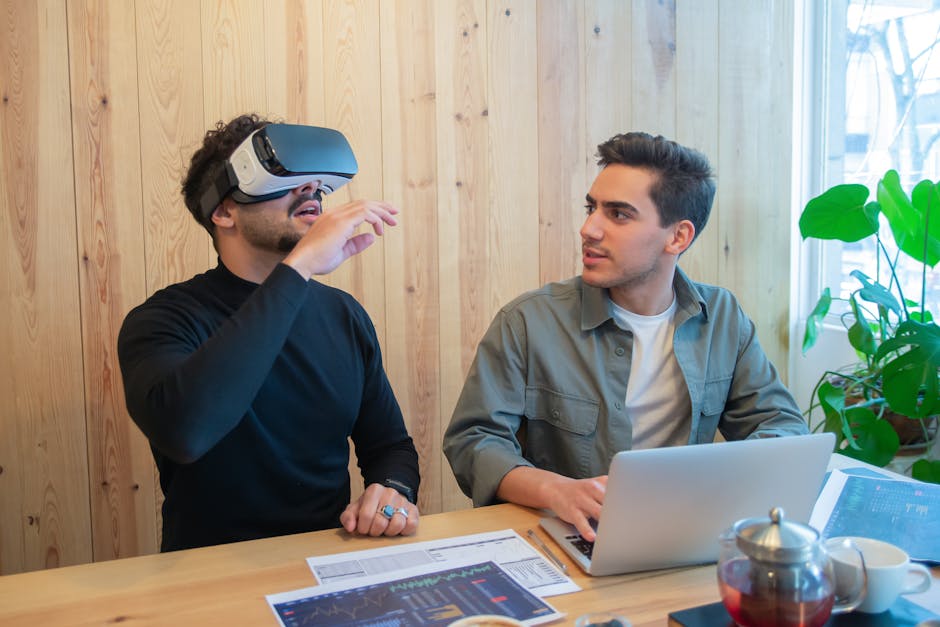
Table of Contents
- Understanding AI-Powered Augmentation
- AI Tools Enhancing Creative Processes
- The Cognitive Benefits of AI Augmentation
- AI as a Creative Collaborator
- Challenges and Ethical Considerations
- The Future Landscape of Augmented Creativity
Understanding AI-Powered Augmentation
The term "AI-powered augmentation" in the realm of creativity refers to the synergistic integration of artificial intelligence capabilities to enhance, expand, and accelerate human creative processes. It’s not about replacing human ingenuity, but rather about empowering it. Think of it as equipping a master artisan with an impossibly precise and infinitely patient apprentice, or a visionary architect with a boundless simulation engine. This partnership allows us to push the boundaries of what’s possible, explore more avenues, and refine ideas with unprecedented speed and depth.
It’s crucial to distinguish between AI as a mere tool and AI as a genuine collaborator. When AI functions as a tool, it performs specific, often repetitive tasks. For example, an AI-powered text editor might correct grammar and suggest synonyms, or a design software might automate the generation of repetitive graphic elements. These are invaluable for boosting efficiency and streamlining workflows, as seen in many AI-Powered Workflow Automation applications. However, AI truly enters the realm of augmentation when it actively participates in the ideation and refinement stages, offering novel perspectives, generating unexpected combinations, and even challenging our initial assumptions. This leads us to the spectrum of augmentation.
At the most basic level, AI provides assistance. This might involve suggesting relevant research papers, identifying patterns in data that spark new insights, or offering variations on a theme. As we move along the spectrum, AI begins to engage in more generative partnership. Here, AI doesn’t just suggest; it creates. This is where we see the rise of The Algorithmic Artist: How Generative AI is Reshaping Innovation & Creativity, with tools capable of generating text, images, music, and even code based on prompts. This level of partnership requires a nuanced understanding of how to guide and curate the AI’s output, ensuring it aligns with human intent and artistic vision. This collaborative dance between human and machine is at the heart of what we explore in The Augmented Workforce: AI Companions and Human Collaboration.
Case Study: AI-Assisted Storytelling in Film Production
A prominent film studio, facing tight deadlines and budget constraints, implemented an AI-powered narrative generation tool. This system analyzed vast datasets of successful movie scripts, identifying common plot structures, character archetypes, and pacing techniques. While the AI did not write the script itself, it acted as a powerful brainstorming partner for screenwriters. It generated multiple plot synopses based on initial concepts, suggested character backstories that added depth, and even proposed alternative scene endings that the writers might not have considered. This drastically reduced the initial ‘blank page’ paralysis and accelerated the development of compelling narratives. The human writers then used their expertise and understanding of The Neuroscience of Creativity: Unlocking Your Brain’s Innovative Power to refine the AI’s suggestions, ensuring emotional resonance and thematic coherence. The outcome was a faster, more innovative script development process, leading to a critically acclaimed film.
The effectiveness of AI augmentation hinges on our ability to design and implement these systems thoughtfully. Just as crucial as the AI’s capabilities is the human interface. This brings to mind the importance of user experience and how intuitive, human-centered design is paramount, echoing the principles of Usability Testing: The Human-Centric Design Secret Weapon. Ultimately, AI-powered augmentation is a potent force for amplifying human potential, fostering a richer landscape of innovation and creativity. It requires us to cultivate a culture that embraces these new possibilities, guided by leaders who understand how to foster Unlock Innovation: Culture, Leadership & Creativity.
AI Tools Enhancing Creative Processes
The creative landscape is undergoing a profound transformation, not through automation that replaces human ingenuity, but through augmentation that amplifies it. We’re moving beyond the traditional notion of AI as a mere tool and embracing it as a collaborative partner, a catalyst for inspiration, and a powerful enhancer of our innate creative faculties. This is the era of AI-Powered Augmentation of Human Creativity, and the tools are rapidly evolving to touch every facet of the creative process.
Generative AI, for instance, has exploded onto the scene, offering unprecedented assistance in textual creation. For writers and marketers, these systems are invaluable for overcoming writer’s block, generating diverse drafts for idea generation, and even crafting compelling scripts and marketing copy. Imagine feeding an AI a few keywords and receiving a dozen unique angles for a blog post, or a range of taglines for a new product. This isn’t about replacing the human touch, but about providing a richer palette from which to draw, speeding up the initial stages of ideation. The exploration of these capabilities aligns with advancements in Idea Generation Tools & Techniques: Sparking Innovation & Creativity.
In the realm of visual arts, AI’s impact is equally striking. Tools capable of generating entirely new images from textual prompts are democratizing visual content creation. Beyond raw generation, AI excels at style transfer, allowing artists to imbue their work with the essence of masters or specific aesthetic movements. Design assistance goes further, with AI helping to refine layouts, suggest color palettes, and even generate variations on existing designs, accelerating the iterative nature of design, much like the principles explored in AI-Powered Design Innovation. This opens up new avenues for experimentation, a cornerstone of creativity, as discussed in Boost Creativity: The Power of Experimentation.
The world of music and sound is also being re-sculpted. AI acts as a sophisticated composition aid, generating melodic fragments, harmonic progressions, and rhythmic patterns that can spark new musical ideas. For sound designers, AI can assist in creating unique audio textures and effects. Furthermore, AI-powered remixing tools are enabling musicians to explore existing tracks in novel ways, forging new sonic landscapes. These advancements are akin to exploring the underlying The Neuroscience of Creativity: Unlocking Your Brain’s Innovative Power.
Even the technical domain of coding and development is seeing creative augmentation. AI can now generate code snippets, suggest debugging solutions, and even assist in rapid prototyping. This frees up developers to focus on the higher-level architectural and problem-solving aspects of their work, fostering more innovative solutions. This mirrors the broader trend of The Augmented Workforce: AI Companions and Human Collaboration.
For writers and editors, AI-powered tools are becoming indispensable. Beyond advanced grammar and spell-checking, these systems offer stylistic suggestions, identify clichés, and even assist with plot development by suggesting narrative arcs or character motivations. This meticulous attention to detail and refinement is crucial for polished creative output, similar to the importance of Usability Testing: The Human-Centric Design Secret Weapon in product development. The application of AI here is a direct manifestation of AI-Powered Creative Tools.
FAQ: How do I ensure AI tools don’t stifle my own creative voice?
The key lies in viewing AI as a co-pilot, not an autopilot. Treat AI-generated content as raw material or inspiration. Always imbue it with your unique perspective, experiences, and intentions. Experiment with prompts to guide the AI towards your desired outcomes, and be prepared to edit, refine, and reimagine its output. Think of it as having a highly efficient brainstorming partner that presents a wide array of options, from which you then select and shape the best elements. This approach is central to fostering a culture that Unlock Innovation: Culture, Leadership & Creativity.
FAQ: What are the ethical considerations when using AI for creative work?
Several ethical considerations are paramount. Transparency about the use of AI is crucial, especially in professional contexts. Issues of copyright and intellectual property for AI-generated or AI-assisted content are still evolving and require careful navigation. Avoiding bias in AI outputs, which can reflect societal prejudices, is another significant challenge. Furthermore, we must consider the impact on human creators and ensure that AI augmentation serves to elevate, rather than devalue, human artistic endeavors. This necessitates a mindful approach to AI-Powered Innovation Strategies that prioritizes human agency.
Ultimately, these AI tools are not replacing the human spark; they are fanning its flames, providing novel starting points, accelerating tedious processes, and opening up entirely new creative horizons. The true innovation lies in how we, as humans, leverage these powerful partners to push the boundaries of what’s creatively possible, leading to groundbreaking Innovation & Creativity in Product Development.
The Cognitive Benefits of AI Augmentation
The integration of Artificial Intelligence into creative processes isn’t about replacing human ingenuity; it’s about amplifying it. Think of AI as a highly sophisticated co-pilot, a tireless assistant that can tackle the mundane and the computationally intensive, freeing up our most valuable cognitive resources for what humans do best: envisioning, conceptualizing, and imbuing work with meaning. The cognitive benefits are profound, fundamentally altering how we approach creative challenges.
One of the most immediate advantages is overcoming creative blocks and mental inertia. The blank page, a notorious antagonist to inspiration, can be less daunting when AI tools can rapidly generate a multitude of starting points, variations, or even entirely new conceptual frameworks. This isn’t about AI dictating the direction, but rather providing a rich tapestry of possibilities that can jolt us out of ruts and spark new lines of thought. This aligns with insights from The Neuroscience of Creativity: Unlocking Your Brain’s Innovative Power, which highlights the importance of varied stimuli for neural pathway activation.
Furthermore, AI excels at expanding conceptual boundaries and exploring novel ideas that might lie beyond our immediate reach or habitual thinking patterns. By processing vast datasets and identifying unexpected correlations, AI can present juxtapositions and connections that a human might miss. This is particularly evident in fields like art and design, where generative AI tools are already reshaping creative outputs, as explored in The Algorithmic Artist: How Generative AI is Reshaping Innovation & Creativity. These tools act as powerful catalysts for ideation, pushing us to consider avenues previously unimagined.
The acceleration of iteration cycles and experimentation is another significant cognitive benefit. AI can rapidly prototype, test hypotheses, and generate variations at a speed and scale impossible for humans alone. This dramatically reduces the time and effort required to explore different directions, allowing for more robust experimentation and refinement. This capacity directly supports the principle of Boost Creativity: The Power of Experimentation, enabling a more fluid and less resource-intensive approach to discovery.
Perhaps one of the most transformative aspects is the reduction of ‘friction’ in the creative workflow. Tasks that are repetitive, time-consuming, or require extensive data manipulation can be offloaded to AI. This could include everything from initial drafts and data analysis to the generation of preliminary visuals or even the tedious aspects of editing. This streamlining, often referred to as AI-Powered Workflow Automation, liberates creative professionals to focus on higher-level problem-solving, strategic thinking, and the nuanced aspects of their craft. This also has direct implications for Innovation & Creativity in Product Development, by speeding up the early stages of conception and prototyping.
Case Study: Generative Design in Automotive Engineering
A leading automotive manufacturer utilized AI-powered generative design tools to explore lightweight yet robust chassis components. Instead of relying on traditional CAD methodologies and manual iteration, engineers input design parameters and material constraints. The AI then generated thousands of potential design options, many of which were organic, biomimetic structures that human designers wouldn’t have conceived. This accelerated the design exploration phase by months, leading to components that were not only lighter and more fuel-efficient but also exhibited novel aesthetic qualities. This case exemplifies how AI augments human designers by presenting novel solutions beyond their ingrained heuristics.
Finally, AI is playing a crucial role in democratizing creative tools and lowering barriers to entry. Sophisticated design, writing, and analytical capabilities, once requiring years of specialized training and expensive software, are becoming accessible through intuitive AI interfaces. This empowers individuals with great ideas but limited technical expertise to bring their visions to life. This broader access fosters a more inclusive creative landscape, inviting diverse perspectives and potentially leading to more groundbreaking innovations. The accessibility of these AI-Powered Creative Tools for Future Work can foster environments ripe for Unlock Innovation: Culture, Leadership & Creativity. This democratization is crucial for fostering a truly innovative ecosystem, where talent, rather than technical mastery, becomes the primary driver of creative output.
AI as a Creative Collaborator
The creative landscape is undergoing a profound transformation, not through the replacement of human ingenuity, but through its augmentation. AI is rapidly emerging as a vital partner in the co-creation process, moving beyond simple idea generation to actively participate in iterative development. This collaborative dynamic is not about AI dictating terms, but about it acting as an intelligent assistant, capable of exploring vast conceptual spaces, generating novel variations, and providing data-driven insights that human creators can then refine and shape. This shift is fundamentally redefining how we approach Innovation & Creativity in Product Development.
Consider the realm of design. AI can analyze user feedback at an unprecedented scale, identifying pain points and suggesting design modifications that a human team might overlook. This aligns perfectly with the principles of Usability Testing: The Human-Centric Design Secret Weapon, ensuring that AI-assisted iterations remain firmly rooted in user needs. Similarly, in content creation, AI can generate multiple narrative arcs, character dialogues, or visual concepts based on initial prompts, allowing writers and artists to rapidly explore different creative avenues. This is the essence of AI-Powered Creative Tools for Future Work, where human intuition meets algorithmic exploration.
We’re already witnessing compelling case studies. In music, AI tools are assisting composers by generating harmonic progressions, melodic ideas, and even entire orchestral arrangements that artists can then remix and personalize. This allows for rapid prototyping of musical ideas, pushing the boundaries of sonic exploration. The field of visual arts is similarly impacted, with AI algorithms generating unique visual styles and assisting in the creation of intricate digital landscapes that would be prohibitively time-consuming for a single artist. This is a core aspect of The Algorithmic Artist: How Generative AI is Reshaping Innovation & Creativity. In architecture, AI is being used to optimize building designs for energy efficiency and structural integrity, generating countless design permutations for architects to evaluate. This mirrors the broader trend of AI-Powered Design Automation impacting various industries.
However, this burgeoning partnership necessitates careful ethical consideration. As AI becomes more integrated into the creative workflow, questions of authorship, intellectual property, and the potential for bias in AI-generated content become paramount. Ensuring transparency in how AI tools are used and developing frameworks for attributing creative contributions are crucial steps. This is why fostering an environment that encourages open dialogue and responsible implementation is vital, directly relating to the importance of Unlock Innovation: Culture, Leadership & Creativity. We must also consider the potential for AI to perpetuate existing societal biases, highlighting the need for diverse datasets and rigorous testing. As researchers at MIT have noted, addressing algorithmic bias is a critical challenge in the development of fair and equitable AI systems. As detailed by MIT Technology Review, understanding and mitigating these biases is an ongoing and essential endeavor.
The future of human-AI creative teams promises a synergistic evolution. Imagine a scenario where AI acts as a perpetual brainstorming partner, a tireless researcher, and a skilled executor of tedious tasks, freeing up human creators to focus on higher-level conceptualization, emotional resonance, and strategic decision-making. This future envisions a truly Augmented Workforce: AI Companions and Human Collaboration, where AI enhances, rather than replaces, human capabilities. Teams will be more agile, capable of exploring more ideas, and ultimately producing more innovative and impactful work. This partnership will require new leadership skills, as outlined in Mastering Leadership Styles for Innovation: Ignite Creativity & Drive Growth, to effectively manage these blended human-AI creative units.
To navigate this exciting new frontier, creators can consider the following as they integrate AI into their workflows:
- Clearly define the AI’s role in the creative process (e.g., idea generation, refinement, exploration).
- Prioritize transparency in AI usage and be prepared to discuss authorship and attribution.
- Continuously evaluate AI outputs for bias and ensure ethical considerations are addressed.
- Invest in training to understand and effectively utilize AI-powered creative tools.
- Foster a culture of experimentation and learning, embracing the iterative nature of AI collaboration.
- Remember that AI is a tool; human intuition, empathy, and critical thinking remain indispensable.
The integration of AI as a creative collaborator is not a distant possibility but a present reality. By embracing this partnership with a thoughtful and ethical approach, we can unlock unprecedented levels of innovation and creativity, pushing the boundaries of what’s possible.
Challenges and Ethical Considerations
The dawn of AI-powered augmentation in creative fields, while brimming with potential, is also a fertile ground for complex challenges and crucial ethical considerations. As we push the boundaries of what’s possible with tools like generative AI, understanding and proactively addressing these issues is paramount to ensuring this technology serves as a true enhancement, not a detriment, to human ingenuity.
One of the most immediate and debated concerns revolves around authorship and intellectual property rights. When an AI generates a piece of art, music, or text, who truly "owns" it? Is it the programmer, the user who provided the prompt, or the AI itself? Existing legal frameworks are often ill-equipped to handle this new paradigm, leading to a murky landscape where ownership disputes are likely to arise. This necessitates a re-evaluation of how we attribute creation and protect the rights of both human and AI-assisted creators, drawing parallels to discussions around The Algorithmic Artist: How Generative AI is Reshaping Innovation & Creativity.
The specter of bias in AI-generated creative content is another significant hurdle. AI models are trained on vast datasets, and if these datasets reflect existing societal biases – be it racial, gender, or cultural – the AI will inevitably perpetuate and even amplify them in its outputs. This can lead to the creation of art or stories that reinforce harmful stereotypes, limiting the diversity of creative expression and potentially alienating audiences. Ensuring fairness and inclusivity in AI training data is therefore an ethical imperative, demanding careful attention to the sources and curation of information used to build these powerful tools.
Maintaining human agency and control throughout the creative process is crucial. The goal of augmentation is to empower, not replace, human creativity. As AI tools become more sophisticated, there’s a risk of creators becoming passive recipients of AI-generated content, losing their unique voice and intentionality. This requires a conscious effort to design AI systems that act as collaborators, offering suggestions and executing tasks based on human direction, rather than dictating the creative outcome. This echoes the principles of Empathy in Design Thinking: Your Key to Human-Centric Innovation, emphasizing the human at the center of the process.
The impact on the creative workforce and the very definition of "artist" is also a profound consideration. As AI takes on more routine creative tasks, there’s a legitimate concern about job displacement. Furthermore, the lines between human-generated and AI-assisted work blur, prompting a re-evaluation of what it means to be an artist in the 21st century. Is an artist someone who conceives the idea, who meticulously crafts every element, or who skillfully guides an AI to realize a vision? The rise of The Augmented Workforce: AI Companions and Human Collaboration suggests a future where distinct skill sets will emerge, focusing on prompt engineering, curation, and strategic direction of AI tools.
| Key Challenge | Implication for Creativity | Mitigation Strategy |
|---|---|---|
| Authorship & IP Rights | Uncertainty in ownership, potential for disputes. | Develop new legal frameworks, explore licensing models for AI-generated works. |
| Algorithmic Bias | Perpetuation of stereotypes, limited diversity in creative output. | Curate diverse and representative training data, implement bias detection and mitigation techniques. |
| Human Agency | Risk of passive consumption, erosion of unique creative voice. | Design AI as collaborative tools, emphasize human control over AI outputs. |
| Workforce Impact | Job displacement, redefinition of the ‘artist’ role. | Focus on upskilling and reskilling, foster new creative roles centered on AI collaboration. |
Finally, ensuring responsible development and deployment of creative AI is an overarching imperative. This means fostering a culture of ethical innovation, where developers and organizations prioritize transparency, accountability, and the long-term societal impact of their AI creations. This ties directly into fostering strong Unlock Innovation: Culture, Leadership & Creativity within organizations and embracing responsible Mastering Leadership Styles for Innovation: Ignite Creativity & Drive Growth principles. Avoiding the pitfalls of Tech Blunders: Your Blueprint for Innovation & Creativity requires foresight and a commitment to ethical best practices. As the field rapidly evolves, continuous dialogue and proactive problem-solving will be essential to harness the full, positive potential of AI in augmenting human creativity, ensuring it serves as a powerful force for good. For further insights into the cognitive underpinnings, exploring The Neuroscience of Creativity: Unlocking Your Brain’s Innovative Power can provide a deeper understanding of the human element we are augmenting.
The Future Landscape of Augmented Creativity
The frontier of creative endeavor is being redrawn, not by individual genius alone, but by the symbiotic dance between human imagination and artificial intelligence. We stand on the cusp of a new era, where AI is poised to become not just a tool, but a genuine creative partner, fundamentally altering how we conceive, generate, and experience art, design, writing, and beyond.
Predicting the exact trajectory of AI creative capabilities is akin to forecasting the evolution of a nascent species, but several trends are already clear. We’ll see AI move beyond mere content generation to sophisticated conceptualization, capable of understanding nuanced artistic intent and contributing novel ideas. Imagine AI assistants that can analyze vast datasets of artistic movements, identify emerging patterns, and propose entirely new aesthetic frameworks, pushing the boundaries of what we consider visually or aurally pleasing. This isn’t just about generating variations on existing themes; it’s about AI becoming a catalyst for conceptual breakthroughs. The field of The Algorithmic Artist: How Generative AI is Reshaping Innovation & Creativity is already showcasing these incredible advancements.
The interaction between humans and AI in creative domains will undoubtedly evolve. We’re shifting from a command-and-control paradigm to one of co-creation. Think of it less as telling a machine what to do, and more as engaging in a dialogue, a back-and-forth exchange where human intuition and AI’s processing power merge. This will foster more dynamic workflows, where AI can serve as an tireless ideation engine, a rigorous critic, or even a muse. Tools that facilitate this collaboration are rapidly advancing, as explored in discussions on AI-Powered Collaboration Tools for Creative Teams. This enhanced collaboration will require a deep understanding of human-computer interaction, ensuring that the AI acts as an extension of, rather than a replacement for, human creative agency. For designers, this means rigorous Usability Testing: The Human-Centric Design Secret Weapon will be crucial to ensure AI tools are intuitive and empowering.
Perhaps the most exciting prospect is AI’s potential to unlock entirely new forms of creative expression. By analyzing the underlying structures of existing art forms and understanding the fundamental principles of aesthetics, AI could synthesize novel experiences that transcend current human limitations. Imagine immersive, dynamically generated narratives that adapt in real-time to viewer emotion, or entirely new musical genres born from computational exploration of sound and structure. This isn’t science fiction; it’s the logical extrapolation of current research in generative adversarial networks and other AI architectures. Such advancements might even shed light on The Neuroscience of Creativity: Unlocking Your Brain’s Innovative Power, by revealing how AI can computationally mimic or even enhance aspects of human creative cognition.
The societal implications of this widespread AI augmentation in creativity are profound and multifaceted. On one hand, it democratizes creative tools, empowering individuals with limited technical or artistic skills to bring their visions to life. This could lead to an explosion of diverse voices and perspectives entering the cultural landscape, a phenomenon akin to Crowdsourcing Creativity: Unlock Innovation & Ideas but on an entirely new scale. On the other hand, we must grapple with questions of authorship, intellectual property, and the potential for AI to exacerbate existing inequalities if access to these powerful tools is uneven. Furthermore, the very definition of "creativity" might need re-evaluation. As AI becomes more adept at generating novel and aesthetically pleasing outputs, the human contribution may shift towards curation, intent, and the unique spark of lived experience that AI currently lacks. This necessitates a thoughtful approach to how we foster innovation, as discussed in Unlock Innovation: Culture, Leadership & Creativity. The integration of AI into creative workflows also raises the need for new forms of leadership and organizational structures, as we see with the rise of The Augmented Workforce: AI Companions and Human Collaboration. Ultimately, navigating this future will require careful consideration, ethical frameworks, and a commitment to harnessing AI’s potential for the betterment of human expression and societal enrichment.
Featured image by Kampus Production on Pexels