3D Printing for Concept Exploration
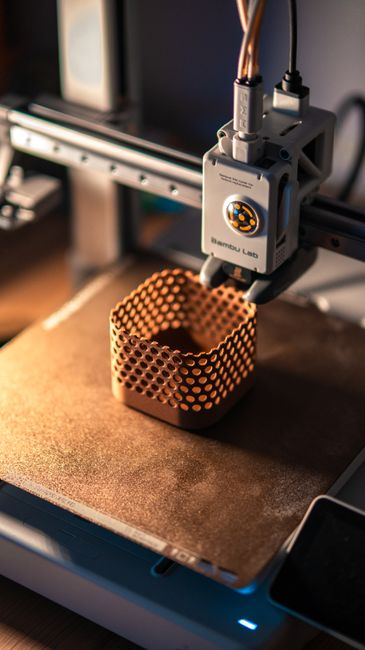
Table of Contents
- Understanding the Fundamentals of 3D Printing for Design
- Rapid Prototyping: Iterative Design and Validation
- Exploring Complex Geometries and Feasibility
- Concept Visualization and Communication
- Industry Applications and Case Studies
- Future Trends and Advanced Techniques
Understanding the Fundamentals of 3D Printing for Design
At its core, 3D printing for concept exploration revolves around additive manufacturing – the process of building a three-dimensional object layer by layer from a digital design. For designers and innovators, understanding the fundamental processes is key to unlocking its potential.
Three of the most relevant additive manufacturing technologies for initial design exploration are:
- Fused Deposition Modeling (FDM): This is perhaps the most widely recognized and accessible 3D printing technology. It works by extruding thermoplastic filament layer by layer onto a build platform. FDM is excellent for creating quick, robust prototypes to test form and function, offering a tangible representation of your ideas. It’s a fantastic starting point for exploring a multitude of design directions early in the Concept Development Process.
- Stereolithography (SLA): SLA uses a UV laser to cure liquid photopolymer resin layer by layer. This process yields incredibly detailed and smooth surfaces, making it ideal for visual models where aesthetics and fine features are paramount. For concepts that require a high degree of polish and accuracy for client presentations or user feedback, SLA shines, contributing significantly to 3D Printing for Concept Visualization.
- Selective Laser Sintering (SLS): SLS employs a laser to fuse powdered material (typically nylon or other polymers) together. SLS parts are known for their excellent strength and durability, making them suitable for functional prototypes that undergo stress testing or for producing end-use parts in low volumes. This robust capability can accelerate the transition from concept to a testable product, aligning with the principles of 3D Printing for Innovation.
The transformative power of these technologies for concept exploration lies in their inherent advantages over traditional prototyping methods. The most significant benefits are speed and cost-effectiveness. Instead of waiting weeks and incurring substantial costs for machining or injection molding, designers can iterate through multiple design iterations in days or even hours. This rapid feedback loop dramatically reduces the risk associated with bringing new ideas to life, mirroring how early print technologies like the printing press democratized information and accelerated the spread of new concepts. Indeed, The Printing Press: Gutenberg’s Revolution in Information Dissemination fundamentally changed how knowledge and ideas were shared, a parallel we can draw to the impact of 3D printing on design. This agility is crucial for effective 3D Printing for Conceptualization.
Material properties play a crucial role in how well a 3D printed model serves its conceptual purpose. The choice of material directly impacts:
- Strength: Will the model need to withstand significant force, or is it purely for visual review? Thermoplastics like ABS (often used in FDM) offer good tensile strength, while resins (SLA) can be brittle but highly detailed.
- Flexibility: For applications requiring bending or resilience, flexible filaments (like TPU in FDM) are essential. This allows for testing of designs that need to absorb impact or conform to shapes.
- Surface Finish: The aesthetic appeal of a concept model can be as important as its form. SLA typically offers the smoothest finishes out-of-the-box, while FDM prints might require post-processing like sanding or painting. SLS parts can have a slightly grainy texture, but often offer good detail and a matte finish.
- Understand your concept’s needs: Is it about form, function, or both?
- Match material to application: Strength, flexibility, and aesthetics are key considerations.
- Explore different printing technologies: FDM, SLA, and SLS offer unique strengths for diverse conceptual models.
- Consider post-processing: Surface finish can be enhanced after printing.
Finally, successful 3D printing for concept exploration hinges on effective software tools. The process begins with Computer-Aided Design (CAD) software. Tools like SolidWorks, Fusion 360, or even free options like Tinkercad, allow designers to create and manipulate 3D models. Once a design is finalized in CAD, it needs to be exported in a format compatible with 3D printing, most commonly an STL (stereolithography) file.
The next crucial step involves 3D model preparation software, often called "slicers." These programs, such as Cura, PrusaSlicer, or proprietary software from printer manufacturers, take the STL file and "slice" it into thin, horizontal layers. The slicer then generates the machine instructions (G-code) that tell the 3D printer exactly how to move and deposit material to build the object layer by layer. Features within slicers, like infill density, layer height, and support structures, are critical for optimizing print time, material usage, and the structural integrity of the conceptual model. This meticulous preparation ensures that your digital vision translates accurately into a physical form, facilitating rapid iteration and informed design decisions, as discussed in 3D Printing Prototyping: Speed, Cost, & Design Freedom.
Rapid Prototyping: Iterative Design and Validation
In the crucible of innovation, the journey from abstract idea to tangible reality is often fraught with uncertainty. This is where 3D printing truly shines, acting as the engine for rapid prototyping, a cornerstone of iterative design and validation. In the nascent stages of the design cycle, before significant investment is committed, 3D printing allows us to transform digital concepts into physical objects with unprecedented speed. This isn’t just about creating pretty models; it’s about building functional prototypes that can be rigorously tested.
The ability to quickly produce physical iterations enables designers and engineers to directly engage with their creations. Testing ergonomics becomes intuitive – does the grip feel right? Is the button placement natural? How does the product interface with the user’s daily life? These questions, which might linger in the realm of speculation with purely digital models, are answered with tangible feedback. Furthermore, 3D printing excels at bringing complex geometries and intricate form factors to life, revealing design challenges and opportunities that might be obscured on a screen. This capability is crucial for exploring novel aesthetics and functionalities.
One of the most potent applications of rapid prototyping is in gathering early user feedback. Presenting a physical object, even an early-stage prototype, elicits a far more insightful response than a flat render or a wireframe. Users can interact with the product, identify pain points, and offer suggestions that are grounded in real-world experience. This direct input is invaluable for refining the design and ensuring it truly meets user needs.
The magic of 3D printing in this context lies in its ability to dramatically accelerate the design iteration loop. The traditional cycle of design, manufacture, test, and re-design can be agonizingly slow and expensive. With 3D printing, this loop shrinks significantly: print, test, refine, print again. This rapid cadence allows for more exploration and fewer compromises, fostering a culture of continuous improvement. This is analogous to the transformative impact of The Invention of the Printing Press and its Impact on Knowledge Dissemination, which democratized access to information and spurred innovation across fields. Similarly, 3D printing democratizes the creation and refinement of physical products, paving the way for more groundbreaking ideas.
The process of creating physical prototypes for testing and feedback is a critical component of a robust Concept Development Process. It bridges the gap between abstract ideation and market-ready solutions, ensuring that innovation is not just creative but also practical and user-centric. This iterative approach is fundamental to the broader field of 3D Printing for Innovation, allowing for a more agile and responsive development path. While distinct from the informational revolution sparked by The Printing Press: Gutenberg’s Innovation Revolution, the underlying principle of democratizing creation and accelerating dissemination of ideas holds true. We see this amplified in the way 3D printing supports 3D Printing for Conceptualization and 3D Printing for Concept Visualization, making abstract thoughts concrete and testable.
Exploring Complex Geometries and Feasibility
The advent of 3D printing has shattered the confines of traditional manufacturing, unlocking a realm of design possibilities previously relegated to theoretical sketches and complex simulations. We can now bring to life shapes that were once geometrically impossible to produce, from organic, fluid forms to intricate lattice structures and self-supporting internal voids. This capability is a game-changer for concept exploration, allowing designers and engineers to move beyond the limitations of subtractive manufacturing and explore truly novel forms.
This newfound freedom in geometry directly translates into a powerful ability to test the manufacturability of intricate designs much earlier in the Concept Development Process. Instead of investing heavily in tooling and production only to discover a design flaw at the eleventh hour, 3D printing allows for rapid iteration and validation. This early feedback loop is crucial for refining complex concepts and ensuring they can be realized efficiently. It’s akin to a digital renaissance for design, where ideas can be rapidly prototyped and disseminated, much like how The Printing Press and the Democratization of Knowledge revolutionized the spread of information.
Furthermore, 3D printing provides unparalleled insight into internal structures and complex internal features that would be inaccessible with conventional methods. Imagine designing a heat exchanger with optimized internal channels for maximum efficiency, or a medical implant with porous internal structures designed for bone integration. These internal complexities, crucial for functional performance, can now be materialized and inspected. This is a significant leap forward from the limitations of 3D Printing for Conceptualization, where the focus was primarily on external form.
| Feature Evaluated | Benefit of 3D Printing for Exploration | Traditional Method Limitation |
|---|---|---|
| Internal Geometry | Direct visualization and testing | Requires complex machining, X-rays, or destructive analysis |
| Structural Integrity | Physical stress testing of novel forms | Limited by known material properties and manufacturing constraints |
| Manufacturability | Early identification of production challenges | High cost of tooling and initial production runs for failure analysis |
| Complex Assemblies | Printing as a single unit | Requires multiple parts, fasteners, and assembly steps |
Beyond mere aesthetics and internal features, 3D printing allows for rigorous assessment of the structural integrity of avant-garde forms. We can now fabricate physical prototypes of highly complex geometries and subject them to real-world stress tests. This empirical data is invaluable for understanding the performance characteristics of novel designs and de-risking their implementation. It allows us to push the boundaries of what’s structurally possible, moving beyond theoretical simulations to tangible validation. This mirrors the way new ideas and technologies, like 3D Printing Prototyping: Speed, Cost, & Design Freedom, empower continuous improvement and innovation. For more on how these iterative processes can be mapped, consider exploring Service Blueprinting for Innovation.
Concept Visualization and Communication
In the dynamic world of innovation, the ability to clearly articulate a nascent idea is paramount. This is where the transformative power of 3D printing for concept exploration truly shines. Moving beyond the two-dimensional limitations of screens, 3D printed models offer a tangible, tactile representation of abstract concepts, revolutionizing how we communicate them.
One of the most significant advantages is the enhanced clarity when using 3D printed models to communicate ideas to stakeholders and clients. Imagine presenting a complex product design or a novel architectural concept. While renderings and sketches can be effective, a physical model allows for immediate, intuitive understanding. Stakeholders can hold it, examine it from all angles, and gain a visceral feel for its form, function, and scale. This shared physical understanding fosters deeper engagement and more productive feedback, significantly reducing the risk of misinterpretation that can plague purely digital communication. This aligns with the core principles of 3D Printing for Conceptualization, where physical embodiment accelerates idea refinement.
Furthermore, creating tangible representations for marketing and investor presentations elevates the impact of your pitch. A well-crafted 3D model acts as a powerful visual aid, making your proposition more memorable and compelling. It demonstrates a commitment to detail and a tangible vision, which can be crucial for securing investment or capturing market attention. This physical proof-of-concept can be far more persuasive than a PowerPoint deck alone, transforming abstract visions into concrete possibilities.
The benefit extends internally as well, enhancing team collaboration through shared physical understanding. When designers, engineers, marketers, and product managers can interact with the same physical model, a common ground for discussion is established. Discrepancies in perception are quickly identified and resolved, leading to more cohesive development cycles and a faster path to market. This shared experience mirrors the way early innovators leveraged new technologies for widespread understanding. For instance, The Invention of the Printing Press and its Impact on Knowledge Dissemination fundamentally changed how ideas were shared and understood, much like 3D printing democratizes the understanding of physical concepts today. We can draw parallels between this technological leap and The Printing Press: Gutenberg’s Revolution in Information Dissemination, where widespread access to printed materials spurred innovation and a collective advancement of knowledge.
Ultimately, 3D printing is instrumental in bridging the gap between digital design and real-world perception. The digital realm, while powerful, can sometimes feel abstract. 3D printing translates these intricate digital models into something we can see, touch, and interact with. This process is vital for validating ergonomic considerations, assessing aesthetic appeal, and identifying potential manufacturing challenges early in the Concept Development Process. The rapid iteration enabled by 3D Printing for Prototyping ensures that concepts are not just visualized but are also rigorously tested against the realities of physical form and function.
To illustrate the impact of tangible representations on communication, consider the following:
| Benefit | Impact on Stakeholder Engagement | Role in Idea Validation |
|---|---|---|
| Tangible Form Factor | Increases comprehension and reduces ambiguity. Stakeholders can physically explore the design. | Allows for immediate ergonomic and aesthetic assessments, leading to quicker feedback loops. |
| Material Realism | Communicates texture, weight, and durability expectations. Enhances perceived value. | Helps identify material suitability and potential production challenges before costly tooling. |
| Scale Accuracy | Provides a true sense of proportion and spatial relationship. Crucial for large-scale projects. | Facilitates accurate spatial planning and compatibility checks with existing environments. |
The ability to manifest digital ideas into physical objects is a cornerstone of modern 3D Printing for Concept Visualization. It’s not merely about creating a model; it’s about fostering a shared understanding, accelerating decision-making, and ultimately, driving innovation forward with greater confidence and clarity. This is a powerful tool in any innovator’s arsenal, akin to the profound impact of The Printing Press: Democratizing Knowledge and Innovation on the dissemination of ideas throughout history. For a deeper dive into leveraging physical models for strategic planning, explore Service Blueprinting for Innovation, which also emphasizes clear visualization and communication of complex processes.
Industry Applications and Case Studies
The power of 3D printing in the realm of concept exploration is no longer confined to theoretical discussions; it’s a tangible force reshaping industries. From the sleek contours of consumer electronics to the intricate geometries of aerospace components, 3D printing allows designers and engineers to move beyond digital renderings and hold a physical manifestation of their ideas in their hands. This immediacy dramatically accelerates the iterative design process, enabling rapid prototyping and validation. For instance, in the consumer goods sector, companies are leveraging additive manufacturing to explore novel ergonomic designs for everything from coffee makers to power tools, quickly testing user comfort and aesthetic appeal.
In the automotive and aerospace industries, the benefits are even more profound. Complex internal structures, lightweight components, and bespoke parts that were once prohibitively expensive or impossible to manufacture are now within reach. This facilitates the exploration of radical new designs that can improve fuel efficiency, enhance structural integrity, and reduce assembly times. Think of intricate turbine blades or personalized dashboard components – 3D printing unlocks a new paradigm in 3D Printing for Prototyping.
Beyond discrete products, 3D printing is revolutionizing how we conceptualize and interact with built environments. Architects and urban planners are utilizing large-scale 3D printers to create detailed physical models of buildings, neighborhoods, and even entire cities. These models provide an unparalleled level of 3D Printing for Concept Visualization for stakeholders, allowing for a more intuitive understanding of scale, spatial relationships, and the overall impact of proposed developments. This fosters more effective communication and collaboration, leading to better-informed decisions and more innovative urban designs. This tactile approach to planning echoes historical revolutions in knowledge dissemination, much like The Invention of the Printing Press and its Impact on Knowledge Dissemination unlocked new possibilities for sharing ideas.
The medical field is another vibrant arena for 3D printing’s conceptual exploration. In the development of medical devices and prosthetics, the ability to create patient-specific prototypes is transformative. Surgeons can rehearse complex procedures on 3D-printed anatomical models, and prosthetists can rapidly iterate on designs for artificial limbs, ensuring optimal form, fit, and function for individual patients. This personalized approach significantly enhances patient outcomes and accelerates the development cycle for life-changing assistive technologies.
Numerous success stories highlight the impact of 3D printing on innovation journeys. Companies that embrace additive manufacturing early in their Concept Development Process often find themselves with a distinct competitive advantage. They can de-risk their investments by testing more ideas, iterate faster than competitors, and bring truly novel solutions to market. This democratizing effect on innovation, much like the historical impact of The Printing Press: Democratizing Knowledge and Innovation, allows smaller teams and startups to compete with larger, more established players by enabling rapid experimentation and tangible proof of concept. For a deeper dive into the strategic application of these technologies, exploring 3D Printing for Innovation is a crucial next step.
Future Trends and Advanced Techniques
The journey of 3D printing in concept exploration is far from over; in fact, it’s accelerating into exciting new territories. We’re witnessing the emergence of groundbreaking technologies and materials that push the boundaries of what’s physically possible for conceptualization. Think beyond simple plastics. Advanced photopolymers can mimic the look and feel of ceramics and metals, while high-performance thermoplastics offer unprecedented strength and durability, allowing for concepts to be tested under more realistic conditions. Innovations in bioprinting are even opening doors to exploring biological concepts in tangible ways.
Crucially, the synergy between 3D printing and artificial intelligence is revolutionizing concept generation itself. AI-powered generative design tools can explore vast design spaces, iterating through countless permutations based on specified parameters. This allows for the creation of highly optimized and novel forms that human designers might not have conceived of independently. When these AI-generated designs are then realized through rapid 3D printing, the feedback loop for refinement becomes incredibly efficient, significantly accelerating the Concept Development Process. This fusion empowers creators to explore a wider array of potential solutions, moving beyond incremental improvements to true paradigm shifts.
The potential of multi-material and full-color printing is dramatically enhancing the realism achievable in concept models. Imagine not just a shape, but a representation that accurately reflects the intended textures, colors, and material properties of the final product. This level of fidelity in 3D Printing for Concept Visualization allows stakeholders to gain a much deeper understanding and emotional connection to the proposed innovation. It bridges the gap between abstract ideas and tangible reality, fostering clearer communication and more informed decision-making early in the 3D Printing for Conceptualization phase. This can be likened to the profound impact of The Invention of the Printing Press and its Impact on Knowledge Dissemination, which allowed ideas to be shared with unprecedented clarity and reach.
- Embrace AI for iterative design exploration and automated concept generation.
- Leverage multi-material printing for functional and aesthetic realism.
- Experiment with advanced materials to test conceptual performance under varied conditions.
- Explore full-color printing to enhance stakeholder comprehension and emotional engagement.
- Continuously evaluate emerging printing technologies for their potential to accelerate the innovation pipeline.
Perhaps the most profound future trend is the evolving role of 3D printing in democratizing innovation. Just as The Printing Press: Democratizing Knowledge and Innovation fundamentally altered the landscape of information sharing, 3D printing is making advanced prototyping and product development accessible to a much broader audience. Entrepreneurs, small businesses, researchers, and even individuals can now bring their ideas to life without the prohibitive costs and lead times associated with traditional manufacturing. This accessibility fosters a more diverse ecosystem of innovators, leading to a richer tapestry of creative solutions. It empowers individuals to move from ideation to tangible proof-of-concept with unprecedented ease, echoing the transformative power of The Printing Press’s Role in the Renaissance, where widespread access to knowledge spurred a cultural and scientific explosion. The ability to rapidly iterate and test concepts is a core tenet of effective 3D Printing for Prototyping, and as this technology becomes more widespread, the pace of innovation across all sectors will undoubtedly accelerate, much like the impact of The Printing Press: Gutenberg’s Revolution in Information Dissemination.
Featured image by Melih Can on Pexels