3D Printing for Prototyping
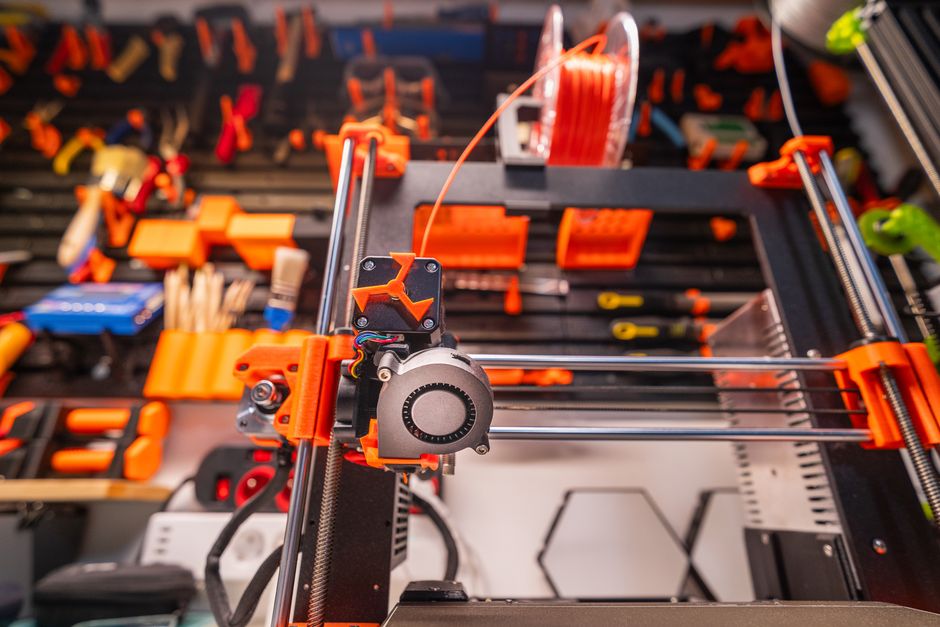
Table of Contents
- The Core of Rapid Prototyping: How 3D Printing Revolutionizes Design
- Choosing the Right 3D Printing Technology for Your Prototype
- From CAD to Physical Model: The 3D Printing Workflow
- Applications of 3D Printed Prototypes Across Industries
- Beyond the First Prototype: Iteration, Testing, and Refinement
- The Future Landscape: Advanced Materials and Emerging Trends
The Core of Rapid Prototyping: How 3D Printing Revolutionizes Design
The engine driving today’s accelerated product development cycles isn’t just a clever algorithm or a visionary leader; it’s a transformative technology that has democratized creation: 3D printing. At its heart, 3D printing, also known as additive manufacturing, is a process of building three-dimensional objects layer by layer from a digital design. Unlike subtractive manufacturing, where material is carved away from a larger block, additive methods build up complexity from nothing, fundamentally changing how we approach tangible creation.
For decades, product designers and engineers relied on laborious, time-consuming, and often expensive methods for prototyping. These could involve manual crafting, CNC machining, or early forms of rapid prototyping that still demanded significant lead times. Imagine the frustration of iterating on a design, only to face weeks of waiting for a physical model. This historical context highlights the sheer magnitude of the shift 3D printing has brought. It echoes, in a way, the profound societal shifts brought about by The Invention of the Printing Press and its Impact on Knowledge Dissemination, where access to creation and information was dramatically broadened.
The advantages of 3D printing for creating prototypes are profound and interconnected, forming the bedrock of its revolutionary impact.
Firstly, Speed. The ability to go from a digital file to a physical object in mere hours or days, rather than weeks or months, is a game-changer. This drastically shortens the feedback loop, allowing for more rapid iteration and validation of design concepts. This agility is crucial for staying ahead in innovation-driven markets. You can explore multiple design directions simultaneously, test ergonomics, and identify flaws early in the process, all thanks to the sheer velocity offered by Rapid Prototyping: Fast, Smart Product Development.
Secondly, Cost-Effectiveness. While the initial investment in some advanced 3D printers can be significant, the cost per prototype, especially for low-volume runs or complex geometries, is often dramatically lower than traditional methods. Reduced material waste, less need for specialized tooling, and minimized labor costs all contribute to making it more accessible for startups and established companies alike. This democratization of prototyping is a key reason for the surge in innovation we’re witnessing. For a deeper dive into these economic benefits, explore 3D Printing Prototyping: Speed, Cost, & Design Freedom.
Thirdly, Complexity. This is where 3D printing truly shines. Designs that were once impossible or prohibitively expensive to manufacture – intricate internal structures, organic shapes, or complex assemblies – can now be printed with relative ease. This newfound freedom allows designers to push the boundaries of form and function, leading to more optimized and innovative products. Consider the possibilities for biomimicry or advanced aerospace components; these intricate designs are now within reach.
The impact of these advantages on the product development lifecycle is nothing short of transformative. Traditional lifecycles were often linear, with distinct, time-consuming phases. 3D printing enables a more iterative and agile approach, blurring the lines between design, testing, and refinement. It empowers designers to move seamlessly from 3D Printing for Concept Visualization to creating Functional Prototyping that can be subjected to rigorous real-world testing. This means that ideas can be validated, problems identified, and solutions implemented far more quickly, leading to products that are not only innovative but also robust and market-ready. This iterative process fundamentally accelerates innovation, allowing companies to bring groundbreaking products to market faster than ever before.
Choosing the Right 3D Printing Technology for Your Prototype
Choosing the right 3D printing technology for your prototype is akin to selecting the right tool for a craftsman. The landscape of additive manufacturing offers a diverse array of techniques, each with its own strengths and ideal applications. Understanding these nuances is crucial for unlocking the full potential of Rapid Prototyping: Fast, Smart Product Development.
At the forefront of accessibility and affordability is Fused Deposition Modeling (FDM). This technology, often seen in desktop printers, works by extruding thermoplastic filament layer by layer. FDM is excellent for creating visually representative prototypes, concept models, and even functional parts where high precision isn’t paramount. Its wide range of affordable materials, including ABS, PLA, and PETG, offers varying degrees of strength and flexibility. For a deeper dive into material properties, consider exploring resources on Rapid Prototyping Materials.
For a higher degree of detail and smoother surface finishes, Stereolithography (SLA) and Digital Light Processing (DLP) resin-based printing are excellent choices. These technologies use UV light to cure liquid photopolymer resins, allowing for intricate designs and fine features. SLA and DLP are ideal for producing aesthetically pleasing prototypes, dental models, and components requiring complex geometries. However, the resins can be more brittle than some FDM plastics and may require more extensive post-processing, such as washing and UV curing.
Stepping up in terms of material strength and part durability, Selective Laser Sintering (SLS) and Multi Jet Fusion (MJF) stand out. SLS uses a laser to fuse powdered materials, typically nylon, layer by layer. MJF, developed by HP, employs an inkjet array to fuse powdered materials with fusing and detailing agents. Both technologies produce strong, functional parts with excellent mechanical properties, making them suitable for engineering prototypes that need to withstand stress, heat, and chemical exposure. They are often favored for creating end-use parts as well as robust prototypes. While the initial investment in these machines can be higher, the ability to create strong, complex parts with minimal support structures can offer a significant cost-benefit for certain projects.
The choice of material properties is paramount. Do you need a prototype that is tough and impact-resistant for testing drop scenarios? Or is flexibility key for simulating a rubber component? Heat resistance will be critical if your prototype will undergo thermal testing. For instance, PETG used in FDM offers good chemical resistance and strength, while TPU can provide excellent flexibility, ideal for overmolding simulations. Engineering-grade materials like Nylon 12 used in SLS and MJF offer superior mechanical performance for demanding applications. A comprehensive understanding of these material characteristics directly impacts the success of your Functional Prototyping efforts.
When performing a cost-benefit analysis, consider not just the initial machine cost, but also material expenses, build times, and post-processing requirements. FDM generally offers the lowest cost per prototype for simpler designs. SLA and DLP have moderate material costs and can be more expensive for larger parts due to resin consumption. SLS and MJF, while having higher upfront costs, can become more economical for producing batches of functional parts where material waste is minimized and design freedom is maximized. Explore insights into the overall impact of 3D printing on cost and speed in our article on 3D Printing Prototyping: Speed, Cost, & Design Freedom.
Other critical factors include resolution – the level of detail a printer can achieve. For intricate parts, high-resolution technologies like SLA are preferred. Build volume dictates the maximum size of a part you can print in a single piece. If your prototype is large, you might need to consider technologies with larger build capacities or be prepared for multi-part assembly. Finally, post-processing requirements can significantly add to the time and cost. FDM prints may require support removal and sanding, while resin prints often need washing, curing, and potentially painting. SLS and MJF parts typically require cleaning to remove excess powder, and some may benefit from surface finishing.
Case Study: Developing a Ergonomic Gaming Mouse
A startup designing a new ergonomic gaming mouse initially opted for FDM printing to rapidly iterate on grip designs and button placements. While FDM provided the speed and low cost needed for early stage concept visualization, they soon encountered limitations when testing the tactile feel and durability of the primary mouse shell. To address this, they switched to SLA printing for their next iteration, using a high-detail resin that mimicked the smooth finish and rigidity required for a premium product. This allowed them to create visually accurate and comfortable prototypes that provided crucial user feedback. For their final functional prototype, which needed to withstand rigorous gaming tests, they utilized MJF printing with a durable nylon material, enabling them to validate the structural integrity and performance under real-world conditions. This phased approach, leveraging different 3D printing technologies based on the prototyping stage, proved instrumental in their product development journey, a process that shares similarities with the strategic mapping in Service Blueprinting for Innovation.
From CAD to Physical Model: The 3D Printing Workflow
The journey from a nascent idea to a tangible, holdable prototype is at the heart of innovation. For those embracing modern design and development methodologies, 3D printing offers a direct and powerful pathway. Let’s break down the workflow that transforms digital blueprints into physical realities.
At the genesis of any 3D printed prototype lies Computer-Aided Design (CAD) software. This is where your ideas take shape in a virtual space. Whether you’re using professional-grade tools like SolidWorks or Fusion 360, or more accessible options like Tinkercad, CAD allows for precise geometric modeling, detailed part design, and the assembly of complex components. The fidelity and accuracy of your digital model directly influence the quality of your final prototype, making proficiency in your chosen CAD software a cornerstone of effective Rapid Prototyping Techniques.
Once your design is complete, the next crucial step is file preparation. Most 3D printers understand geometry defined by triangles. The most common file formats for this purpose are STL (stereolithography) and OBJ. STL files describe the surface geometry of a 3D object using a collection of triangles. OBJ files are more versatile, capable of storing color and texture information alongside geometry. The choice of format often depends on the specific 3D printing technology and software you’re using. Ensuring your model is "watertight" – meaning it has no holes or gaps in its surface – is paramount to avoid printing errors.
This digital file then enters the realm of slicing software, sometimes referred to as a "slicer." Think of this as the translator between your CAD model and the 3D printer’s language. Slicers, such as Cura or PrusaSlicer, take your 3D model and mathematically "slice" it into hundreds or thousands of thin, horizontal layers. For each layer, the slicer generates precise instructions (G-code) that tell the 3D printer exactly where to move its print head, how much material to extrude, and at what temperature. This process also allows you to define crucial print parameters like layer height, infill density, print speed, and support structures – all of which significantly impact the final outcome. This granular control over the printing process is a key contributor to the 3D Printing Prototyping: Speed, Cost, & Design Freedom.
Before initiating a print, printer calibration and setup are non-negotiable for achieving optimal print quality. This involves ensuring the print bed is level, the nozzle is at the correct height, and the filament is properly loaded and feeding smoothly. Different printing technologies (FDM, SLA, SLS) have their own specific calibration routines. For example, FDM printers often require bed leveling to ensure the first layer adheres perfectly, which is the foundation for the entire print. SLA printers demand careful attention to resin viscosity and UV exposure settings. Investing time in proper calibration upfront can save considerable frustration and wasted material down the line.
Even with meticulous preparation, challenges can arise in the 3D printing process. Common issues include:
- Layer Adhesion Problems: Layers not sticking to each other can result in weak prints that delaminate. This can be caused by incorrect temperature settings, print speed that’s too fast, or insufficient cooling.
- Warping: When parts of the print lift off the build plate, often due to uneven cooling and material shrinkage. Heated build plates and enclosures can help mitigate this.
- Stringing: Fine wisps of filament left between printed parts, usually an indicator of retraction settings needing adjustment or filament moisture.
- Over- or Under-Extrusion: Too much or too little material being deposited. This can be due to calibration issues with the extruder, incorrect filament diameter settings in the slicer, or nozzle clogs.
Troubleshooting these issues often involves a systematic approach: adjusting temperatures, print speeds, retraction settings, and checking for physical obstructions or wear on the printer components. A well-maintained printer and a good understanding of your chosen material’s properties are your best allies in overcoming these hurdles. It’s a process of iterative refinement, not unlike the meticulous development that went into The Invention of the Printing Press and its Impact on Knowledge Dissemination.
FAQ: What is the most critical step in the 3D printing workflow for a successful prototype?
While all steps are important, the most critical is arguably the design phase within CAD software. A flawed or poorly designed digital model, no matter how perfectly printed, will result in a flawed prototype. Ensuring the model is accurate, manifold (watertight), and optimized for the intended printing technology is paramount. If your digital model is robust, the subsequent steps of slicing and printing become significantly smoother and more predictable, leading to high-quality prototypes that truly represent your innovative vision.
FAQ: How do I know which file format (STL, OBJ, etc.) to use for my 3D print?
The choice of file format typically depends on the 3D printing software and hardware you are using. Most FDM and SLA printers primarily work with STL files for geometry. If your design incorporates color or texture information that you wish to preserve in the print (e.g., for visual prototypes), the OBJ format is a better choice. Always check the specifications or documentation for your specific 3D printer and slicer software. For most standard rapid prototyping applications focused on form and function, STL is the ubiquitous choice.
Applications of 3D Printed Prototypes Across Industries
The transformative power of 3D printing for prototyping extends its reach across nearly every sector imaginable, driving innovation and accelerating development cycles. This technology democratizes the creation of tangible representations of ideas, fostering a culture of iteration and refinement.
In the realm of Consumer Goods, 3D printing is invaluable for producing functional prototypes that allow designers to rigorously test ergonomics and user experience before mass production. Beyond mere function, it enables the creation of highly detailed aesthetic models, providing a realistic glimpse of the final product’s look and feel, crucial for marketing and stakeholder buy-in. Imagine quickly iterating on the grip of a new gaming controller or the form factor of a smart home device – this level of rapid testing was once prohibitively expensive and time-consuming.
The Automotive and Aerospace industries have embraced 3D printing for its ability to validate intricate designs and iterate on complex components at an unprecedented pace. From testing aerodynamic efficiency with precisely printed wind tunnel models to creating jigs and fixtures for assembly lines, the benefits are profound. This technology allows for the rapid iteration of intricate engine parts or aerodynamic surfaces, drastically reducing the lead time for design validation. As highlighted in discussions around Rapid Prototyping: Fast, Smart Product Development, the ability to quickly test and refine complex geometries is a game-changer for these capital-intensive sectors.
Medical and Healthcare applications are perhaps where 3D printing’s impact is most profoundly felt on a human level. Surgeons can now practice complex procedures on patient-specific anatomical models, dramatically improving surgical planning and outcomes. The creation of custom prosthetics, perfectly tailored to an individual’s needs, is revolutionizing patient care. Furthermore, device manufacturers are leveraging 3D printing to prototype innovative medical instruments and diagnostic tools, bringing life-saving technologies to market faster. For instance, prototypes of novel surgical implants can be printed and tested for biocompatibility and structural integrity, a critical step in bringing new medical solutions to patients.
Within Manufacturing, 3D printing is a powerful tool for creating custom jigs, fixtures, and even tooling on demand. This significantly streamlines production processes and reduces downtime associated with traditional manufacturing methods for these essential components. The ability to perform quick form-and-fit checks with printed parts ensures that components will integrate seamlessly, preventing costly delays and rework on the assembly line. This direct application of 3D Printing for Innovation is transforming how factories operate.
For Architecture and Construction, 3D printing offers a tangible way to bring designs to life. Highly detailed scale models provide clients and stakeholders with an intuitive understanding of spatial relationships and aesthetic intent. This visual clarity is essential for securing approvals and communicating complex architectural visions effectively, acting as a powerful tool for 3D Printing for Concept Visualization.
The parallels between the iterative nature of 3D printing prototyping and the information dissemination revolution sparked by the invention of the printing press are striking. Just as The Invention of the Printing Press and its Impact on Knowledge Dissemination democratized access to information, 3D printing democratizes the creation and validation of physical concepts. This technological leap, much like The Printing Press: Gutenberg’s Innovation Revolution, empowers individuals and organizations to bring ideas to reality with unprecedented speed and flexibility, fundamentally altering the landscape of product development and fostering a continuous cycle of innovation. In essence, it’s about reducing friction in the journey from idea to tangible reality, a core principle that has driven human progress throughout history.
Beyond the First Prototype: Iteration, Testing, and Refinement
The initial excitement of seeing a digital design manifest physically is just the beginning. In the realm of innovation, 3D printing truly shines in its ability to foster a dynamic and efficient iterative design process. Gone are the days of waiting weeks or months for a new mold or expensive tooling to accommodate a minor design tweak. With 3D printing, a designer can go from concept to physical object, identify a flaw, make a digital adjustment, and have a refined version in hand within hours or days. This rapid feedback loop is the engine that drives true product evolution, allowing for continuous improvement without the prohibitive costs and delays of traditional manufacturing.
This iterative approach is paramount for functional prototyping. Aesthetically pleasing models are useful for initial concept validation, but the real test comes when a prototype must perform its intended function. 3D printing allows us to move beyond static representations and create parts that can be subjected to stress, strain, and real-world operational conditions. Imagine testing a new ergonomic grip, the load-bearing capacity of a bracket, or the fluid dynamics of a custom nozzle. If the first iteration fails under load, or a functional requirement isn’t met, the design can be quickly modified, re-printed, and re-tested. This ability to perform robust functional testing is a cornerstone of successful product development, aligning with the principles of Rapid Prototyping Techniques.
Once functional testing provides insights, gathering feedback from stakeholders – be it engineers, marketing teams, or even potential end-users – becomes critical. This feedback loop, facilitated by readily available 3D printed iterations, allows for design adjustments that might not have been apparent during internal reviews. For instance, a user might find a button placement awkward, or a crucial assembly point might be difficult to access. These qualitative insights, when combined with quantitative data from functional tests, are what propel a design from a promising concept to a truly user-centric product. This process mirrors the way early printers disseminated information, allowing for widespread review and refinement, akin to The Printing Press’s Role in the Renaissance, where ideas could be shared and debated more broadly.
As the design matures through multiple iterations, the focus gradually shifts from purely functional and form testing to the considerations necessary for eventual mass production. This is where material selection becomes increasingly important. While early prototypes might be printed in readily available, cost-effective materials like PLA or ABS for quick iteration, later-stage prototypes may require materials that closely mimic the properties of the intended production material. This could involve exploring high-performance polymers, composites, or even metals, depending on the application. Understanding the capabilities and limitations of different 3D printing materials in these later stages, as detailed in resources like Rapid Prototyping Materials, is crucial for ensuring a smooth transition to manufacturing. Furthermore, design for manufacturability (DFM) becomes a key consideration; features that are easily printed might need to be redesigned to be more efficiently produced through injection molding or CNC machining, for example. This careful progression ensures that the final product not only performs as intended but is also economically viable to produce at scale. The ability to test and validate these production-relevant aspects with 3D printed models significantly de-risks the entire development lifecycle.
The Future Landscape: Advanced Materials and Emerging Trends
The horizon of 3D printing for prototyping is not just bright; it’s rapidly evolving, driven by relentless innovation in materials science, artificial intelligence, and manufacturing paradigms. We’re moving beyond basic plastics and metals, venturing into a realm where the very fabric of our creations can be intelligently designed and produced.
The Material Frontier: Beyond the Basics
The development of advanced 3D printable materials is a cornerstone of this future. We’re witnessing the rise of sophisticated composites, like carbon fiber reinforced polymers, offering unparalleled strength-to-weight ratios for aerospace and automotive applications. Metals are becoming more accessible and versatile, with advancements in techniques allowing for complex geometries and alloys previously impossible to manufacture. Advanced polymers, including high-temperature resistant thermoplastics and biocompatible materials for medical devices, are expanding the functional capabilities of 3D printed prototypes. This aligns directly with the foundational benefits of 3D Printing Prototyping: Speed, Cost, & Design Freedom, allowing designers to test increasingly specialized and high-performance concepts. For a deeper dive into this evolving area, exploring resources on Rapid Prototyping Materials is highly recommended.
AI: The Intelligent Co-Pilot for Design and Production
Artificial intelligence and machine learning are no longer futuristic concepts; they are actively reshaping the 3D printing landscape. AI algorithms are being integrated into design software to automate generative design processes, creating organic and optimized structures that human designers might not conceive. Furthermore, ML models are optimizing print parameters in real-time, predicting potential failures, and adjusting settings to ensure higher print success rates and material efficiency. This intelligent approach to prototyping can accelerate development cycles significantly, much like how early innovations in printing democratized knowledge. Consider the historical impact of The Printing Press: Gutenberg’s Revolution in Information Dissemination – AI is similarly democratizing complex design and manufacturing.
The Symphony of Multi-Material Printing
The ability to print with multiple materials in a single build is a game-changer for prototyping. Imagine creating a single prototype that seamlessly integrates rigid and flexible sections, conductive pathways, and even soft-touch surfaces. This capability allows for the creation of highly realistic and functional prototypes that closely mimic the end product’s intended performance and user experience. This directly enhances the value proposition of Functional Prototyping, enabling more thorough testing and validation before mass production.
Decentralization and Localization: A New Manufacturing Ethos
3D printing is a powerful catalyst for distributed manufacturing and localized production. Instead of relying on centralized factories, designs can be sent digitally to localized printing hubs or even in-house facilities. This drastically reduces lead times, transportation costs, and the environmental impact associated with global supply chains. For startups and innovators, this means the ability to iterate and produce on demand, closer to their target markets. This aligns with the principles of agile development, enabling rapid validation of ideas, as explored in Rapid Prototyping for Startups: Ignite Innovation, Validate Ideas Fast. The shift towards localized production also mirrors the revolutionary impact of early printing technologies on accessibility and dissemination, akin to The Invention of the Printing Press and its Impact on Knowledge Dissemination.
Sustainability in Focus
As 3D printing matures, so does the focus on its sustainability. Innovations are emerging in eco-friendly printing materials, such as biodegradable filaments and recycled plastics. Furthermore, the ability to print on-demand and with high material efficiency inherent in additive manufacturing reduces waste compared to traditional subtractive methods. Optimized designs, facilitated by AI, can also lead to lighter, more material-efficient products, further contributing to sustainability. This conscious approach to prototyping is becoming as critical as the design itself.
FAQ: How are advanced materials like composites improving 3D printed prototypes?
Advanced materials such as carbon fiber reinforced polymers offer significantly improved strength and stiffness while reducing weight. This allows for the prototyping of components that can withstand more demanding functional tests and closely replicate the performance characteristics of final, high-performance products in industries like aerospace and automotive. The ability to test with such materials accelerates the validation process and pushes the boundaries of what’s possible with additive manufacturing.
FAQ: What is the role of AI in optimizing the 3D printing process for prototyping?
AI plays a crucial role in several areas. In design, generative AI can create highly optimized and novel geometries. During the printing process, machine learning algorithms can analyze sensor data to predict and prevent print failures in real-time, ensuring higher success rates and material utilization. AI can also optimize print parameters for specific materials and desired outcomes, leading to faster print times and improved part quality, directly contributing to the agility highlighted in Rapid Prototyping: Fast, Smart Product Development.
Featured image by Jakub Zerdzicki on Pexels