3D Printing for Conceptualization
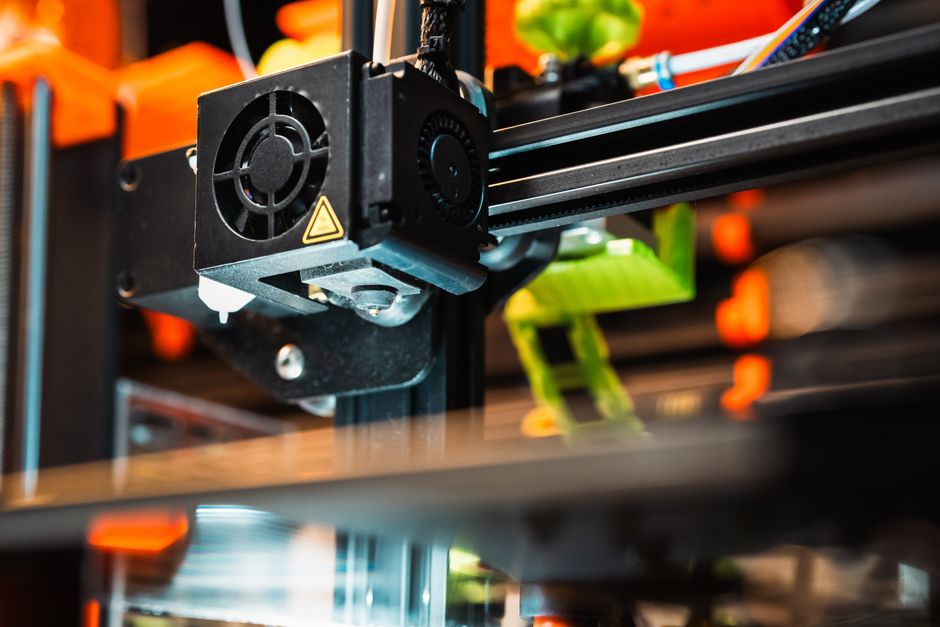
Table of Contents
- The Role of 3D Printing in the Early Stages of Design
- From Sketch to Solid: The Workflow for Conceptual Models
- Material Selection for Conceptual 3D Prints
- Leveraging Different 3D Printing Technologies for Concept Models
- Applications of 3D Printed Concepts Across Industries
- Enhancing Collaboration and Communication with 3D Printed Concepts
- Challenges and Best Practices for 3D Printing Concepts
The Role of 3D Printing in the Early Stages of Design
In the nascent stages of any innovative endeavor, the leap from a fleeting idea to a concrete form can be the most challenging, yet crucial, step. This is precisely where the transformative power of 3D printing shines, acting as an indispensable bridge between the abstract realm of 2D concepts and tangible, examinable realities. No longer are designers tethered to flat sketches or intricate digital models that may fail to capture the full essence of a design’s spatial qualities. 3D printing allows for the immediate materialization of these nascent thoughts, providing a physical object that can be held, manipulated, and truly understood.
This immediacy fuels a dramatically accelerated design process. The ability to rapidly prototype allows for swift iteration and the generation of invaluable feedback cycles. What might have taken days or weeks with traditional methods can now be accomplished in hours, enabling teams to test variations, identify flaws, and refine concepts with unprecedented agility. This iterative loop is vital for refining ideas before significant resources are committed, echoing the way the invention of the printing press democratized knowledge and accelerated discourse, much like The Printing Press’s Role in the Renaissance. Similarly, this rapid iteration is a cornerstone of effective 3D Printing for Prototyping, allowing for quick adjustments and improvements.
Furthermore, 3D printing drastically reduces ambiguity in design communication. A physical model, even a rough one, speaks a universal language that transcends the limitations of verbal or 2D visual explanations. Stakeholders, from engineers to marketing teams, can engage with a tangible representation of the design, leading to more informed discussions and a shared understanding. This clarity is essential for aligning diverse perspectives and ensuring everyone is working towards a common goal, much like how The Invention of the Printing Press and its Impact on Knowledge Dissemination revolutionized how information was shared and understood. When complex service interactions need to be visualized and understood, tools like Service Blueprinting for Innovation complement physical prototyping by mapping out user journeys and touchpoints.
The technology also opens doors to exploring complex geometries that are inherently difficult, if not impossible, to sketch or model manually with accuracy. Organic shapes, intricate internal structures, and highly detailed components can be brought to life with relative ease, pushing the boundaries of what is aesthetically and functionally achievable in the early design phase. This freedom to explore complex forms is a significant advantage, contributing to the overall drive for innovation in product development, as detailed in research on the advantages of 3D Printing Prototyping: Speed, Cost, & Design Freedom. The ability to materialize these intricate designs quickly mirrors the impact of The Printing Press: Gutenberg’s Revolution in Information Dissemination by making complex ideas more accessible and replicable. Ultimately, embracing 3D printing in these early stages is not just about creating a physical object; it’s about unlocking a more intuitive, iterative, and communicative design process, fostering true innovation, as explored in 3D Printing for Innovation.
From Sketch to Solid: The Workflow for Conceptual Models
The journey from a fleeting idea to a tangible object is often the most challenging, yet most exhilarating, part of the innovation process. For centuries, this leap has relied on sketches, diagrams, and descriptive language. Much like how The Invention of the Printing Press and its Impact on Knowledge Dissemination democratized information, 3D printing democratizes the creation of physical forms, allowing concepts to be explored and refined in a way that was once unimaginable. This section delves into the practical workflow of transforming your initial sparks of creativity into solid, printable conceptual models.
From Sketch to Solid: The Workflow for Conceptual Models
The essence of conceptualization lies in rapid iteration and tangible feedback. When an idea begins as a 2D sketch, a wireframe diagram, or even a rough napkin drawing, the immediate goal is to translate that flat representation into a three-dimensional form. This is where the power of digital modeling software shines. For conceptualization, the emphasis is often on speed and ease of use rather than hyper-realistic rendering or complex engineering specifications. Tools like Tinkercad, SketchUp, and Fusion 360 (with its intuitive freeform modeling capabilities) are excellent starting points. Tinkercad, in particular, is lauded for its beginner-friendly interface, allowing users to combine basic shapes to quickly build up complex forms. SketchUp offers a more robust set of tools for architectural and product design visualization, while Fusion 360 provides a more integrated approach for those looking to move from concept to functional prototype. The choice of software often depends on the complexity of the concept and the designer’s existing skill set.
Once your 3D model is crafted, the next crucial step is preparing it for the physical realm. This involves exporting your design into a universally compatible file format. The most common formats for 3D printing are STL (STereoLithography) and OBJ (Object). STL files represent the surface geometry of a 3D object using a collection of triangular facets. They are simple and widely supported but lack color and texture information. OBJ files, on the other hand, are more versatile and can store color, material, and texture data, making them ideal for models where visual fidelity is paramount. Ensuring your model is "watertight" – meaning it has no holes or gaps in its surface – is critical for a successful print, regardless of the chosen format. Many 3D modeling programs have built-in tools to check for and repair such issues. This preparation is akin to the meticulous typesetting and plate-making that underpinned The Printing Press’s Role in the Renaissance, where accuracy in the intermediate stages ensured the quality of the final output.
The final stage before hitting the print button is using slicer software. Programs like Cura, PrusaSlicer, and Simplify3D act as translators between your 3D model file and the 3D printer. They "slice" your digital model into hundreds or thousands of thin horizontal layers, generating the G-code instructions that the printer follows. Within the slicer, you define crucial print settings such as layer height (which affects print resolution and time), infill density (how solid the inside of the object is), print speed, and support structures (temporary material added to print overhangs). Understanding these settings is key to achieving the desired balance between print quality, material usage, and print time. This granular control over the manufacturing process is a cornerstone of modern innovation, enabling rapid feedback loops that fuel creative exploration. For a deeper dive into this, consider resources that explore 3D Printing for Prototyping which often detail these essential preparation steps.
- Begin with 2D sketches, wireframes, or even napkin drawings.
- Select 3D modeling software suitable for conceptualization (e.g., Tinkercad, SketchUp, Fusion 360).
- Ensure your 3D model is “watertight” and free of errors.
- Export your model in STL or OBJ format.
- Utilize slicer software (e.g., Cura, PrusaSlicer) to define print settings and generate G-code.
- Experiment with layer height, infill, and support structures for optimal results.
By mastering this workflow, you unlock the true potential of 3D printing for conceptualization. It transforms abstract ideas into tangible objects that can be held, examined, and shared, accelerating the design process and fostering a more iterative and collaborative approach to innovation, much like how The Printing Press: Gutenberg’s Revolution in Information Dissemination reshaped how knowledge was shared and consumed. This process directly feeds into the iterative nature of Service Blueprinting for Innovation, allowing for physical manifestations of service concepts or touchpoints to be explored.
Material Selection for Conceptual 3D Prints
When embarking on the journey of conceptualizing with 3D printing, the choice of material is far from an afterthought. It’s a crucial decision that directly impacts the fidelity, cost, and speed of your early-stage models. For initial explorations and rapid iteration, the focus often shifts to materials that offer a balance of affordability and printability.
Common Materials for Conceptual Prints
The workhorse filaments for most desktop 3D printers, particularly for conceptualization, are PLA (Polylactic Acid), ABS (Acrylonitrile Butadiene Styrene), and PETG (Polyethylene Terephthalate Glycol-modified).
- PLA is exceptionally popular due to its ease of printing, low warping, and biodegradable nature. It’s rigid, comes in a vast array of colors, and is generally the most cost-effective option, making it ideal for quickly churning out numerous design variations. Its brittle nature means it’s not suitable for functional testing but excels in pure visual representation.
- ABS, while slightly more challenging to print (requiring a heated bed and often an enclosure to prevent warping), offers greater durability and temperature resistance than PLA. Its post-processing capabilities, like acetone smoothing, can also lend a more polished finish to conceptual models, though this adds time and complexity.
- PETG strikes a middle ground, offering better toughness and flexibility than PLA, along with good chemical resistance. It’s also food-safe in many formulations and relatively easy to print, making it a versatile choice for concepts that might benefit from a slightly more resilient feel or a translucent finish.
Prioritizing Speed and Cost
For the iterative process of conceptualization, where the goal is to explore numerous ideas rapidly, cost-effectiveness and print speed are paramount. Think of it like the early days of the printing press; the ability to disseminate information quickly and affordably was revolutionary. As explored in The Invention of the Printing Press and its Impact on Knowledge Dissemination, efficiency in production unlocked unprecedented creative and intellectual growth. Similarly, using inexpensive materials like PLA allows designers and innovators to print multiple iterations of a concept without breaking the bank, mirroring the democratization of information that occurred with The Printing Press: Gutenberg’s Innovation Revolution. This directly relates to the principles of rapid prototyping, where speed, cost, and design freedom are essential drivers of innovation, as detailed in 3D Printing Prototyping: Speed, Cost, & Design Freedom.
Visual Representation Matters
Beyond basic printability, consider how the material’s properties contribute to the visual representation of your concept.
- Color: Many filaments come in a stunning spectrum. For conceptual models, vibrant or specific colors can help convey the intended aesthetic and brand identity of a product or design. Opaque materials are excellent for representing solid objects, while translucent or transparent filaments can be used to demonstrate internal workings or light diffusion.
- Texture: The inherent surface finish of a filament can significantly impact the perceived quality of a conceptual model. Some PLA finishes are naturally matte, while others can be glossy. The choice here can subtly influence how the design is perceived.
Specialized Materials for Specific Needs
While PLA, ABS, and PETG cover a wide range of conceptualization needs, don’t shy away from specialized materials when your concept demands it.
- Flexible filaments (TPU/TPE) are invaluable for concepts involving soft-touch components, grips, or dynamic elements.
- Wood-filled or metal-filled filaments can offer a more premium or tactile feel, allowing you to explore the perceived materiality of a design more realistically. These can be particularly useful for luxury goods or architectural models where texture is a key differentiator.
- High-temperature resistant materials might be necessary if your concept involves components that would realistically be exposed to heat, even in an early prototype.
Case Study: Concept Scooter Handlebar Grip
A design team was conceptualizing a new electric scooter, focusing on ergonomic handlebar grips. For initial explorations, they used a standard grey PLA, allowing them to quickly print several different grip shapes and sizes, testing feel and form factor with minimal cost and time investment. Once the most promising shape was identified, they switched to a flexible TPU filament in a vibrant orange to create a more realistic prototype that mimicked the actual tactile experience of a rubber grip, allowing for more meaningful user feedback before committing to expensive tooling.
Ultimately, the material selection for conceptual 3D prints is a strategic choice. It’s about aligning the material’s properties with the specific goals of your conceptualization phase, whether that’s rapid exploration, detailed visual representation, or simulating real-world tactile feedback. Just as Gutenberg’s printing press revolutionized information sharing by making it more accessible and widespread, 3D printing materials empower innovators to bring their ideas to life quickly and affordably, fostering a more dynamic and creative environment.
Leveraging Different 3D Printing Technologies for Concept Models
The power of 3D printing in the early stages of innovation lies in its ability to transform abstract ideas into tangible forms. This democratization of rapid prototyping allows for swift iteration and testing, a crucial element in fostering creativity. Different 3D printing technologies offer distinct advantages for conceptualization, each catering to specific needs in terms of detail, material properties, and cost-effectiveness. Understanding these differences is key to selecting the right tool for the job.
FDM: The Accessible Gateway to Tangible Ideas
Fused Deposition Modeling (FDM) is arguably the most accessible and affordable 3D printing technology. Utilizing thermoplastic filaments, FDM printers extrude melted plastic layer by layer. Its primary strength for conceptualization lies in its affordability and accessibility. This means even small teams or individual innovators can get their hands on physical models quickly and without significant investment. FDM is excellent for producing larger, less intricate concept models that serve to communicate basic form, scale, and ergonomics. Think of it as the conceptual sketch of the 3D printing world – it gets the idea across effectively and affordably. For more on the foundational aspects of rapid prototyping, exploring the concepts behind 3D Printing for Prototyping can provide valuable context.
SLA & DLP: Precision for Aesthetic and Functional Refinement
For concepts demanding a higher degree of visual fidelity and smoother surface finishes, Stereolithography (SLA) and Digital Light Processing (DLP) rise to the occasion. These technologies employ photopolymer resins cured by UV light. SLA uses a laser to trace each layer, while DLP projects an entire image of the layer at once. Their key advantage is high detail and smooth finishes, making them ideal for visualizing intricate designs, testing snap-fit mechanisms, or creating aesthetically pleasing presentation models. While typically more expensive than FDM, the superior quality they offer can be invaluable when subtle details matter in the early stages of design exploration. This focus on detail and form echoes the advancements seen with The Printing Press’s Role in the Renaissance, where refined reproduction of information opened new avenues of thought.
SLS: Unlocking Complexity and Material Versatility
Selective Laser Sintering (SLS) utilizes a laser to fuse powdered materials, typically polymers like nylon. Its significant advantage for conceptualization is its ability to produce complex geometries and material variety without the need for support structures. This allows for the creation of interlocking parts, hollow structures, and intricate lattice designs that are difficult or impossible with other methods. Furthermore, SLS can print with a range of engineering-grade materials, offering a glimpse into the functional properties of a final product even at the conceptual stage. This capability for intricate and diverse form-making mirrors the transformative impact of The Printing Press: Gutenberg’s Revolution in Information Dissemination, which enabled the widespread sharing of complex ideas.
Case Study: Rapid Prototyping for a Novel Wearable Device
A startup developing a new health-monitoring wearable device faced the challenge of iterating rapidly on its ergonomic design. Initially, they relied on 3D printed mock-ups using FDM. While affordable, the layer lines and lower resolution hindered accurate assessment of comfort and aesthetics. They then switched to SLA for their second round of prototypes. The smooth surfaces and fine details allowed the team to better evaluate how the device would feel against the skin and how its visual appeal would translate to market. This shift significantly accelerated their design refinement process, allowing them to present a more polished and user-centric concept to potential investors. This mirrors the iterative improvement in design and functionality that characterized early innovations, much like the advancements in early printing technologies documented in The Invention of the Printing Press and its Impact on Knowledge Dissemination.
Comparing Technologies for Conceptualization
When choosing a 3D printing technology for conceptualization, a crucial step is to weigh speed, cost, and fidelity.
- FDM excels in speed and low cost, making it perfect for rapid, iterative ideation and early-stage form exploration. Fidelity is generally lower, but sufficient for communicating basic concepts. For a broader understanding of these trade-offs, consider the principles outlined in 3D Printing Prototyping: Speed, Cost, & Design Freedom.
- SLA/DLP offer superior fidelity at a higher cost and potentially slower print times compared to FDM. They are best for visually critical concept models or when functional prototypes require smooth surfaces.
- SLS provides the highest design freedom and material options, enabling complex structures. While generally more expensive and potentially slower than FDM, it allows for a more realistic representation of the final product’s form and even some functional aspects.
Ultimately, the choice of technology should align with the specific goals of the conceptualization phase. A well-executed concept model, regardless of the technology used, can serve as a powerful tool for communication, collaboration, and driving innovation forward, much like how new communication mediums have historically reshaped how ideas are shared and developed. This strategic selection is a fundamental aspect of effective innovation processes, akin to using tools like Service Blueprinting: Map Your Service for Innovation to visualize and refine complex systems.
Applications of 3D Printed Concepts Across Industries
The ability to rapidly translate digital designs into tangible objects has democratized the ideation process, allowing for swift iteration and profound understanding of concepts across a vast spectrum of industries. This is where 3D printing for concept visualization truly shines, acting as a catalyst for innovation and creativity.
In Product Design, 3D printing has revolutionized the early stages of development. Designers can quickly produce numerous form studies to explore different aesthetics and ergonomics, allowing for hands-on evaluation long before committing to expensive tooling. This tangible feedback loop is crucial for refining user experience and ensuring a product’s comfort and intuitiveness. Furthermore, these models serve as compelling marketing prototypes, enabling stakeholders to grasp the product’s essence and potential impact. This mirrors the transformative power of The Printing Press’s Role in the Renaissance, where the ability to mass-produce and disseminate ideas fostered unprecedented creativity and progress. The speed and cost-effectiveness of this prototyping are further detailed in our exploration of 3D Printing Prototyping: Speed, Cost, & Design Freedom.
Architecture and Urban Planning benefit immensely from 3D printed scale models. These physical representations provide an unparalleled level of detail and spatial understanding, crucial for visualizing complex designs and presenting them effectively to clients and the public. A client can walk around a miniature replica of a proposed building or urban development, gaining an intuitive grasp of scale, form, and integration with its surroundings that no 2D drawing or digital rendering can fully replicate.
The Medical Device sector leverages 3D printing for early-stage form factor exploration. Engineers can create iterative models to test the ergonomics and user interaction of new devices, from surgical instruments to prosthetics. This allows for crucial refinements in how the device will be held, operated, and integrated into a patient’s life, leading to more effective and user-friendly medical solutions.
In the demanding fields of Automotive and Aerospace, 3D printing facilitates the creation of mock-ups for both aesthetic and functional assessment. Prototypes of interior components, exterior panels, or even complex aerodynamic elements can be rapidly produced, allowing engineers and designers to evaluate form, fit, and initial functional aspects before investing in traditional manufacturing methods. This iterative process accelerates development cycles and reduces the risk of costly design flaws.
Finally, Art and Fashion have embraced 3D printing as a powerful tool for bringing highly intricate designs and unique forms to life. Artists can prototype complex sculptures or avant-garde jewelry pieces with unprecedented detail and freedom, pushing the boundaries of what’s artistically possible. Similarly, fashion designers can experiment with novel silhouettes, textures, and garment constructions that would be prohibitively difficult or impossible to achieve through conventional means. This mirrors the foundational shift brought about by The Printing Press: Gutenberg’s Revolution in Information Dissemination, enabling a wider audience to engage with and create sophisticated concepts.
The impact of this technology resonates across industries, democratizing access to rapid prototyping and fostering a culture of continuous innovation. As we’ve seen with the historical impact of technologies like The Invention of the Printing Press and its Impact on Knowledge Dissemination, the ability to concretize ideas swiftly and affordably accelerates progress in ways previously unimaginable. For a deeper dive into the practical aspects of this transformative technology, our article on 3D Printing for Innovation provides further insights.
Enhancing Collaboration and Communication with 3D Printed Concepts
In the fast-paced world of innovation, clarity and shared understanding are paramount. While digital models are indispensable, they can often fall short of conveying the full scope and nuance of a concept. This is where 3D printing steps in, transforming abstract ideas into tangible realities that foster deeper collaboration and more effective communication. The ability to hold, examine, and interact with a physical representation of a design breaks down barriers and ignites a new level of engagement.
One of the most significant advantages of 3D printed concepts lies in facilitating truly "hands-on" design reviews. Imagine a team of designers, engineers, and marketing specialists gathered around a table, not just looking at a screen, but actually holding a physical prototype. This tactile experience allows for immediate identification of ergonomic issues, aesthetic considerations, and potential manufacturing challenges. It shifts the conversation from abstract descriptions to concrete observations, leading to more productive and efficient critiques. This mirrors how early forms of mass communication, like The Invention of the Printing Press and its Impact on Knowledge Dissemination, democratized access to information and fostered broader understanding.
Beyond design reviews, 3D printed models significantly improve comprehension among diverse team members. A detailed CAD drawing might be perfectly understood by an engineer, but it could be lost on a stakeholder with a marketing background. A 3D printed object, however, speaks a universal language. It provides a common visual and tactile reference point, ensuring everyone, from the most technical mind to the most business-oriented executive, grasps the core concept. This shared understanding is crucial for alignment and can prevent costly misinterpretations down the line. It’s akin to how The Printing Press’s Role in the Renaissance enabled the rapid spread of ideas across different disciplines and social strata.
The interactive nature of physical models also leads to the gathering of more insightful feedback. When people can touch, feel, and even simulate basic interactions with a concept, their feedback becomes more specific and actionable. Instead of vague suggestions, you receive comments like, "This grip feels a bit awkward," or "The scale here doesn’t quite match the intended user experience." This level of detail is invaluable for refining designs and ensuring they meet real-world needs. This is where 3D Printing for Prototyping truly shines, offering a rapid and cost-effective way to iterate based on tangible feedback.
FAQ: How can 3D printing make design reviews more effective?
3D printing allows for physical interaction with design concepts, enabling teams to identify ergonomic flaws, aesthetic issues, and potential manufacturing challenges more readily than with digital models alone. This tactile engagement promotes a shared understanding and leads to more specific and actionable feedback during reviews.
Furthermore, 3D printed concepts are powerful tools for presenting ideas more persuasively to clients and investors. A compelling pitch is often the difference between securing funding and being overlooked. While digital presentations have their place, a tangible object that clients can hold and examine instills a greater sense of confidence and excitement. It demonstrates a level of commitment and professionalism that elevates your proposal. This visual and tactile proof can be far more impactful than even the most eloquent verbal description, solidifying the perceived value of your innovation. It’s a modern echo of the transformative impact of The Printing Press: Gutenberg’s Revolution in Information Dissemination, where the ability to share ideas physically accelerated their adoption and impact.
FAQ: What is the advantage of using 3D printed models for client presentations?
3D printed models provide a tangible, interactive representation of a concept that can captivate clients and investors. This physical artifact instills confidence, demonstrates a high level of detail and commitment, and allows for a more impactful and persuasive presentation of ideas compared to purely digital formats.
In essence, 3D printing for conceptualization bridges the gap between imagination and realization, transforming abstract notions into communicable realities. It empowers teams to collaborate more effectively, understand each other more deeply, and present their groundbreaking ideas with unparalleled clarity and conviction. This technology is not just about creating objects; it’s about fostering a shared vision and accelerating the journey from idea to impactful innovation, much like how The Printing Press: Gutenberg’s Innovation Revolution fundamentally changed how humans shared and built upon knowledge. It complements other strategic tools like Service Blueprinting for Innovation, providing a physical dimension to visualizing complex service journeys and customer experiences. This approach to 3D Printing for Innovation is becoming an indispensable component of modern creative processes.
Challenges and Best Practices for 3D Printing Concepts
While the allure of rapid iteration and tangible ideation through 3D printing is undeniable, navigating the process for conceptual models isn’t without its hurdles. Understanding these common pitfalls and adopting strategic best practices can transform a promising concept into a powerful visual aid.
Navigating Model Design and Preparation Pitfalls
The journey from a digital idea to a physical print often stumbles at the first few steps. A common pitfall lies in model design. Designers may overlook the inherent limitations of 3D printing, such as minimum wall thickness, overhangs that require excessive support structures, or intricate details that simply won’t resolve at the chosen resolution. Simply exporting a CAD model without considering these factors can lead to failed prints, wasted material, and significant frustration. Another critical area is model preparation. Incomplete or watertight meshes are a frequent culprit for print failures. Software intended for 3D printing often has repair tools, but it’s far more efficient to ensure a clean model from the outset. Think of it like preparing a manuscript for publication; you wouldn’t send it to the typesetter with dangling sentences or missing pages. The meticulous attention to detail required here echoes the revolutionary impact of The Printing Press: Gutenberg’s Innovation Revolution, where accuracy and fidelity in reproduction were paramount.
To mitigate these issues:
- Understand Your Printer’s Capabilities: Familiarize yourself with the build volume, minimum feature size, and material properties of your chosen 3D printer.
- Design for Manufacturability: Incorporate principles of design for additive manufacturing (DfAM) early in your conceptualization process. Consider how the object will be oriented during printing to minimize supports.
- Thorough Model Inspection: Utilize 3D modeling software to check for manifold errors, non-manifold geometry, and flipped normals. Tools like Meshmixer or Netfabb are invaluable for this.
- Test Prints: For complex or critical features, consider printing small test pieces to verify resolution and structural integrity before committing to a full-scale print.
Optimizing Print Settings for Speed and Quality
The settings within your slicing software are the dials you turn to balance print time with the fidelity of your conceptual model. For early-stage conceptualization, speed is often king. However, sacrificing too much quality can render the model useless for conveying the intended idea.
The key is to find the sweet spot. For rapid iteration and rough form studies, prioritizing speed might mean increasing layer height and print speed. Conversely, for a presentation-ready concept model, you’ll want to dial in finer layer heights, slower speeds, and potentially optimize infill patterns for greater strength and smoother surfaces. Many modern slicers offer profiles specifically for concept models or drafts, which can be a good starting point.
Post-Processing: Bringing Concepts to Life
Once a conceptual model emerges from the printer, the work isn’t always done. Post-processing can elevate a rough print into a compelling representation of your idea. For conceptual models, the goal is usually to achieve a smooth, presentable surface that accurately reflects the intended form.
- Sanding: This is often the most crucial step. Starting with coarser grit sandpaper to remove layer lines and then progressively moving to finer grits will achieve a smooth finish. For intricate details, specialized sanding tools or even rotary tools with small attachments can be very effective.
- Filling: Minor imperfections, gaps, or support marks can be addressed with fillers like Bondo or wood putty. Once dry, these can be sanded smooth.
- Priming and Painting: A coat of primer is essential for providing a uniform surface and helping paint adhere. For conceptual models, a clean, consistent color (often white or a neutral gray) can help the viewer focus on the form and design without distraction. Advanced techniques like airbrushing can achieve incredibly smooth and professional finishes.
This meticulous refinement process, transforming raw output into a polished piece, shares a philosophical kinship with the historical impact of printing. Just as The Printing Press: Gutenberg’s Innovation in Information Dissemination allowed for the mass replication of ideas with unprecedented clarity, post-processing ensures your 3D printed concepts can communicate with maximum impact.
Integrating 3D Printing into Existing Design Workflows
For 3D printing to truly drive innovation and creativity, it needs to be more than an add-on; it must be woven into the fabric of your design workflow. This means thinking about it not as a final output, but as an iterative tool. Consider how 3D Printing for Prototyping can be used at various stages, from early-stage form factor exploration to functional testing.
Effective integration often involves:
- Early Engagement: Involve 3D printing expertise or considerations from the very beginning of a project, not just as a manufacturing step. This is akin to how Service Blueprinting for Innovation encourages a holistic view of a service from its inception.
- Cross-Functional Collaboration: Ensure designers, engineers, and manufacturing specialists are all communicating about the possibilities and limitations of 3D printing.
- Agile Iteration Loops: Build 3D printing into your rapid prototyping cycles. Print a concept, gather feedback, refine the design, and print again. This iterative process is fundamental to many modern innovation methodologies, mirroring the continuous improvement seen in fields impacted by early printing technologies, such as The Printing Press’s Role in the Renaissance.
- Digital Asset Management: Maintain organized digital libraries of your 3D models, allowing for easy retrieval and modification for future iterations.
By embracing these challenges and best practices, you can unlock the full potential of 3D printing as a powerful engine for conceptualization, driving faster, more insightful, and ultimately more creative outcomes. This technology, much like the transformative power of The Invention of the Printing Press and its Impact on Knowledge Dissemination, offers a fundamental shift in how we bring ideas into tangible existence.
Featured image by Jakub Zerdzicki on Pexels