Additive Manufacturing for Creative Design
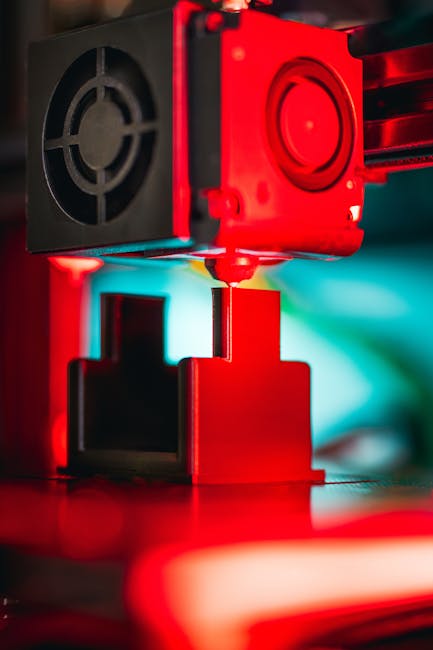
Table of Contents
- Defining Additive Manufacturing in the Creative Context
- Unlocking New Aesthetic Possibilities
- Additive Manufacturing in Diverse Creative Fields
- The Design Workflow: From Concept to Creation
- Challenges and Opportunities for Creative Innovators
Defining Additive Manufacturing in the Creative Context
At its heart, additive manufacturing, commonly known as 3D printing, is a revolutionary approach to creation that builds objects layer by painstaking layer from digital designs. Unlike traditional subtractive manufacturing, where material is removed from a larger block (think of a sculptor chiseling away at stone), additive processes meticulously add material only where it’s needed. This fundamental difference unlocks unparalleled design freedom. Imagine designing an intricate lattice structure that would be impossible to machine, or a perfectly ergonomic grip tailored precisely to an individual’s hand – additive manufacturing makes these concepts tangible. This paradigm shift is not just about making prototypes faster; it’s about enabling the creation of complex, customized, and even entirely novel end-use products. Understanding this core principle is the first step in harnessing its immense potential for creative endeavors.
The landscape of additive manufacturing is diverse, with several key technologies catering to different material needs and design complexities. Fused Deposition Modeling (FDM) is perhaps the most widely recognized, extruding thermoplastic filament layer by layer, making it accessible for hobbyists and educators alike, and excellent for rapid prototyping of form and function. Stereolithography (SLA) uses UV lasers to cure liquid photopolymer resin, achieving remarkably high resolution and smooth surface finishes, ideal for intricate figurines, jewelry, and detailed architectural models. Selective Laser Sintering (SLS) employs lasers to fuse powdered materials, typically plastics or metals, creating strong and durable parts suitable for functional prototypes and end-use components. Multi Jet Fusion (MJF), a technology developed by HP, offers similar benefits to SLS with faster build times and enhanced material properties, making it a powerful tool for mass customization and production. Each of these technologies offers unique creative avenues, from fashion design and art installations to bespoke medical devices and personalized consumer goods. This evolution from simple prototyping to producing final, market-ready items is a testament to the maturation and growing sophistication of additive manufacturing.
The ability to iterate rapidly and test concepts physically is crucial for the creative process. Additive manufacturing significantly accelerates this iterative loop, allowing designers to refine their ideas based on tangible results. This closely mirrors the iterative design and engineering that defined early aviation pioneers, as detailed in our exploration of The Wright Brothers’ Secret: Iterative Design & Engineering Innovation That Took Flight. Furthermore, the principles of Usability Testing: The Human-Centric Design Secret Weapon become far more effective when designers can quickly produce functional prototypes to gather real-world feedback, driving more human-centered solutions. As additive manufacturing continues to advance, its role in creating not just products, but entirely new experiences and solutions, will only grow, pushing the boundaries of what we define as possible in design and innovation.
Unlocking New Aesthetic Possibilities
For decades, designers have been constrained by the limitations of subtractive manufacturing processes. Machining, molding, and casting inherently dictate certain forms and complexities. Additive manufacturing, commonly known as 3D printing, shatters these paradigms, offering a boundless canvas for the truly imaginative. We are no longer bound by the physical limitations of tools; instead, our creativity becomes the primary constraint.
One of the most profound impacts is the ability to design and produce complex geometries unachievable with traditional methods. Think intricate lattice structures, internal channels, and highly detailed filigree that would be impossible to machine or mold. This opens doors to incredibly lightweight yet strong components, highly efficient heat exchangers, and art pieces with astonishing internal detail.
This newfound freedom allows for the creation of organic, freeform, and biomimetic shapes. Inspired by nature’s elegant designs, designers can now replicate the curves of a seashell, the branching patterns of a tree, or the complex cellular structures of biological organisms. This isn’t just about aesthetics; it’s about leveraging the functional advantages found in nature. This echoes the principles of Universal Design: The Unseen Innovation Spark in Architecture, where form follows function in a harmonious, intuitive way.
Furthermore, additive manufacturing empowers designers to harness material properties for unique textures and finishes. Beyond mere form, the interaction of different materials and printing techniques can yield surfaces with remarkable tactile qualities. Imagine a product with a soft-touch grip seamlessly integrated into a rigid structural element, or a surface that mimics brushed metal or rough stone, all printed in a single operation. This allows for a level of sensory engagement previously unimaginable, especially when considering User Persona Development for Creative Solutions to understand how users will interact with these new textures.
The technology also excels in multi-material and multi-color printing for intricate designs. Imagine a single object composed of rigid and flexible sections, or a product that seamlessly transitions through a spectrum of colors. This enables the creation of highly integrated components, reducing assembly time and cost, while also allowing for sophisticated visual storytelling within the design itself. This level of integration is a testament to the iterative nature of innovation, much like The Wright Brothers’ Secret: Iterative Design & Engineering Innovation That Took Flight.
The synergy between advanced software and additive manufacturing is truly transformative. The role of generative design is particularly exciting in this context. Algorithms can explore vast design spaces, optimizing for specific criteria like strength, weight, or material usage, and presenting novel forms that a human designer might not have conceived. This approach, often informed by principles like TRIZ principles for creative problem-solving, can lead to radically new solutions. For instance, generative design can explore optimal structures for aerospace components, leading to significant weight reductions and fuel efficiency improvements. A relevant read on this can be found in The Role of AI in Designing Smart Factories, where AI-driven design is revolutionizing manufacturing.
FAQ: How does additive manufacturing enable biomimetic design?
Additive manufacturing’s ability to build layer by layer allows for the creation of highly complex and organic internal and external structures that are difficult or impossible to replicate with traditional manufacturing. This freedom enables designers to mimic the intricate forms found in nature, such as cellular structures, branching patterns, and porous surfaces, which often possess optimal functional properties like strength-to-weight ratios or efficient fluid flow. This aligns with a broader Unlock Innovation: Your Ultimate Guide to the Design Thinking Process approach, where looking to natural systems for inspiration is a powerful technique.
FAQ: What are the implications of multi-material printing for product development?
Multi-material printing allows for the creation of single parts with varying material properties, such as rigid and flexible sections, or different colors and textures. This significantly reduces the need for assembly, leading to more integrated and robust products. It also enables functional grading, where material properties change gradually within a single component. This can lead to more ergonomic designs, improved performance, and aesthetic innovation, impacting areas from consumer electronics to medical devices. Exploring how these new forms integrate with user needs is crucial, a concept central to Usability Testing: The Human-Centric Design Secret Weapon.
Additive Manufacturing in Diverse Creative Fields
Additive manufacturing, often lauded for its industrial applications, is rapidly blossoming into a potent engine for creative expression across a breathtaking array of fields. This technology liberates designers from the constraints of traditional subtractive methods, allowing for unprecedented complexity, personalization, and material innovation.
In fashion and apparel, designers are leveraging additive manufacturing for the creation of truly bespoke garments, intricate accessories, and footwear that perfectly contours to the wearer’s anatomy. Imagine a dress with a latticework so delicate it rivals traditional lace, or shoes engineered for unparalleled comfort and support. This shift towards highly personalized fashion not only caters to individual preferences but also opens doors for exploring new aesthetics and functionalities, pushing the boundaries of what we consider wearable art.
Jewelry design has been revolutionized, with additive manufacturing enabling the creation of extraordinarily intricate patterns and complex geometries previously impossible to achieve. Personalized pieces, from engagement rings with unique inscriptions embedded within the metal to elaborate pendant designs, are now within reach, offering a level of customization that resonates deeply with consumers seeking meaningful adornments.
Architecture and interior design are seeing a surge in custom components, sculptural elements, and detailed scale models. From façade elements that mimic natural forms to bespoke furniture pieces that become conversation starters, architects can now realize ambitious visions with greater fidelity. This capability is particularly impactful in exploring new forms and structures, and for integrating complex, organic shapes that enhance the user experience. The principles of Universal Design: The Unseen Innovation Spark in Architecture can also be more readily applied when custom components can be precisely fabricated to meet diverse accessibility needs.
For product design, additive manufacturing provides a frictionless pathway for rapid iteration and the creation of functional prototypes. This agility allows designers to quickly test ideas, refine concepts, and bring unique consumer goods to market faster than ever before. Whether it’s a novel kitchen gadget or a ergonomically optimized tool, the ability to quickly produce and test physical iterations accelerates the entire innovation cycle, aligning perfectly with the ethos of Unlock Innovation: Your Ultimate Guide to the Design Thinking Process. This iterative process mirrors the lessons learned from pioneers like the Wright Brothers, highlighting how The Wright Brothers’ Secret: Iterative Design & Engineering Innovation That Took Flight is a fundamental driver of progress.
The realm of art and sculpture is experiencing a renaissance. Monumental public art pieces can be fabricated with unprecedented detail and structural integrity, while intricate miniatures can be produced with breathtaking precision. Furthermore, the ability to embed electronics and sensors opens up exciting possibilities for interactive installations that respond to their environment or audience, blurring the lines between art, technology, and experience. This expansion of artistic possibilities encourages a fresh perspective on Start Thinking Of Yourself As A Creative Person.
Even in traditionally conservative fields like automotive and aerospace, additive manufacturing is fostering creative expression. Custom interiors that cater to individual passenger preferences, lightweight components that optimize performance and fuel efficiency, and even artistic flair integrated into structural elements are becoming increasingly common. The ability to produce complex, optimized geometries for lightweighting is a direct application of TRIZ principles for creative problem-solving.
The confluence of advanced digital design tools and additive manufacturing technologies is unleashing a wave of innovation, empowering creators to transform their most imaginative concepts into tangible realities. As the technology continues to evolve, we can expect even more groundbreaking applications to emerge, further solidifying additive manufacturing’s role as a cornerstone of modern creativity. This push for innovation is also driving advancements in areas like Sustainable Product Design Innovation, where additive processes can minimize waste and enable the use of novel, eco-friendly materials.
The Design Workflow: From Concept to Creation
The journey from a spark of inspiration to a tangible, printed object is a thrilling dance between imagination and engineering. Additive manufacturing, with its inherent flexibility, has revolutionized this process, offering designers unprecedented freedom. At its core, the design workflow for additive manufacturing hinges on a series of interconnected steps, each building upon the last to refine and realize creative vision.
The initial ideation phase often leverages powerful software tools. Beyond traditional CAD (Computer-Aided Design) software, which allows for precise geometric modeling, the realm of additive manufacturing thrives on sculpting software. These digital clay tools enable organic forms and intricate details that would be impossible to achieve with subtractive methods. Furthermore, the rise of generative design tools, often powered by AI, allows designers to define parameters and constraints, letting algorithms explore a vast solution space to produce novel and optimized forms. This is where we see The Role of AI in Designing Smart Factories begin to intersect with creative product development, pushing boundaries beyond human intuition.
Once a design is conceptualized, it needs to be translated into a format that a 3D printer can understand. This is where file formats and optimization for 3D printing become crucial. While STL (Stereolithography) has been the long-standing standard, offering a tessellated representation of a 3D model, newer formats like OBJ (Object) and especially 3MF (3D Manufacturing Format) are gaining traction. 3MF, for instance, is a more robust format that can carry richer information, including color, materials, and structural data, leading to more accurate and efficient prints. Optimizing these files involves reducing polygon count where possible without sacrificing detail, ensuring watertight models, and orienting them for optimal print success.
A fundamental aspect of additive design is understanding material limitations and designing for manufacturability. Each 3D printing technology and material has its own strengths and weaknesses. A design that might be achievable in flexible resin could be impossible to print in rigid plastic without significant modification. Designers must consider factors like minimum wall thickness, overhang angles, support structures, and material properties (strength, flexibility, heat resistance) from the outset. This often involves a deep dive into the principles of TRIZ principles for creative problem-solving, which offer systematic approaches to overcome technical limitations and find innovative solutions. Adopting a mindset similar to Inclusive Design Principles: Creating Products for Everyone can also help designers anticipate potential manufacturing challenges early on.
The magic of additive manufacturing truly shines through its embrace of iteration and rapid prototyping. This is not a linear process but a cyclical one, mirroring the spirit of The Wright Brothers’ Secret: Iterative Design & Engineering Innovation That Took Flight. Designers can quickly print a prototype, evaluate its form, fit, and function, and then refine the digital model based on the feedback. This rapid feedback loop allows for extensive experimentation, enabling designers to explore multiple design avenues, test different geometries, and ultimately arrive at a more robust and creative solution. This iterative nature is intrinsically linked to the principles of Unlock Innovation: Your Ultimate Guide to the Design Thinking Process. It also necessitates a supportive environment that embraces Psychological Safety: The Rocket Fuel for Your Boldest Creative Risks and acknowledges that The Psychology of Failure in Creative Processes can be a powerful learning tool.
Finally, the creative potential of a 3D printed object is often amplified through post-processing techniques. While some designs emerge from the printer ready to use, many benefit from finishing steps. These can include removing support structures, sanding for a smoother surface finish, painting for aesthetic appeal, or even applying specialized coatings for enhanced functionality like UV resistance or conductivity. Techniques like vapor smoothing can dramatically improve the surface quality of certain plastics, giving them a polished, injection-molded look. For more complex functional parts, post-processing might involve assembling multiple printed components or embedding electronics. This final stage is where the digital design truly transcends into a physical artifact, ready for its intended application, and it’s a crucial step in ensuring that the final product aligns with the intended user experience, which can be further validated through Usability Testing: The Human-Centric Design Secret Weapon.
Challenges and Opportunities for Creative Innovators
Additive manufacturing, while a beacon of creative possibility, isn’t without its hurdles for the intrepid designer. One of the most significant challenges lies in bridging the skill gap between traditional craft and digital fabrication. Many artists and designers honed their skills through tactile, hands-on processes, and the transition to parametric modeling, slicing software, and the nuanced behaviors of 3D printers requires a significant learning curve. This isn’t just about acquiring new software proficiency; it’s about developing a new way of thinking about form, structure, and material, often involving iterative design cycles that echo The Wright Brothers’ Secret: Iterative Design & Engineering Innovation That Took Flight. Embracing this learning process is crucial, and resources that demystify the technical aspects can be invaluable.
Cost considerations and the accessibility of advanced additive technologies also present a barrier. While entry-level 3D printers are increasingly affordable, the industrial-grade machines capable of producing intricate, high-tolerance parts with specialized materials remain a significant investment. This can limit experimentation for independent creators or small studios. However, the growth of maker spaces, 3D printing services, and even rental models is slowly democratizing access, enabling more innovators to explore this frontier. As with any innovation, understanding the return on investment and potential for Seed Funding for Creative Startups becomes a critical consideration.
Intellectual property and design protection in the digital age are complex. The ease with which digital designs can be copied and shared raises concerns for creators worried about their unique ideas being replicated without attribution or compensation. Robust digital rights management, clear licensing agreements, and potentially blockchain-based verification are emerging solutions. Exploring the nuances of copyright law in the context of 3D printable files is essential for safeguarding creative work. This challenge underscores the need for a strong understanding of legal frameworks, much like embracing the broader principles of Unlock Innovation: Your Ultimate Guide to the Design Thinking Process also necessitates an awareness of practical constraints.
The sustainability aspects of additive manufacturing in creative industries are a growing area of both challenge and immense opportunity. While AM can reduce waste by printing only what’s needed, the energy consumption of printers, the origin and recyclability of materials, and the lifecycle impact of printed products require careful consideration. Creative innovators have a powerful role to play in pushing for greener materials, optimizing designs for material efficiency, and promoting a circular economy for 3D printed objects. This aligns with the principles of Sustainable Product Design Innovation and encourages a more responsible approach to creation.
| Challenge Area | Opportunity for Innovators |
|---|---|
| Skill Gap | Develop cross-disciplinary skills; leverage online learning platforms and maker communities; embrace continuous learning. |
| Cost & Accessibility | Utilize 3D printing services; explore collaborative maker spaces; focus on high-value, low-volume production. |
| Intellectual Property | Implement clear licensing; explore digital watermarking; stay informed on evolving IP laws for digital assets. |
| Sustainability | Pioneer eco-friendly materials; design for material efficiency and recyclability; champion circular economy models. |
| Personalization & On-Demand | Design for mass customization; explore direct-to-consumer models; create unique, niche products tailored to individual needs. |
The future of personalized and on-demand creative production is perhaps the most exciting frontier unlocked by additive manufacturing. Imagine a world where bespoke jewelry, custom-fit prosthetics, or unique architectural elements can be designed and produced instantly, tailored precisely to individual needs and desires. This shift moves away from mass production towards a highly individualized and responsive creative ecosystem, echoing the principles of Inclusive Design Principles: Creating Products for Everyone. This also taps into the burgeoning creator economy, where individuals can directly offer unique, digitally fabricated solutions. Furthermore, the ability to prototype rapidly and test thoroughly, informed by approaches like Usability Testing: The Human-Centric Design Secret Weapon, allows for unprecedented refinement and user-centric development. The potential for innovation is immense, encouraging a mindset shift to Start Thinking Of Yourself As A Creative Person.
Featured image by Jakub Zerdzicki on Pexels